The phrase evokes lush green vegetation and rare and unique animals narrated by the voice of David Attenborough. Creepy crawly things that could kill you. Plants that could kill you. Animals that could either amuse you or kill you. Taking boats down small tributaries in search of the rare and unique with the sounds of cicadas, birds, frogs, and monkeys providing a soundtrack evoking mystery of what might be around the next bend.
Of course I had to go when I decided to visit Malaysia. I couldn’t be that close to the world’s third largest island (Australia being a continent is excluded from that list) and not go in search of the “Borneo Big 5”. The Big 5 being the proboscis monkey, orangutan, hornbill (technically the Rhinoceros hornbill, but all of the hornbills are worthwhile), crocodile, and pygmy elephant.
Arriving at Sukau Greenview Bed and Breakfast on the Kinabatangan River deep in the jungle of Sabah, I knew I had made the right choice in booking 3 days and 2 nights on the Jungle Safari. The simple buildings and the lush surroundings felt warm and familiar. After an introductory greeting and getting checked into our rooms, we were off on our first river safari.
The Kinabatangan River, Malaysia’s second-longest river, stretches through the heart of Sabah and is considered one of Borneo’s most spectacular natural wonders. The river offers a haven for some of the world’s most unique and endangered wildlife. With the rainy season underway, the Kinabatangan was about 5 meters (16 feet) higher than normal at the moment. The brown water flanked by green jungles and chalk limestone cliffs. A large teak tree that had washed downstream was lodged against the Sukau Greenview dock.
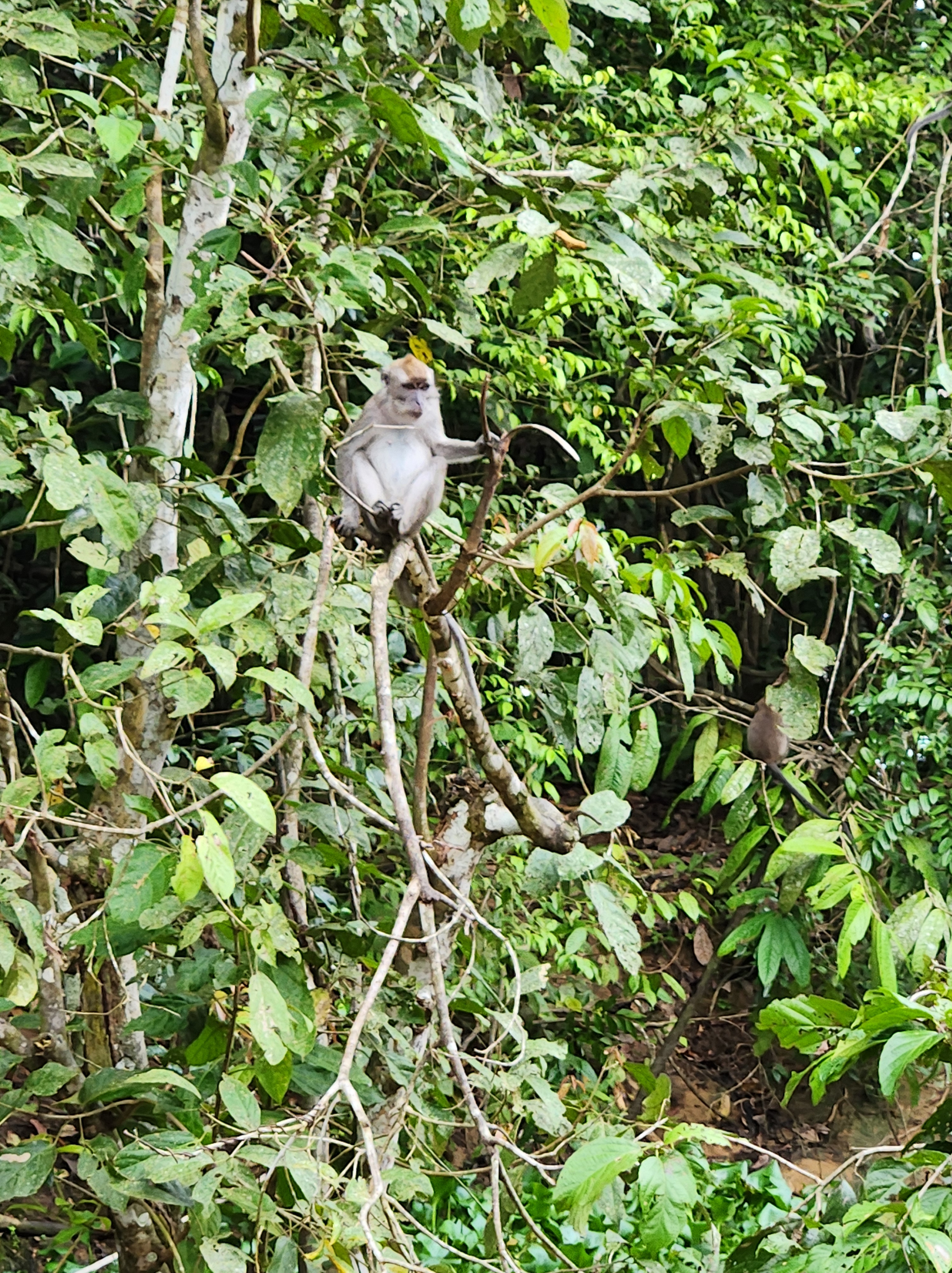
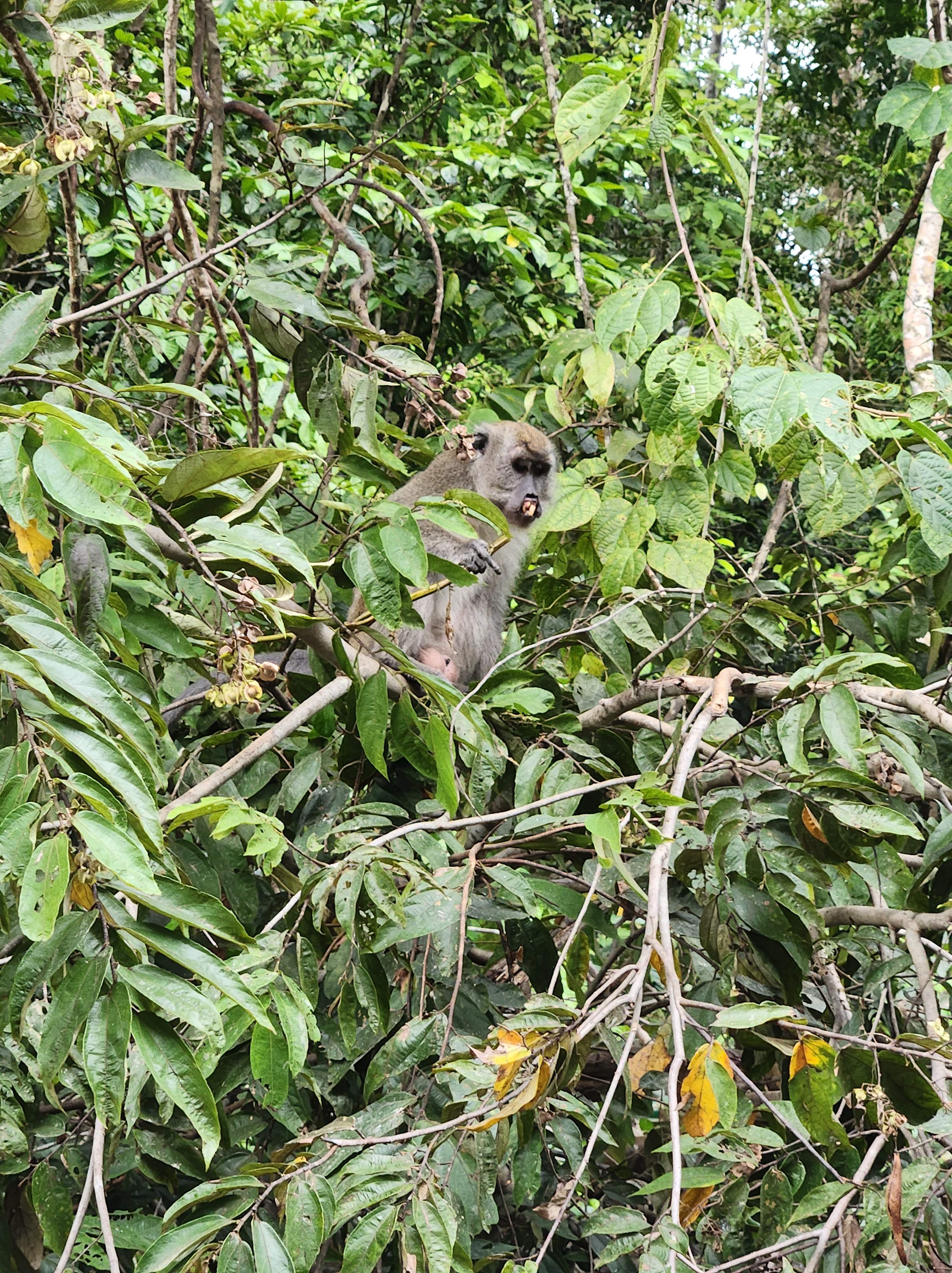
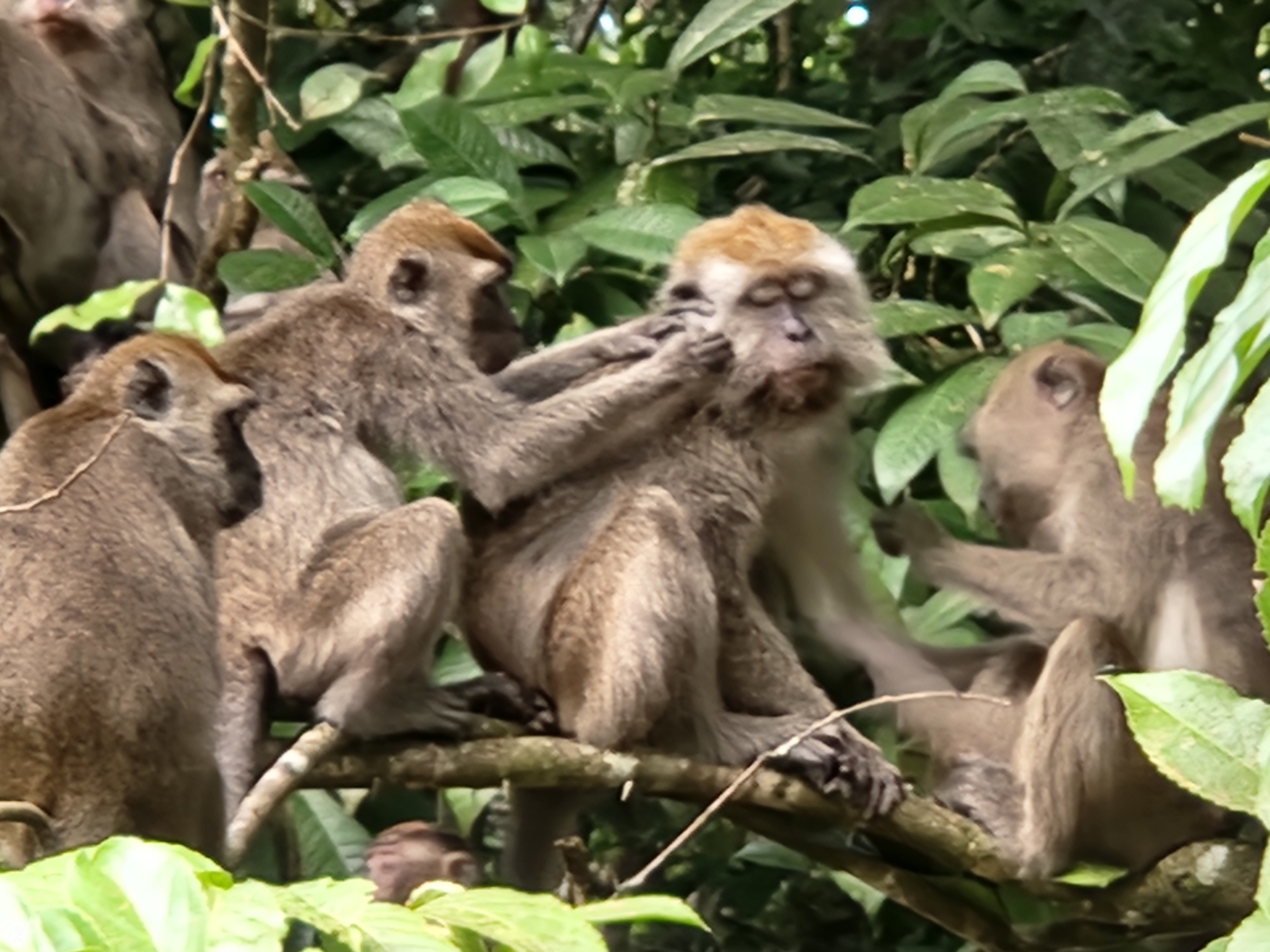
First up on our jungle safari were members of the forest mafia (the long tail macaques) playing in the trees. The long tail macaques are interesting and enjoyable to watch. Definitely not a rare and unique animal though. Ignoring his primate relatives, a small silver leaf monkey was just hanging out in the treetop. The silver leaf monkey is the smallest of the monkeys in the jungles of Borneo. Ten species of monkeys call the jungle home.
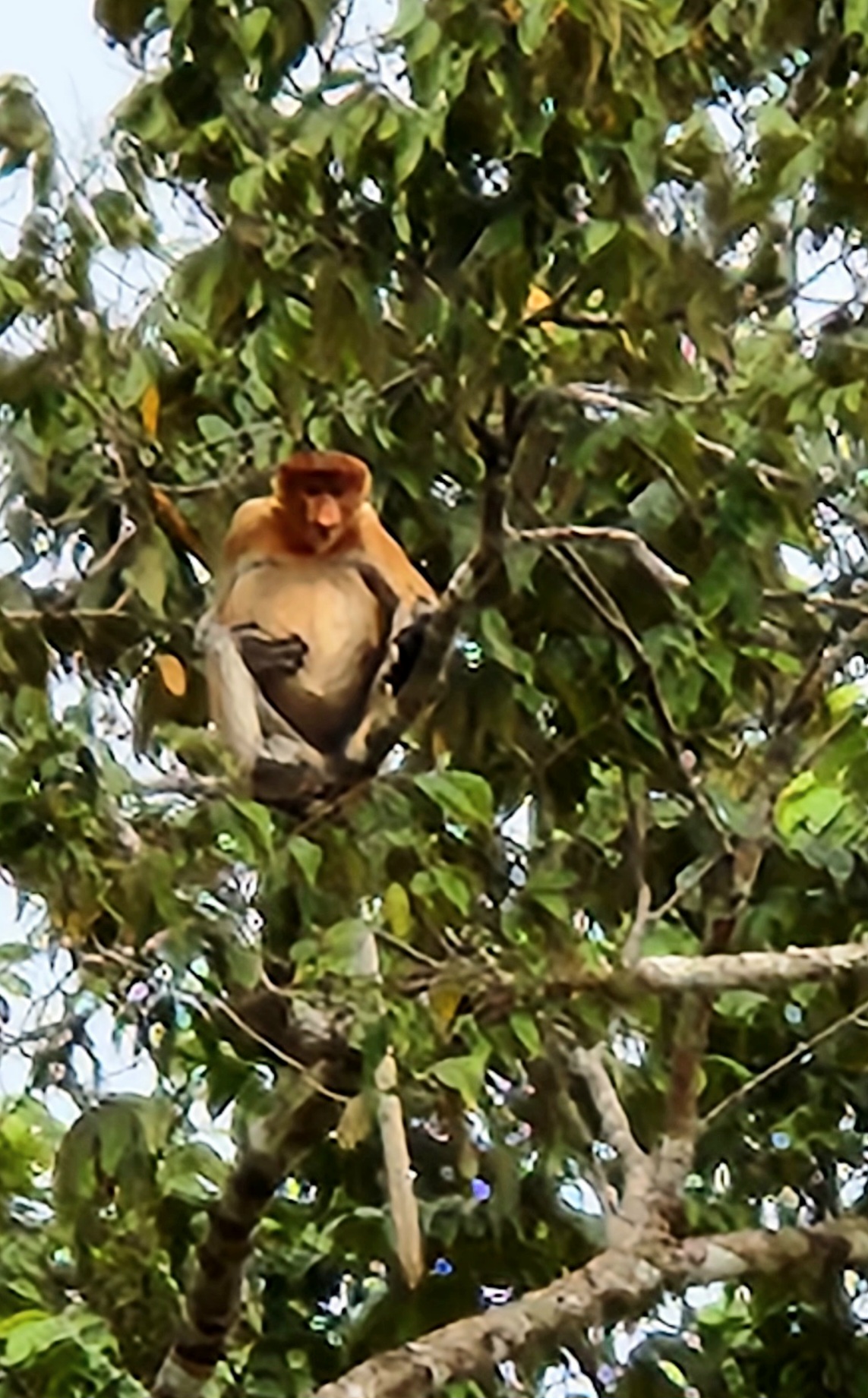
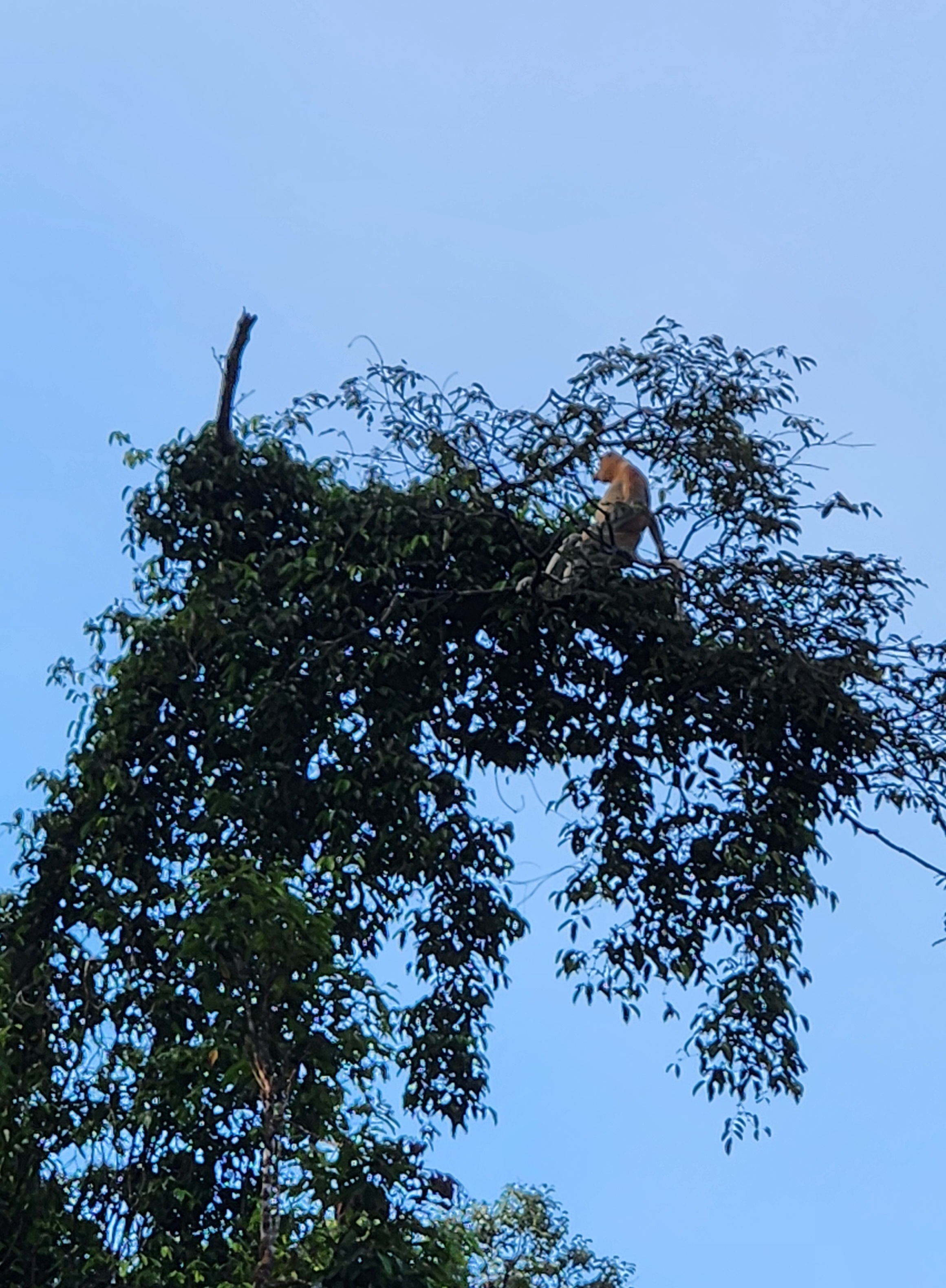
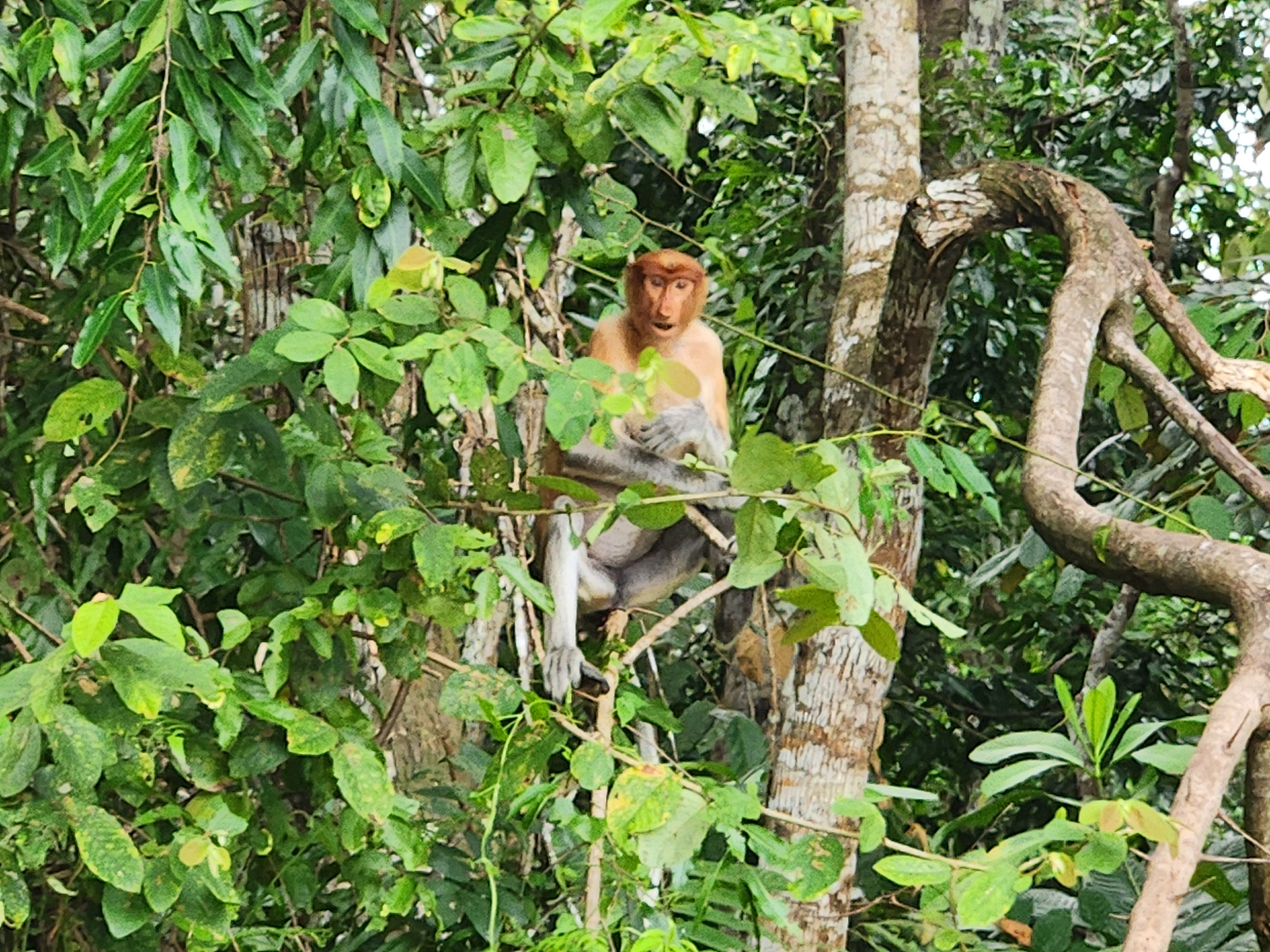
A little further up the river we spotted the first of the Borneo Big 5: the proboscis monkey. The male proboscis monkey with his golden fur and his giant bulbous nose sitting high up in the tree keeping watch over his haren. Only the males grow the big noses starting at the age of about 7 years. Apparently, the female proboscis monkeys find a large nose very attractive. Females and adolescents have pointy noses, which are still cute enough to give them a face that makes you smile. Seeing the proboscis monkeys brought a smile to my face.
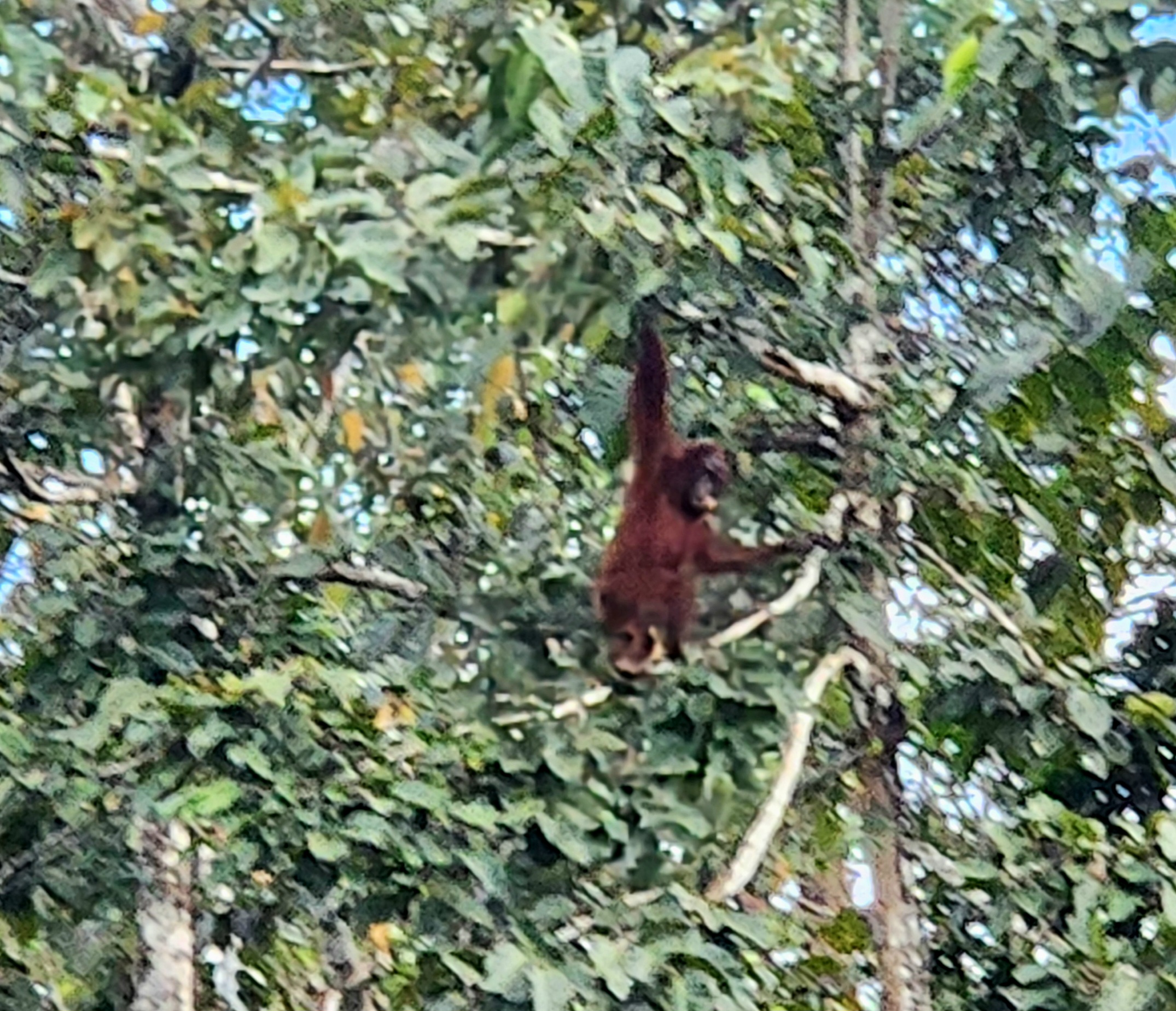
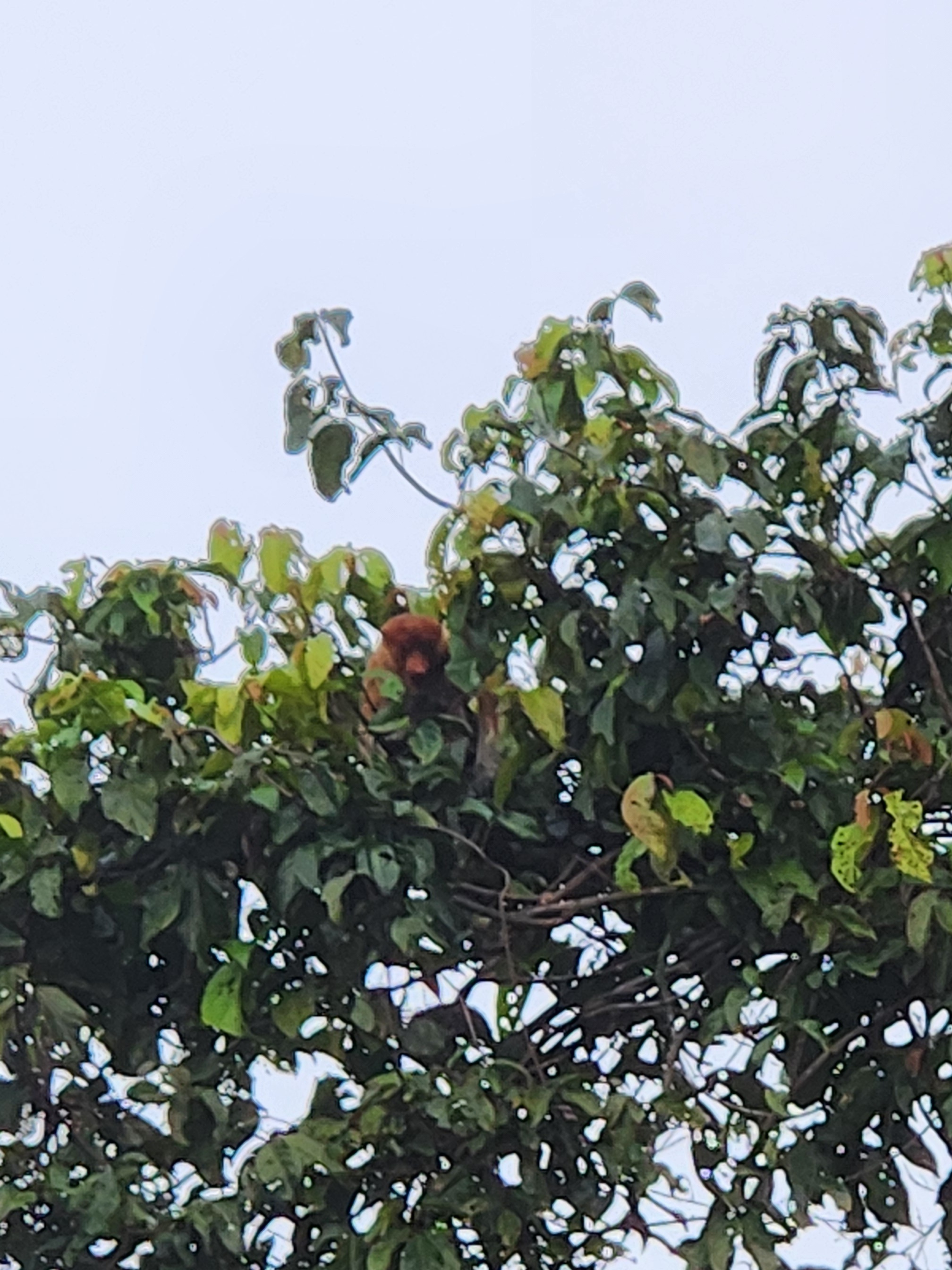
News of a rare sighting had reached our guide and boat driver. The next of the Borneo Big 5: an orangutan. A female orangutan had been spotted in the trees close to the river. She was hard to see because she was just far enough back, but you could see her move through the branches, catching a glimpse of her dark red furry arm as she moved stealthily through the trees. Stopping near the same place as we were returning to the lodge, we were lucky to spot an adolescent orangutan. His more radiant red fur was much easier to see as he moved about and swung from tree to tree. Getting to see an orangutan in the wild was special.
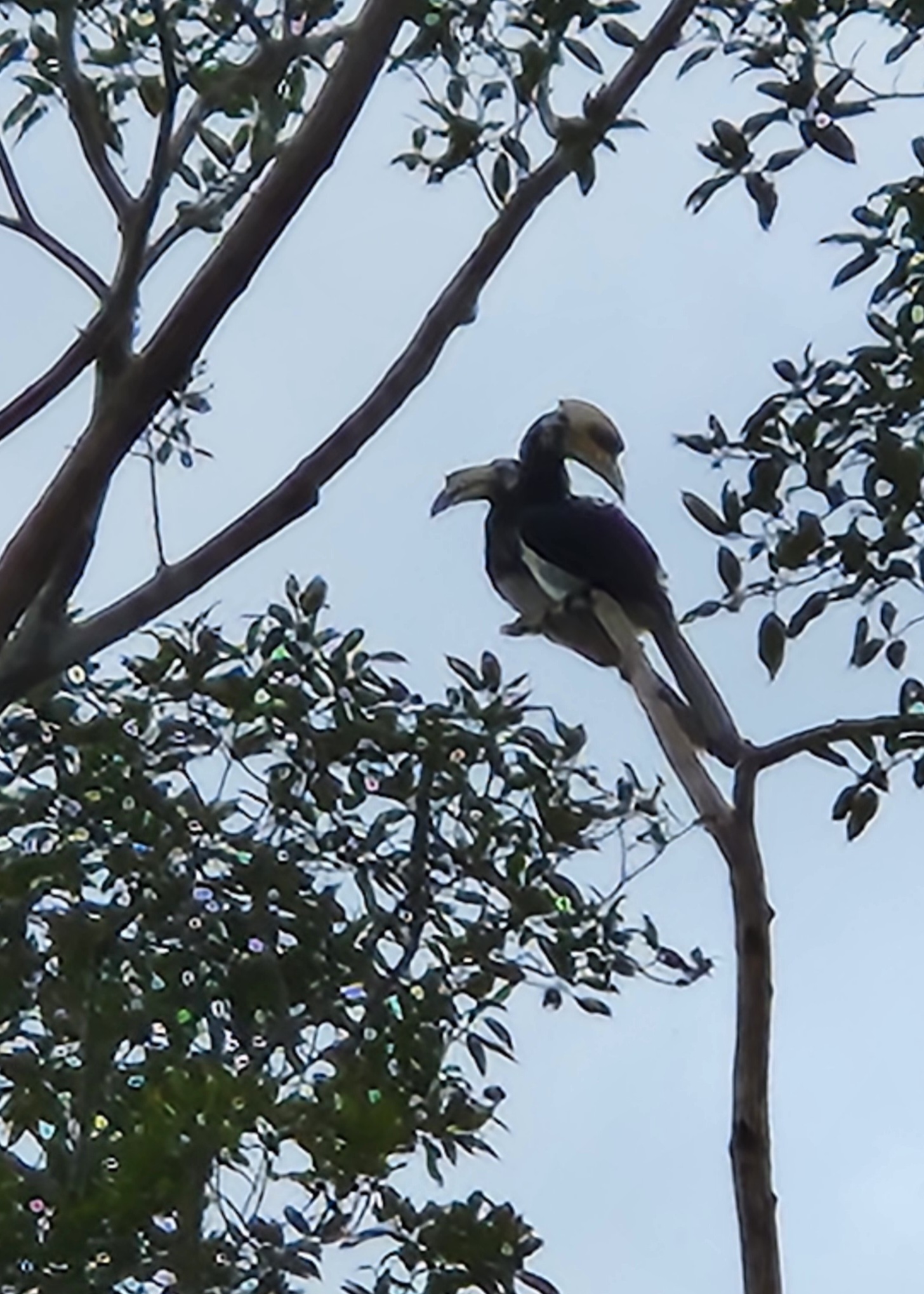
Turning down a tributary graced us with more of the forest mafia (long tail macaques), short tail macaques, and a pair of hornbills. There are 8 different varieties of hornbills on Borneo. This pair had black bodies and a white head (and I pretty much completely forgot the name mere moments after the guide said it. Apparently, based on an image search in Google, it was a Pied Hornbill.) We got to see the hornbill in flight and sharing a branch with his mate. Another one of the Borneo Big 5 in the books.
After dinner, the next cruise we embarked on was a night cruise. This cruise gave us an opportunity to see some of the rare and colorful birds that are active at night, a giant forest fox (fruit bat), and snakes sleeping peacefully on a stalk of grass. The birds were so colorful with their blue, red, and yellow feathers, and perched on the tree branches over the river. The cutest being a little puffy ball of blue and white perched on a branch sleeping. (I’m not even going to try and google what they might have been, I just appreciated the colors.) The white snake that was just curled up sleeping on the green grass. The perfect place to sleep since they will feel the grass vibrate if a prey is coming for them. We even got to see a snake crossing the river, its head and front part of its body perpendicular to the water giving it the essence of dancing along the water. Fireflies were blinking in the night back in the trees. So many fireflies. And between spotting the animals as we moved along the river, I couldn’t help but look at the sky so full of stars and visible without the light pollution of the cities.
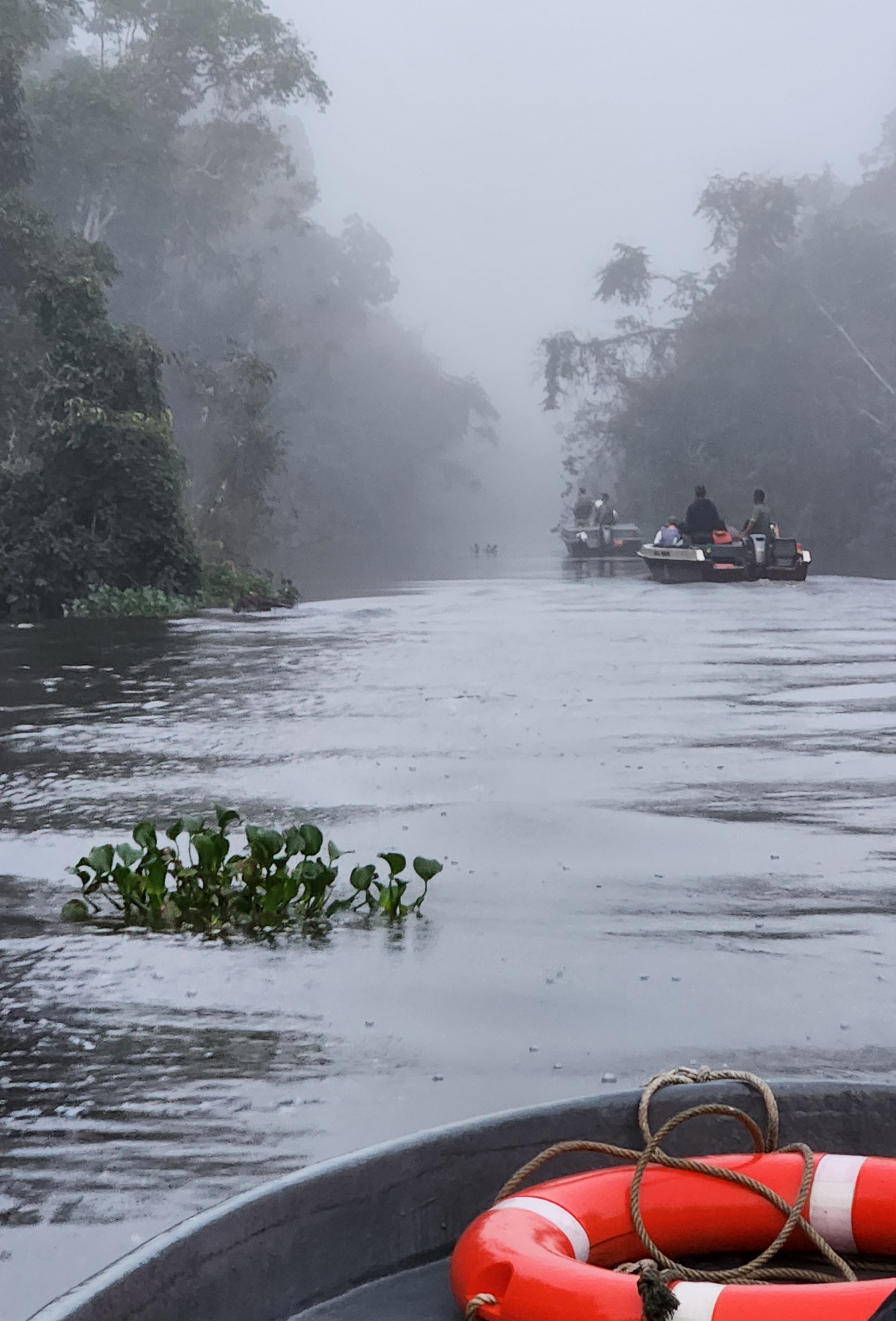
Morning came early as we boarded the boat for our third river cruise at 6 AM. The fog hanging heavy along the river, giving everything a mysterious and mystical quality. On the morning cruise, I discovered that I really am not good at spotting crocodiles. So many branches look like a crocodile, but are not. And then when we actually were stopped to look at a crocodile, I’m still not convinced that I was able to actually see it as it was tucked underneath trees and vegetation near the water’s edge. The number of other boats that impolitely jostled their way in to give their occupants a better view, didn’t help me. In my mind, before setting foot in the boat, I had pictured crocodiles in abundance along the river. The sighting still mostly counts as the fourth of the Borneo Big 5.
More proboscis monkeys were close to the river as the morning was getting started. Later in the day they retreat further into the jungle. For now though, momma and baby were hanging out in the crevice of a tree. Other proboscis monkeys were in the treetops, waiting for the sun to rise. Their golden fur and adorable faces make them a joy to watch. I could have stayed longer watching them start their day. The proboscis monkey has definitely won its way into my heart as a favorite of my time in the jungle.
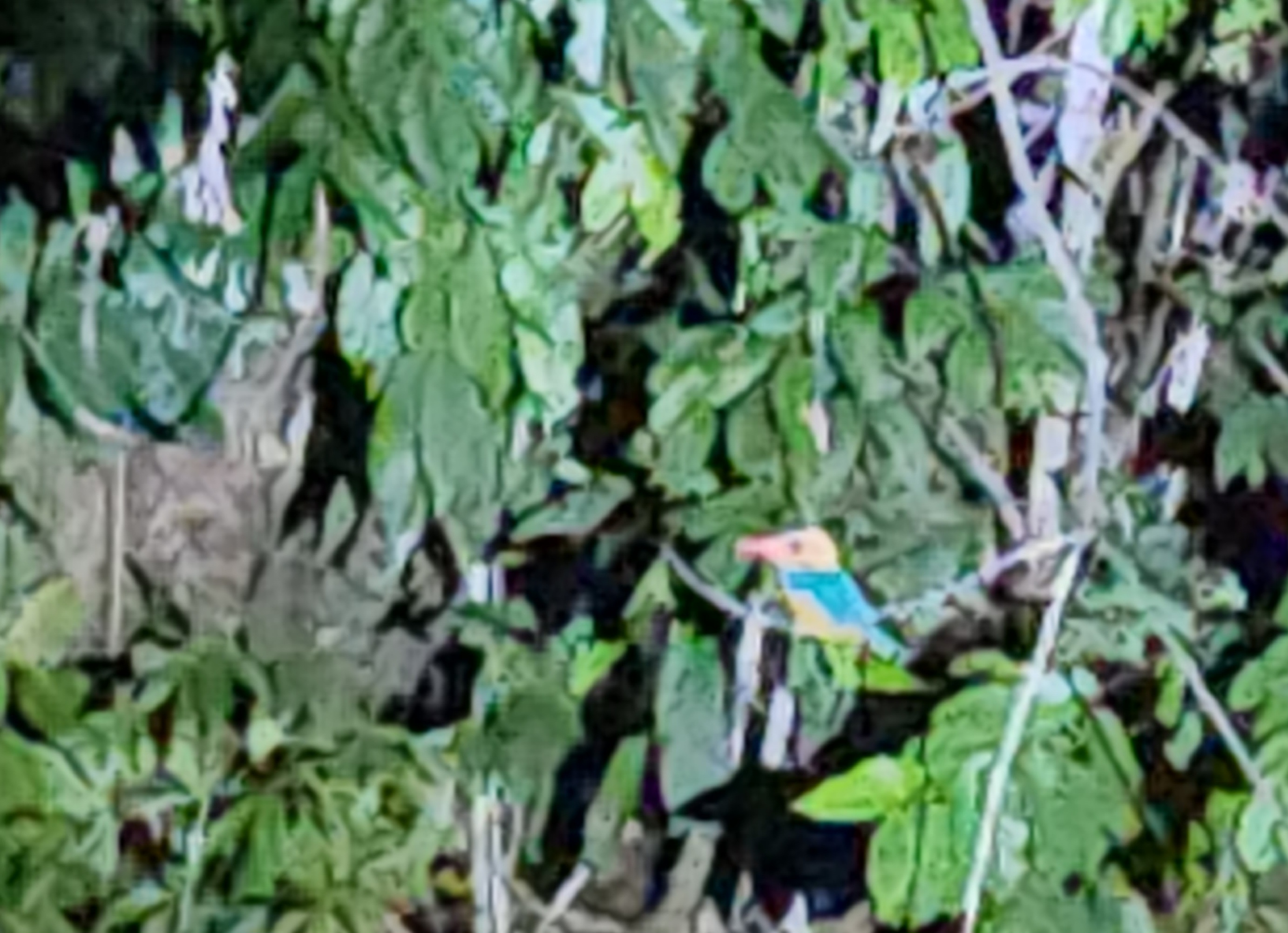
Not being a bird watcher, I took it for granted when our guide told us we were lucky to see the straw head bulbul, a rare bird native to Borneo. We also saw more colorful birds. Including an awake version of the little blue puffball that we had seen sleeping the night before. Another species of hornbill, the White-crested Hornbill (thank you Google), was perched high up in a tree, a bird our guide told us is a dream of most bird watchers to see.
Then it was time to get introduced to the jungle and the creepy crawly things and plants that call it home. A trek through a jungle must be dressed for appropriately given the propensity of leches and mosquitoes to find uncovered skin. Not having the recommended long pants with me, I opted for my turquoise blue with black and gold accents sarong from Bali, long sleeves in the form of my rust color Ganesha hoodie, and yellow wellies (rubber boots). Not everyone can pull off that look. At least the yellow boots drew out the gold in the sarong and the rust orange and turquoise blue were almost complimentary in their colors. Properly dressed and doused in mosquito repellent, we loaded onto the boat and they took us a little bit up river to the opposite bank.
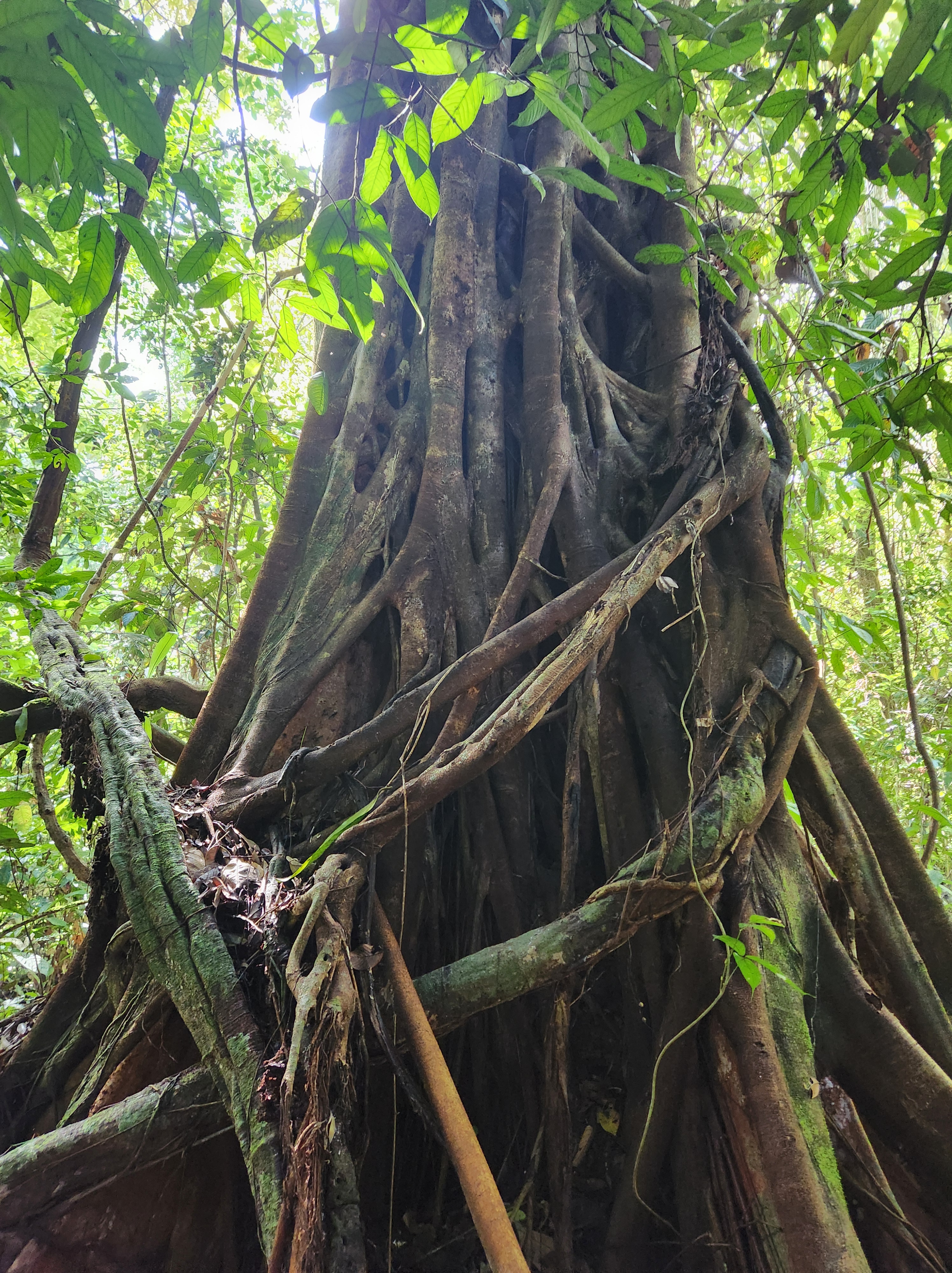
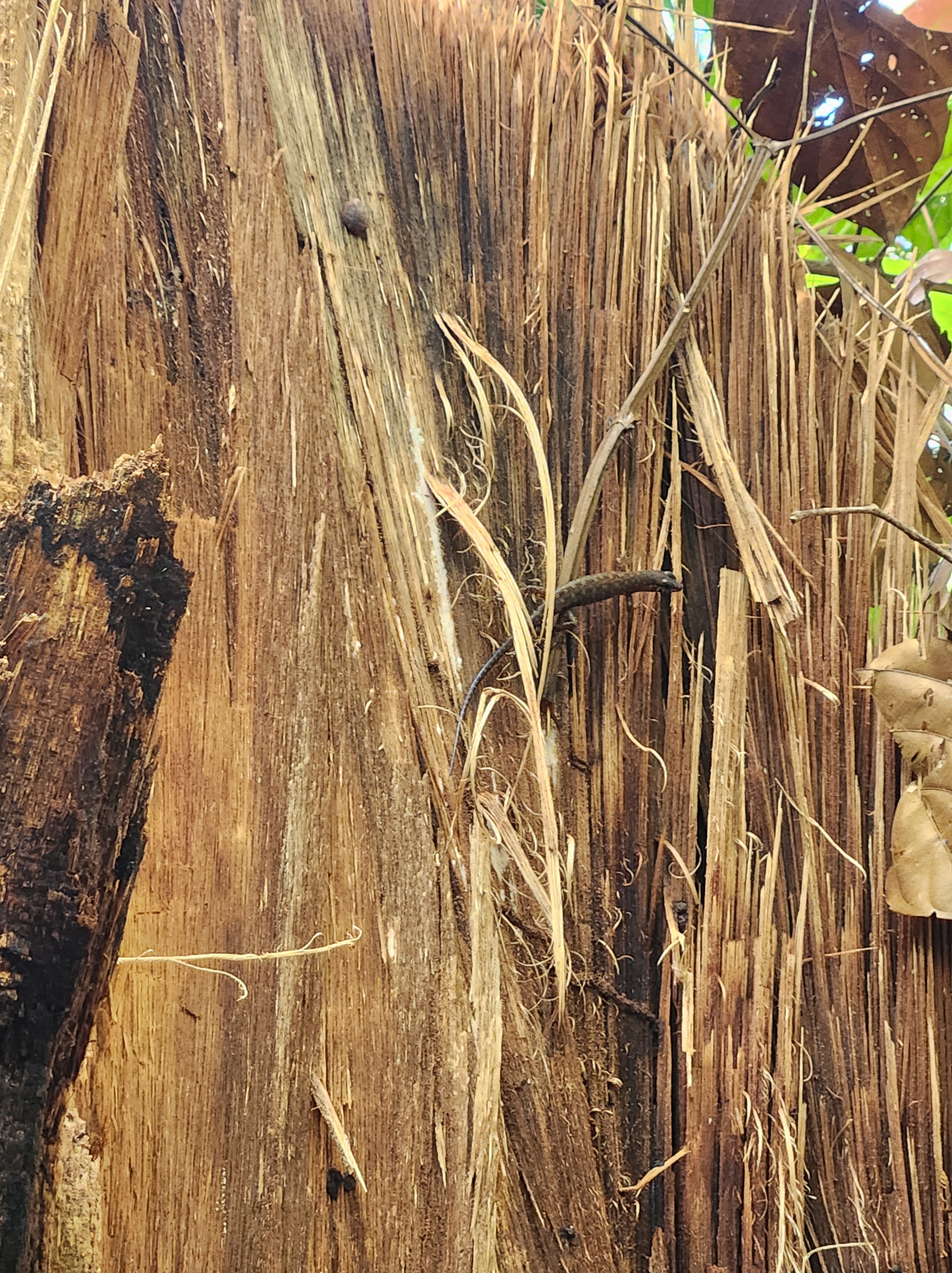
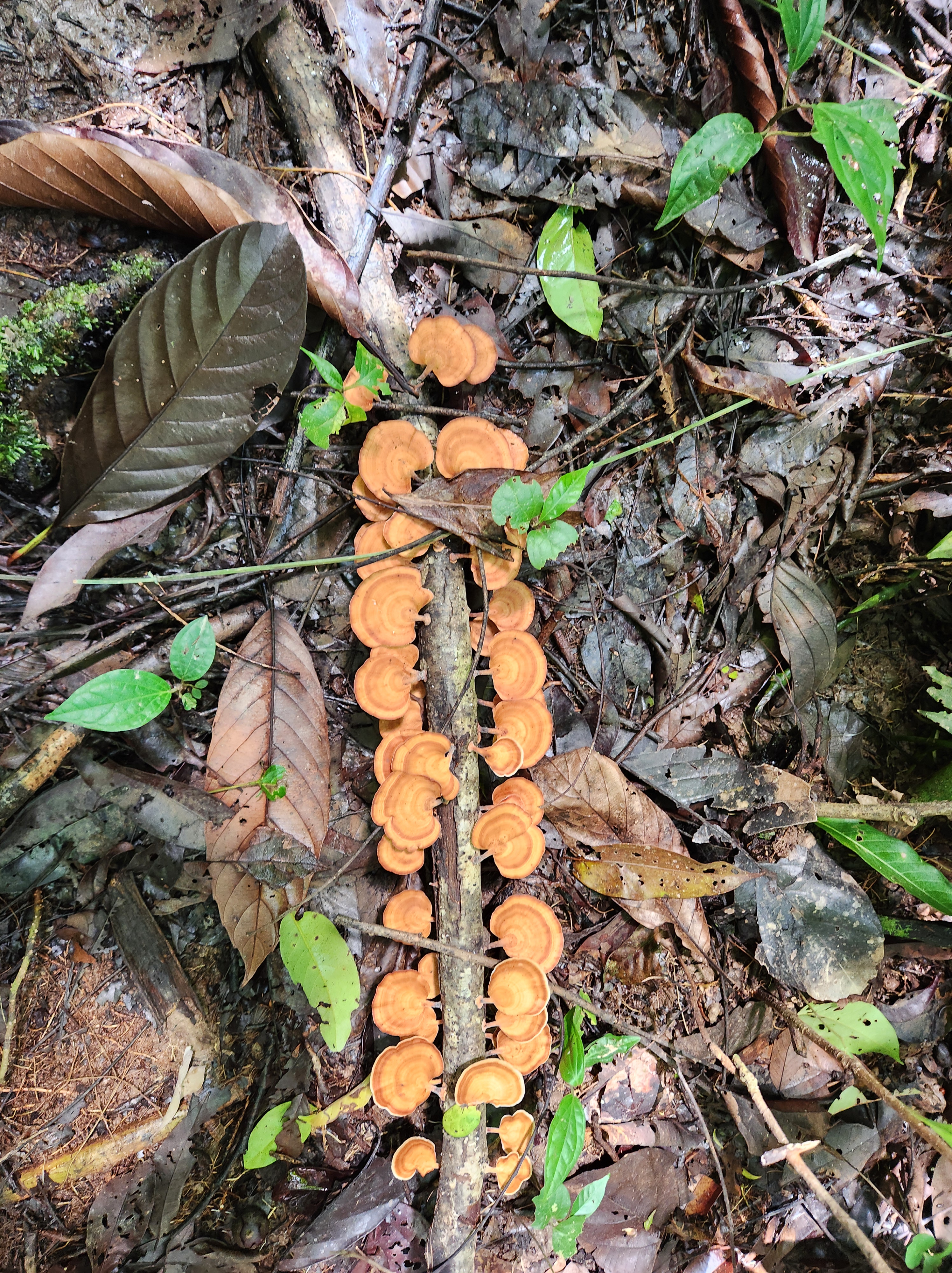
Once in the jungle, we slogged our way through the mud, each step making a glopping sound as the suction from the mud fought to pull the boot off your foot. One woman was the first to make friends with a leech. Just a little one. Despite the instructions to not scream and just let your guide know, she screamed anyway. Ike Ike, our guide, calmly took the leech, rolled it in his fingers and dropped it to the jungle floor. We learned about iron wood and the vines that are parasites and suffocate the tree they choose as a host. A relative of the poison ivy thrives in the jungle, with a sap that is way more itchy than its diminutive cousin. We saw millipedes (touch but don’t squeeze as they have a substance they will produce that can kill a human (it would probably take 5 to actually kill a human, 6 for good measure, but you really shouldn’t kill another human)), a skink trying to disguise itself as part of tree fibers, and a larger version of a millipede that rolls up like an armadillo for protection (so less poisonous than the first one, might take 10 to kill a human.) The red cup mushroom, white glow in the dark mushrooms, and the wood mushrooms were pretty fun(gi) to see.
The afternoon river cruise graced us with more opportunities to see some fantastic animals. More probiscis monkeys, the male of this harem group was close to the river when we pulled up, giving us the opportunity to fully admire his nose. Several hornbills of another species flew over us as we moved away from the monkey party, which was pretty spectacular. We searched in vain for the last of the Borneo Big 5: the pygmy elephant. Due to the high water level, the female pack had moved up river for the season. A bull had been spotted in the area a few days prior. Today he was nowhere to be found. Giving up hope on spotting him, we turned up another tributary. We did get to see the long tail macaque that had apparently lost a battle and was missing part of his lip, and several baby long tail macaques that are simultaneously cute and creepy looking. A rhinoceros hornbill did a flyover, close enough to see the brilliant colors.
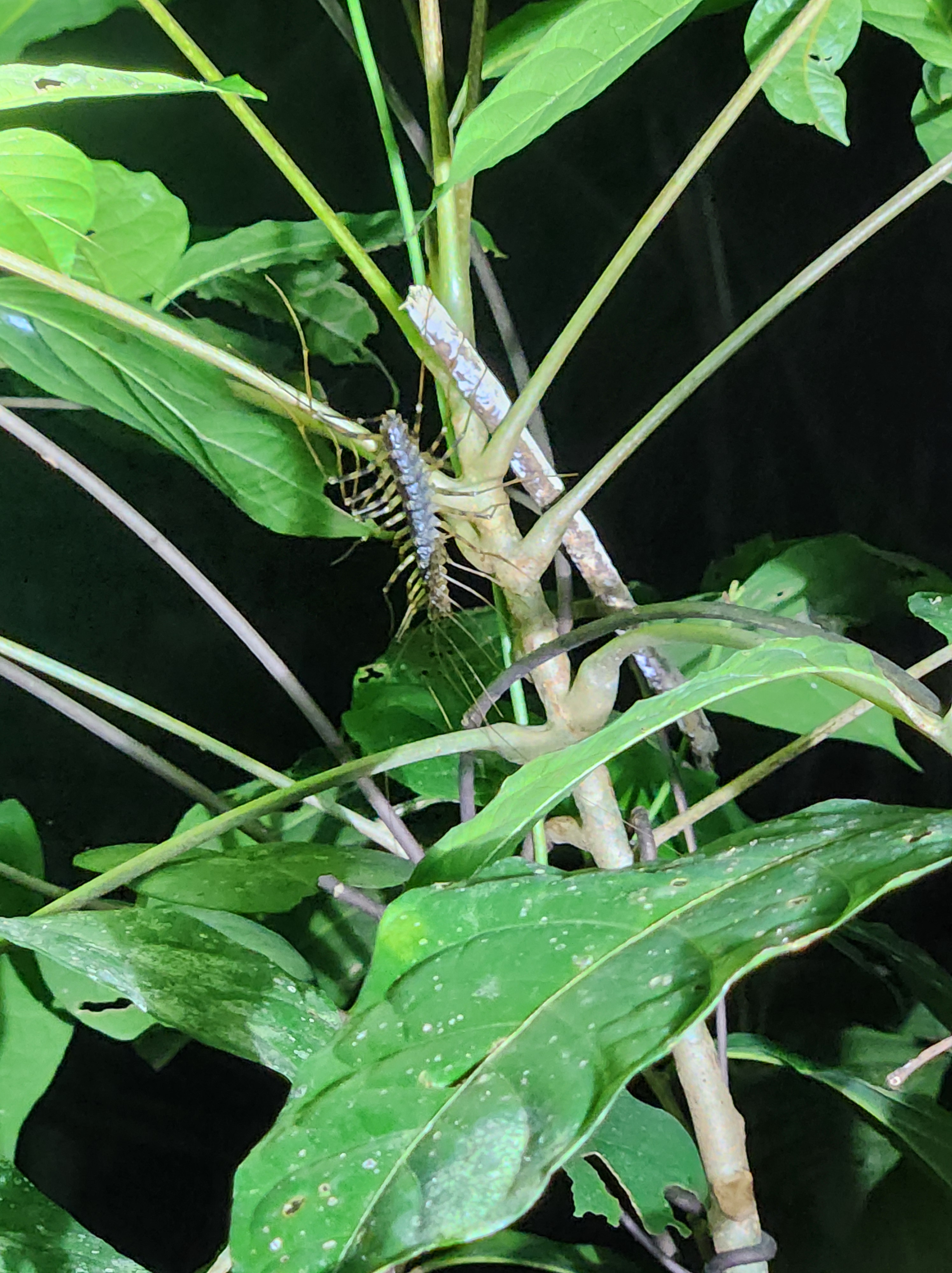
Our last venture into the jungle was a night walk. Covered in clothing and mosquito repellent, wearing our wellies (rubber boots), and armed with torches (flashlights, torches just sounds more cool) we were off into the jungle. This walk is where the small things that could kill you took center stage. The spiky plant that you would not want to grab onto unless you wanted to go to the hospital to have the spines removed one by one. The tree frogs, not colorful but definitely poisonous, the large huntsman spider hanging out on a tree, and the centipede all dangerous. Not everything we saw could kill you. The butterfly that flitted by and landed on a tree, the walking stick hanging out on a leaf, the cicada, and the hammer head slug were more pleasant to find. The soundtrack of the walk was the glopping sound of the boots in the mud and the chirps of the cicadas and frogs. No leeches this time.
The people at Sukau Greenview were so beautiful and wonderful. From the guides to the ladies in charge of the food, everyone made sure the experience was incredible. At each meal, the staff ensured that I had my gluten free options. In between meals, the ladies made sure the coffee and water were flowing.
Seeing four of the Borneo Big 5 is an excellent experience. Yes, I was a little disappointed to not see the pygmy elephants, but nothing is guaranteed with wildlife. Enjoying the proboscis monkeys more than made up for the lack of pygmy elephants. Everything about the tour was worth the journey to get there. Especially that I can now say that I have visited the Jungles of Borneo.
After a busy first week of getting settled into life in Chiang Mai, daily routines are beginning to congeal. Surprisingly, adjusting to an unscheduled life takes some effort. In the midst of not doing a lot, I did have the opportunity to see my good friends, drink and eat good food, and take time to just enjoy the day to day routine of being in Chiang Mai.
Walking in Chiang Mai
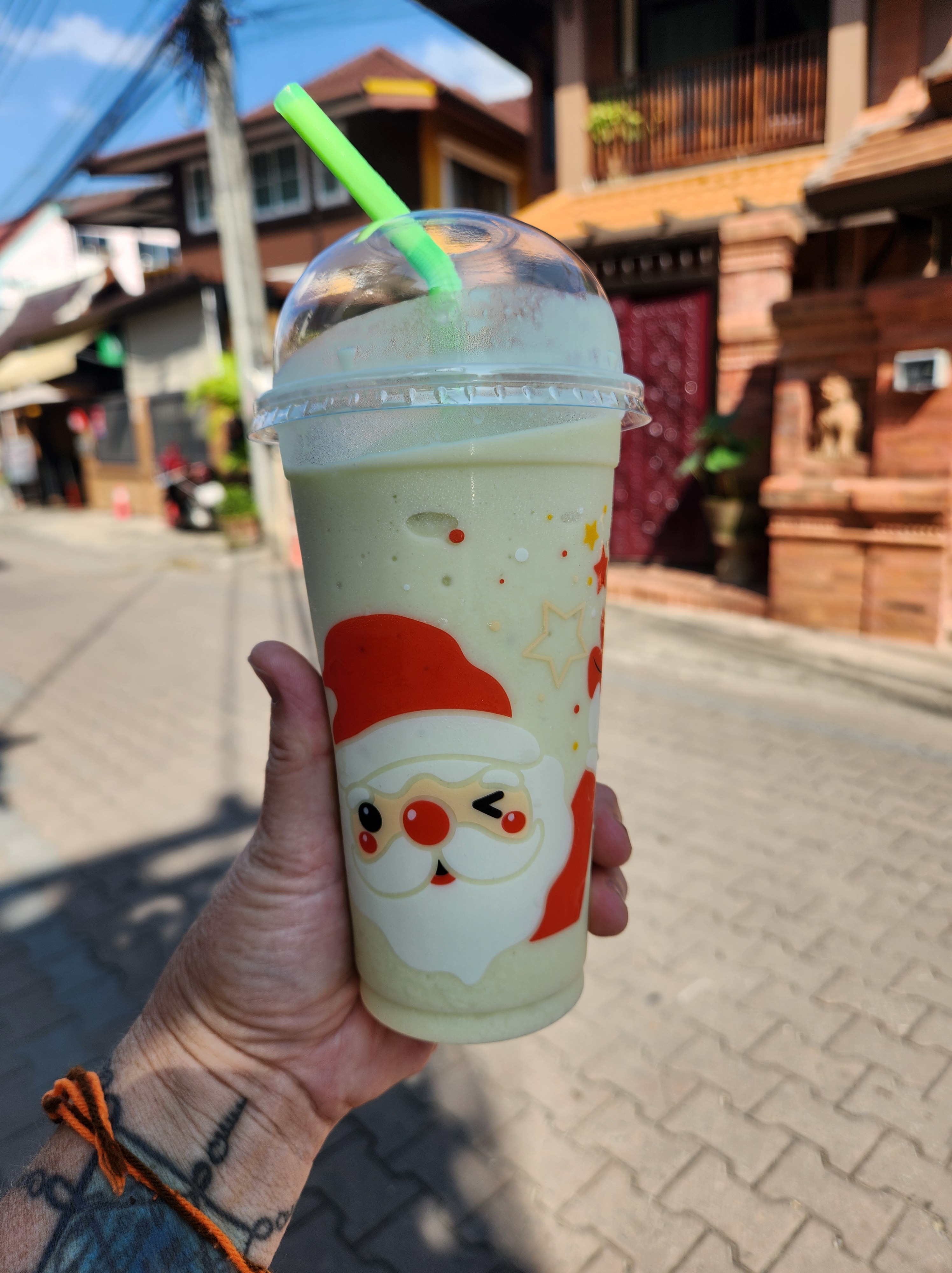
My mornings have fallen into a pattern of walking to Wat Inthakhin to light incense and make merit, then over to Chiang Mai Gate market for an avocado-coconut-banana smoothie, then back to Tiptopthai, stopping to talk to one cheerful vendor that has packages of the Thai dessert I always refer to as “peanut yummy goodness” because I have no idea of the real name. The locals that I greet every day on this route, heartily greet me with each passing day and have started to make basic conversations from time to time. I’ll miss my routine when I’m gone from Chiang Mai for a week and then staying at a different guesthouse for a few days.
Walking in Chiang Mai is an unexpected obstacle course. The curbs, when present, are painted in red and white at the corners and half the time are slanted to allow motorcycles to drive up them for parking. Stepping up or down from the squared off curbs can be range of height from a few inches to a foot. And there are no curb ramps. Well, if they are present, they are usually so that motorcycles can use the sidewalk to jump to the front of the traffic line. If you can find a sidewalk, a smooth walk is not guaranteed. Count on encountering poles in the middle of path, signs, missing paver stones, wobbly manhole covers, missing manhole covers, and pipes sticking up for no apparent reason. I definitely do not recommend walking and texting as it can prove to be a hazard to life and limb. One last tidbit, despite always being taught to walk against traffic, ignore that and always walk with the traffic direction.
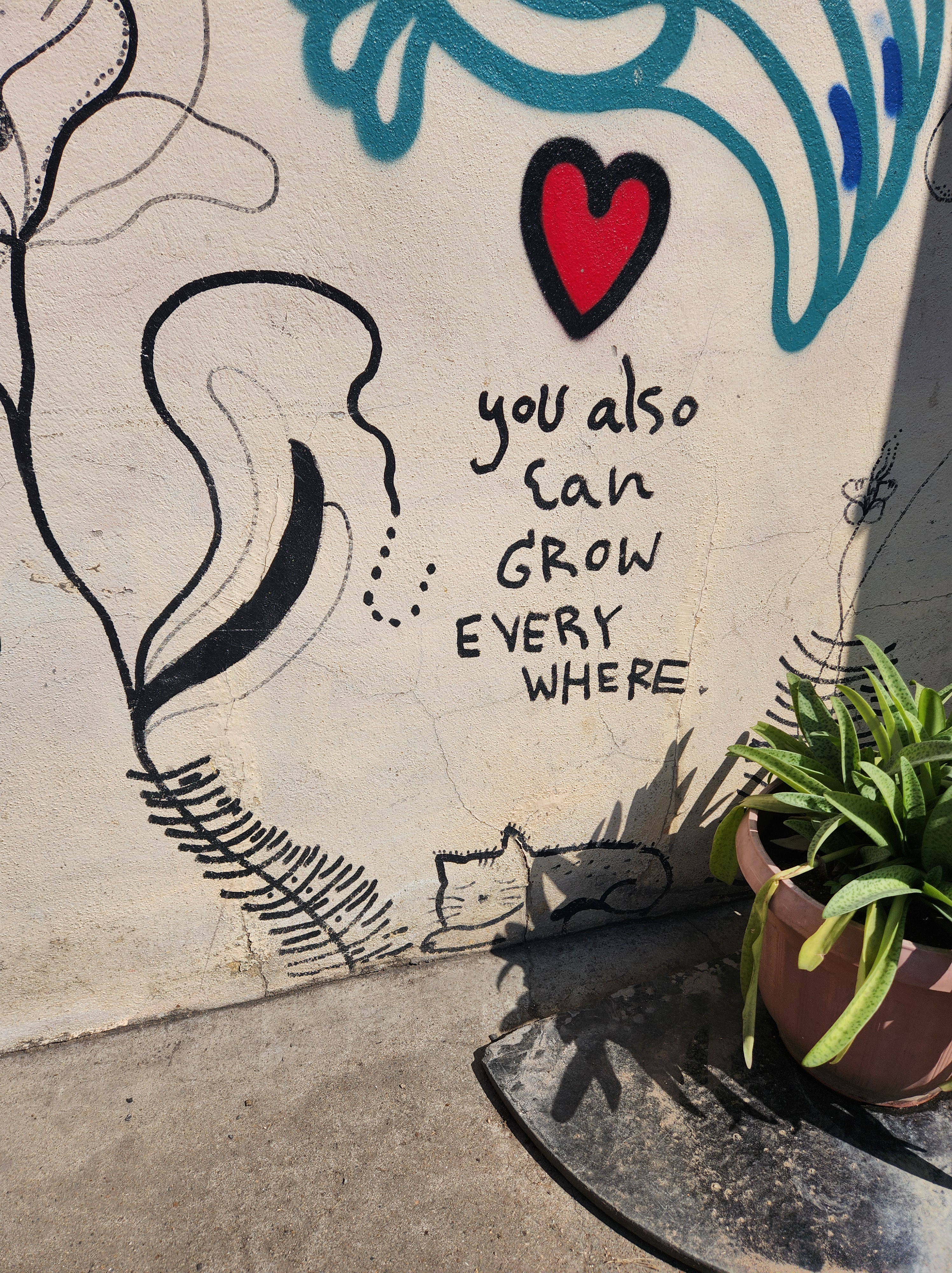
Despite the obstacle course, I still enjoy walking and seeing the random little things that often go unnoticed when on a motorbike or when one is in a hurry to get to a destination. An old mile marker. Flowers against a brick wall. Watching the traffic zip by ancient buildings. A lovely message painted on a building. Along the way, I smile at the Thai and the other farang (foreigners), most the Thai and occasionally a few farang return smiles, which makes me happy. I also am enjoying the healthy benefits of walking everywhere. My legs are continuing to grow stronger with each step.
Friends Old and New
Gathering with friends has been a terrific part of my routine. I’ve spent time with my long-time friends, continued gathering with my new friends, and of course, meeting even more new friends.
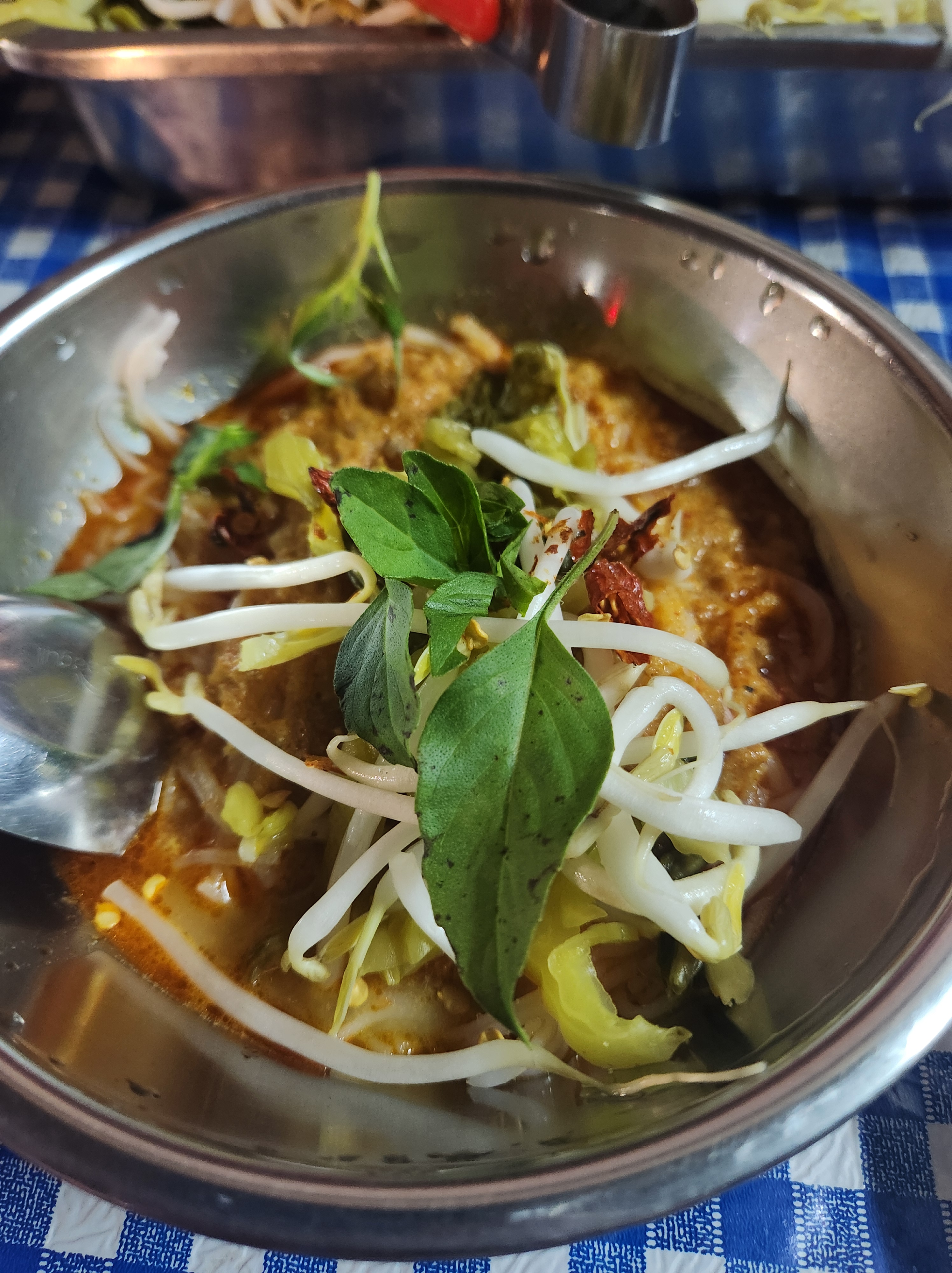
Lek and I had been looking forward to seeing each other since I told her I was planning to be back in Thailand. With the weather threatening rain, Lek picked me up in a car, which is highly unusual. For dinner, she took me to a famous Michlin star rated noodle stand called Sankapoi. The noodles are a style that are more specific to Northern Thailand than your average noodle. The curry options are also more tailored to this area and were delicious.
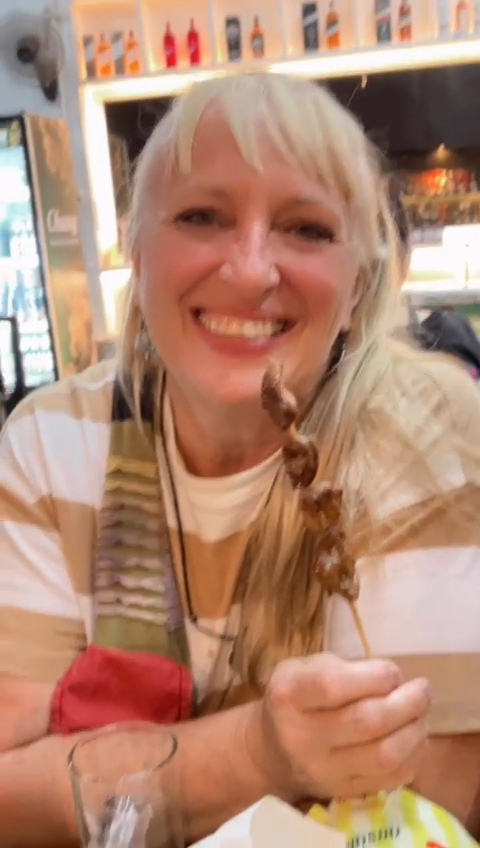
A gathering in Thailand always has room for more friends. Lek’s friends, Nan and Daek were in town also and wanted to see her. Another friend, Jang, also joined us. They met Lek and I at Sankapoi. From there, we went to a bar for beer and to visit. Lek went in search of more food and I was introduced to sai yarng (grilled tripe). I think they were surprised I ate it. “Con Thai ging sai yarng” (“When you are like Thai, you eat sai yarng”) And before you say yuck (even though I know most of you have already thought it), it really wasn’t that bad and tasted no different than any other grilled meat on a stick.
The sai yarng finished and six 750 ml bottles of Singha shared between four of us (Lek wasn’t drinking since she was driving a car), we moved on to the Jazz Café. The Jazz Café is a music venue that doesn’t necessarily feature jazz. In fact, there was no jazz played all evening. More bottles of beer and more food was ordered. We spent the rest of the evening, drinking and laughing. In total, I think we went through nine more bottles of beer. I couldn’t tell you for sure because they never actually let my glass get empty.
Upon hearing that I was heading to Lampang the following week, Nan and Deak invited me to come to Phayao (pronounced: Pie-ow) and visit them. Never to turn down an invitation, I added two days on to my upcoming trip to visit them and see the small town of Phayao.
My friend Chai was also in town for work this week. We originally were going to meet on Friday and Sunday evenings. Friday evening, his customers wanted to stay out later and by the time he was finished at 10 PM, we decided sleep was a better choice from me. On Sunday, we originally were going to meet between 5 and 6 PM. Around 7:30, his customers were done shopping at the mall and he was ready to pick me up. We both had already had a bit to eat, but mostly just snacks. So it was off to eat and drink.
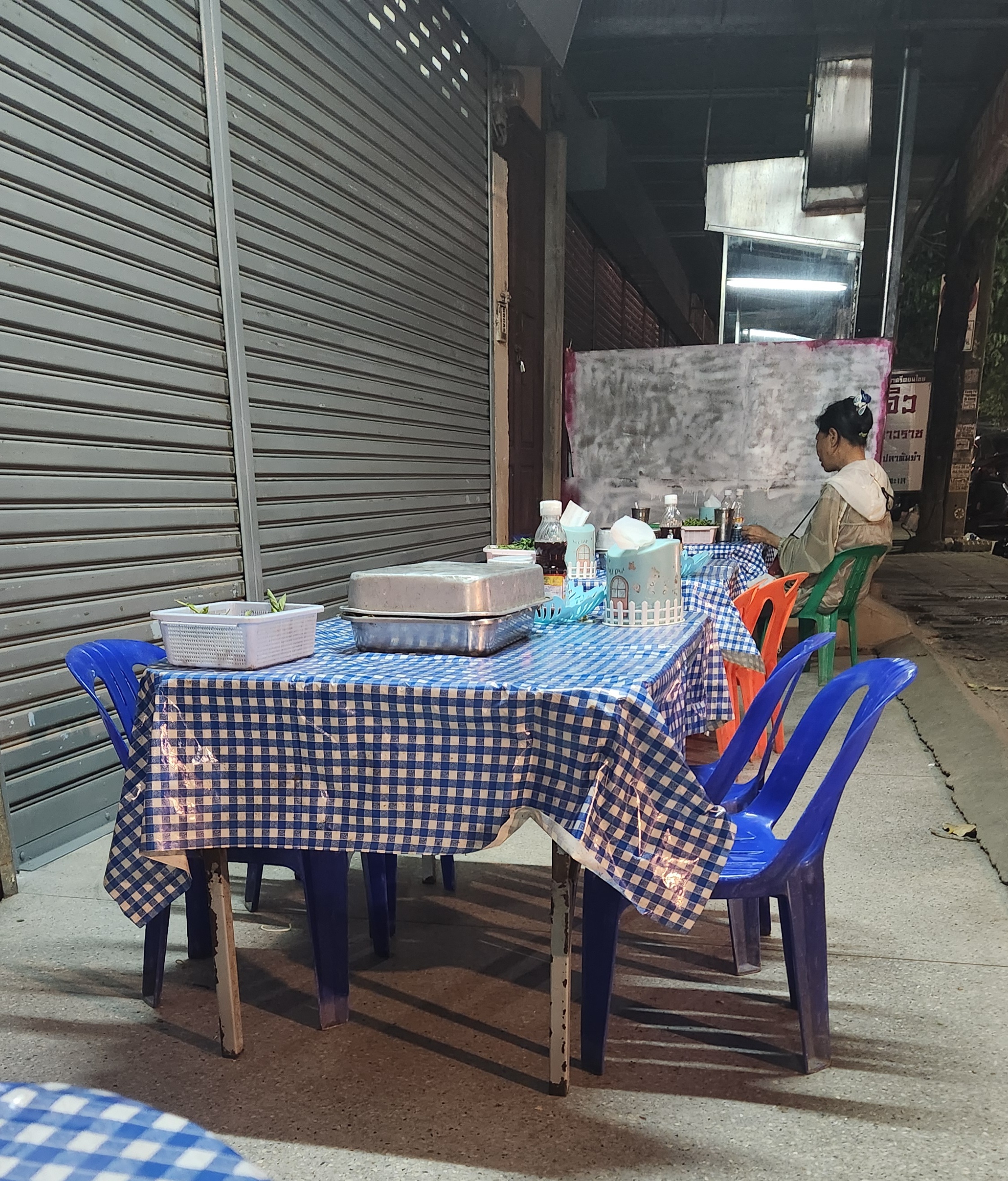
We started at a Japanese restaurant for what we called dinner number 2. Per my usual, I had no idea what some of what I was eating was. Maybe squid. I don’t know. We did also have some more recognizable foods like salmon, chicken, and pork. Since I had never had mala before, Chai decided we should go on to a mala shop for dinner number 3. For mala, you pick out some various meats on a a stick, they grill it, and then serve it in a soup that we shared. Since I am a farang, I’m pretty sure they made it less spicy than normal. While at the mala place, I was telling Chai about my night with Lek. In Chai’s opinion, the vendor on the corner that has been there for many years, makes the dish even better than Sankapoi. And with that, we were on to dinner number 4. Served by a stern woman that never smiled or showed any emotion and sitting at tables and chairs more suited to children size people. Did I mention Thai like to eat?
The beautiful part about knowing that I will have more time in Chiang Mai is that I know this won’t be my only chance to see Lek and Chai.
My days also involved hanging out with my new friends, Miriam and Gabriella. Sometimes we met as a group. Sometimes it was just getting together one-on-one. I’m going to miss these lovely ladies as we all move on in our travels and on our life paths. Hopefully our paths will cross again in the future. Maybe in Thailand. Maybe somewhere down the road.
One of the days Miriam and I went for tok sen massages at Wat Pan Whean. Miriam had never had a tok sen massage and was hesitant to go by herself. My advice to her was to trust the [massage] process. Meaning the therapist may not always work on what you think they should be working on and to just trust that what they are working on is what needs to be worked on to take care of the problem. Several days later, Miriam asked if I wanted to go again. Of course I went. During my massage I was struggling with how my therapist was working. While my brain was ruminating on what the therapist was doing, my advice to Miriam came back to haunt me. Trust the process.
On Sunday, Gabriella invited me to join her for an Ecstatic Dance session. During an Ecstatic Dance session, music is played and the participants can move however feels good to them, without judgement from themselves or others. No talking. Just listening to the music and seeing what comes up for you. You can also just sit and meditate or feel the music however you want. This quote on the webiste from Gabrielle Roth helps sum it up:
“Energy moves in waves. Waves move in patterns. Patterns move in rhythms. A human being is just that – energy, waves, patterns, rhythms. Nothing more. Nothing less. A dance.” ~ Gabrielle Roth
I wasn’t sure what I was getting into. Two hours later, I was really glad that I went.
Often we would have coffee before or after the massage or dance. Occasionally, we would meet for dinner. The last night we were all in town, we met for a last dinner at a wonderful restaurant called Garden to Table by Hotpot Panda. All of the food is fresh and is not made with any sugar or msg. They are known for their kaho soi (a curry type dish with noodles local to Chiang Mai), and by the end of dinner, it was apparent why. After dinner, we moved on to a bar for a beer. When it was time, Gabriella hugged us goodbye and jumped on the Grab motorbike she had ordered. Miriam and I finished our beers and then hugged our goodbyes as well.
Embracing the Inner Nomad
November is traditionally the start of cool season. I am still waiting for the temperatures to cool off. Evenings bring a slight respite from the heat. During the day the temperatures are still in the 28 to 32 C (82 to 90 F) range with high humidity. The heat of the afternoon often finds me at my guest house with the intention of writing. Intentions are fine and dandy. In reality I have usually been more focused on travel planning.
One of the lessons I have learned is that now is the time to embrace my inner nomad. This time is not a time to settle down in one place for an extended period of time. My travels to Southeast Asia have been predominantly focused only on Thailand. Now is the time to visit more countries.
My first jaunt will be a trip to Laos and Vietnam in December. Vietnam requires that you get a visa letter ahead of time so that you can get a visa on entry. Chatting with Miriam about this gave me a little angst and I set to getting my application in as soon as possible. While I was waiting for the application to be processed, I also realized that if it didn’t come through, I would just go somewhere else. My application was approved and my travel planning can commence in full. Just have to trust the process.
My Grand Adventure, the start of life as an international nomad, started in the same way as many of my other adventures to the other side of the world have. Bleary eyed from not sleeping in an effort to adjust my body clock to a time zone that is plus 14 hours away and in an airport waiting for the first of my three flights for the next 24 plus hours of traveling.
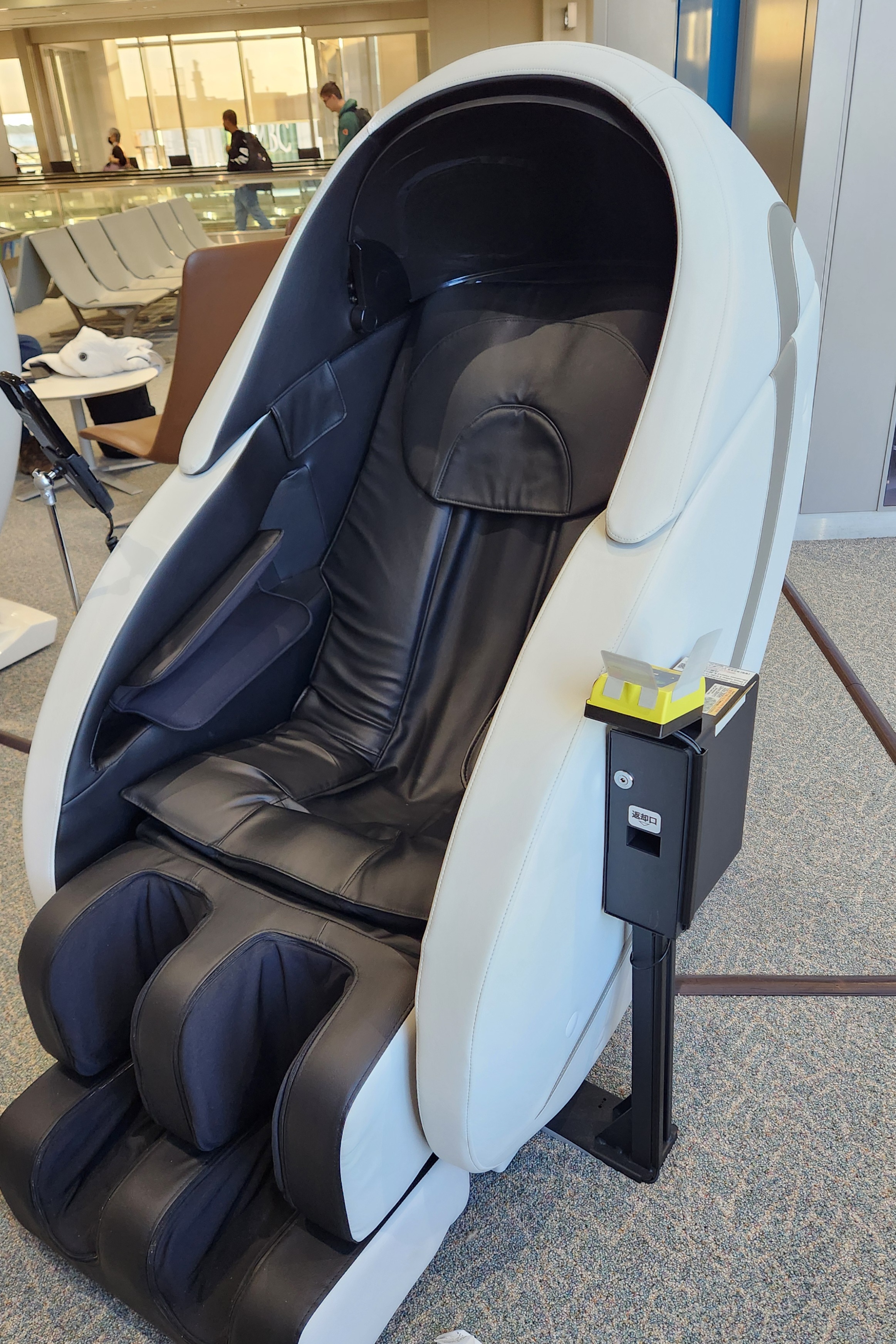
Like my last trip in 2023, passing through the San Francisco airport involved another sprint between gates to catch my Tokyo bound flight. Our incoming flight was on time. Unfortunately, we sat for over 30 minutes on the taxiway waiting for the plane that was occupying our gate to pull back. That delay ate up most of the slightly over one hour that I had for my change, necessitating a request by the flight crew to allow us to deplane first and an extremely fast walk (resisted running) halfway across the airport going from the E concourse to the G concourse.
And also like my last trip to Thailand, United failed to make sure that I had a gluten sensitive meal for the 6 hour flight between Tokyo and Bangkok, as it was operated by Thai Airways as a code share flight. The flight crew was lovely about trying to find me something that was ok for me to eat. Lesson learned, do not trust the United employee you chatted with a week before departure that assured me that meals had been requested for ALL segments. I did receive a $50 credit from United for a future flight. Unfortunately, the quality of United’s service has plummeted so much over the past few years that I don’t know how much more loyalty I have to them. The other lesson learned from the last trip was to pack protein bars or something to eat. I didn’t fully starve.
One night in Bangkok was spent at Sinsarvurn Hotel, not far from the airport in the town of Lad Krabang. In the morning, I made my way to the local market. The warm bowl of congee or jok (depending if you want to use the Chinese word or Thai word), a rice porridge with chicken and ginger and other toppings, was the perfect welcome to Thailand.
Getting Settled
My original plan for Chiang Mai was to stay outside of the Old Town. I wanted to see how I liked being outside of the of Old Town and attempting to submerge myself into life in Thailand. The other part of my original plan was to live in Chiang Mai for approximately four months. I was planning on getting an apartment and a motorbike. Sure, I was going to do some short trips, but I was going to use Chiang Mai and an apartment as a home base. Funny how the Universe sometimes has other plans in store.
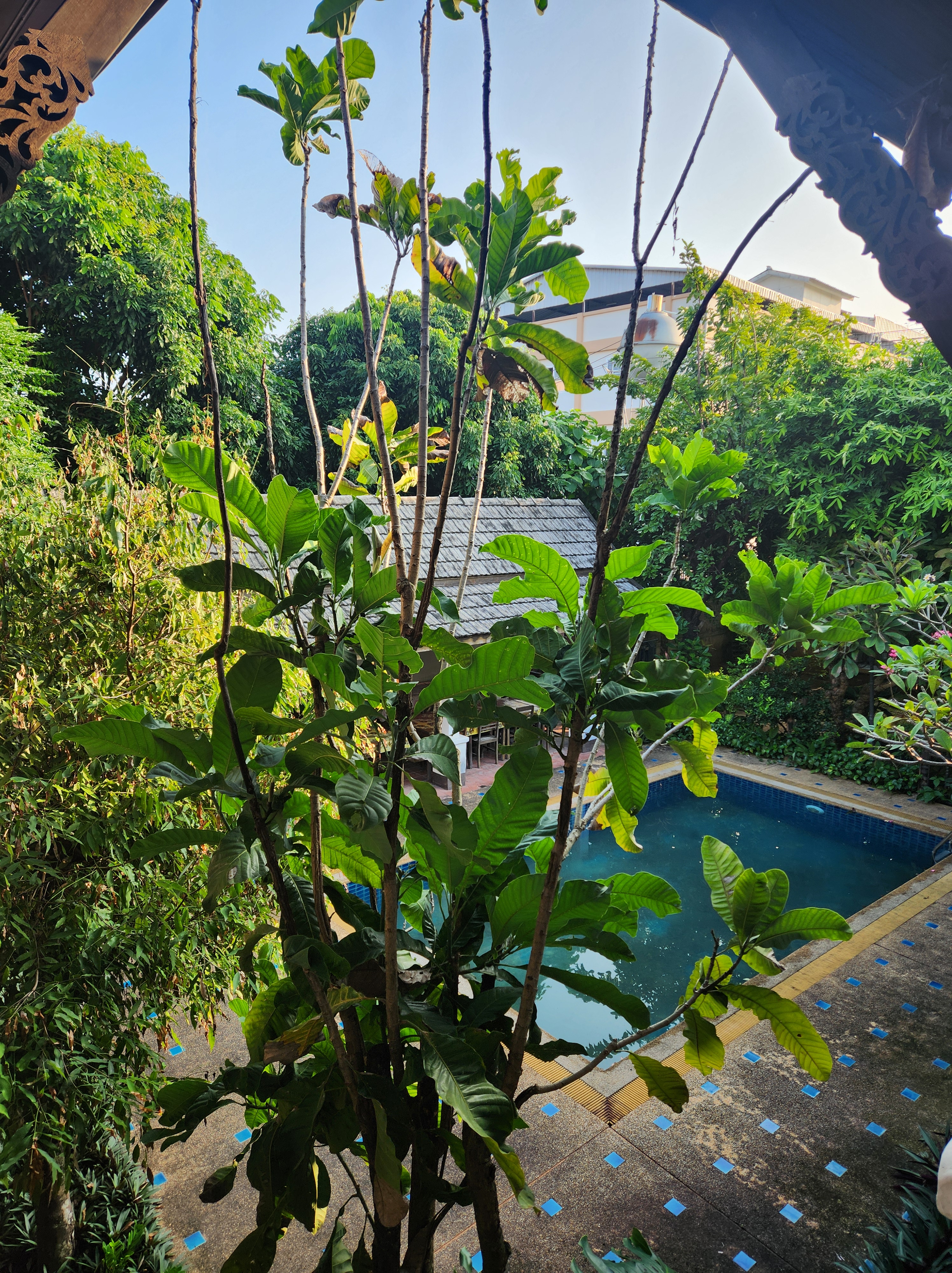
My first hotel was the Royal Shilton Resort. The Royal Shilton Resort is quaint and pleasant. A couple of buildings and two pools, tucked back down a soi (alley) away from the noise and traffic of Huay Keaw road. The lush trees and plants that line the moss covered pavers leading to the room are lovely, despite making for a moderately tricky walk on the slippery stones. The pool in the courtyard closest to my room is uninviting, with muck and leaves at the bottom. The four poster bed with mosquito netting, tied back as the bed curtains, is adorned in a sheet set that looks more like a mattress pad covering an ultra-firm mattress, even by Asian standards, with two equally firm pillows. Locating a comforter in the cupboard and folded in fourths made the bed some version of soft enough to get some sleep.
Every night I’m inundated by a chorus of frogs in the courtyard. Their constant and insistent crick-crick-crick sound resonating off of the stucco walls. All I can picture are the Hmong women that troll the markets and bars where the farang (foreigners) frequent with their wooden frogs with ridged backs that you “play” with a wooden stick. The sound of the live frogs is almost as maddening as the sound of the women playing the frogs in the markets. Every morning, the local rooster crowing at 6 AM acts as an unwelcomed alarm clock after a not terribly comfortable night of sleep.
Finding an apartment has proven to be much more of a challenge than I anticipated. I’ve searched on Facebook Marketplace and on some of the other apartment rental sites. Turns out that most of the monthly rentals are booked up through mid-December and even into January. Lamenting this to my friend Nishan who has been in Chaing Mai for a couple of months at this point, her accommodation sorted well before her trip, she mentioned that she is actually outside of Chiang Mai for training and would love to have me sublet her room for her until she returns on the 26th. The lack of availability was also my first sign that perhaps plans should change.
Tiptopthai House is lovely. Located in the northwest corner of the Old Town on a quiet soi, the place is a family compound ran by Tan, under the ever watchful and stern eye of Pi Noi, Tan’s aunt. Tan and his family live in a couple of the rooms in the two houses. The remaining space has been partitioned off into separate guest rooms, each with their own private bathroom. The kitchen area is available for cooking, but not after about 6 PM, and there are a few places with benches and chairs to sit and relax. The sign over the door by the kitchen area says “Tiptopthai house is more than just a guesthouse, it is your home.” And it feels that way.
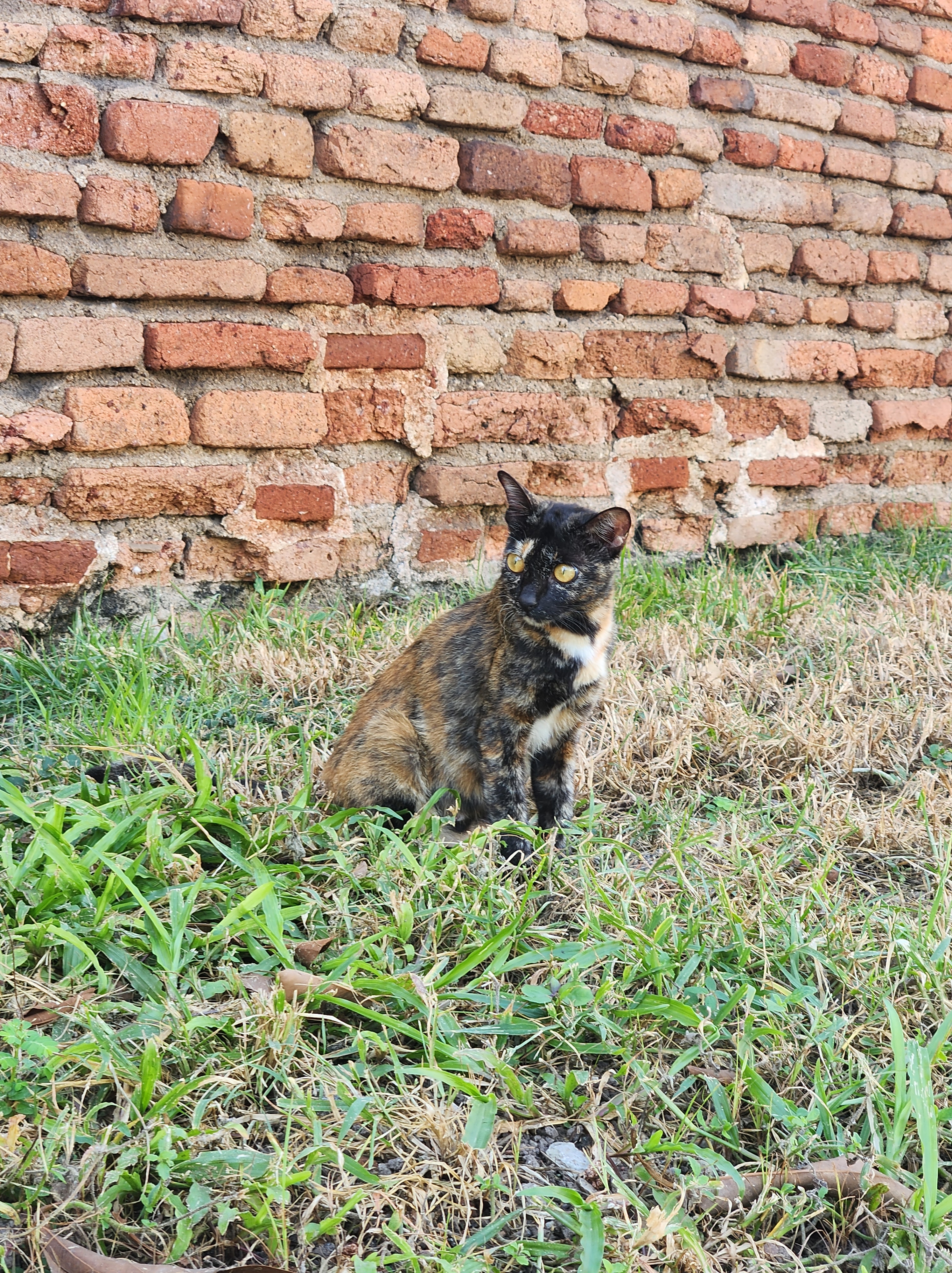
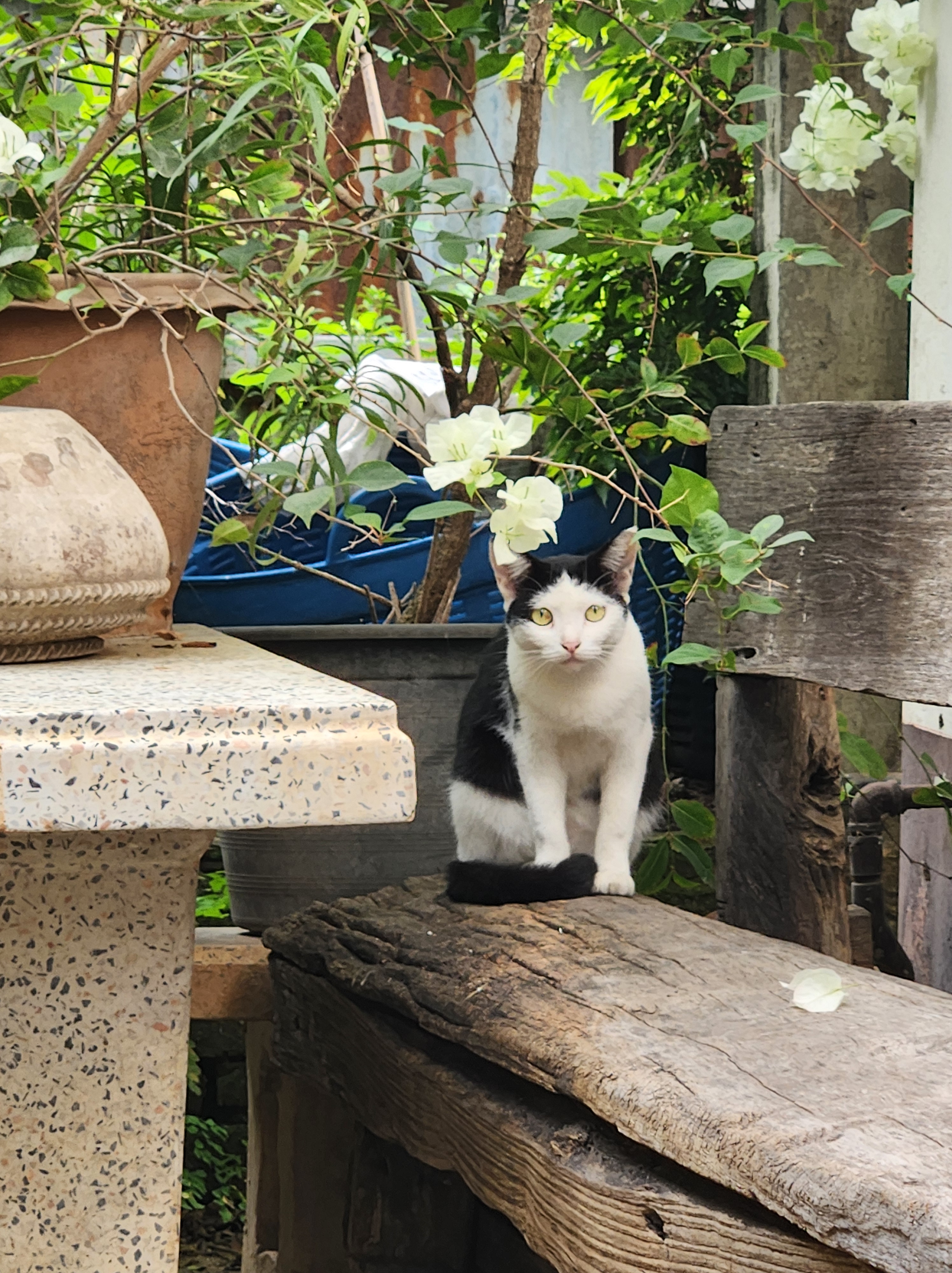
Nishan’s room (now my room for the time being) is the last of the rooms on the far side of the house, tucked neatly down a path with a small table and bench outside. The room is spacious and comfortable, including the bed. The frogs and rooster have been traded for a cat that is skitterish and occasionally vocal, but only during normal waking hours, and the occasional Tokei (like a gecko but bigger) making its signature “toe-kay” sound.
I am happy being back in the Old Town and near the temples and the night markets that I have familiarity with. Funny how things work out.
Getting Around
Then there is getting around. Finding a long-term motorbike rental was proving just as difficult as long-term accommodations.
Most of my transportation has been by foot or by Grab (an Uber equivalent). And so far, I am not missing having a motorbike. Mentally, not having a motorbike has been so much more pleasant. I am seeing more of the little details of Chiang Mai while on foot or on the back of a Grab bike. It has given me the chance to slow down and look around. I don’t have to worry about traffic or the traffic police. Physically, the benefits of walking are already starting to show. My legs are getting stronger and I am feeling better overall.
I may still get a motorbike for a couple of days here and there, assuming I can find one. Otherwise, I plan to use Grab for the trips that are farther away or my feet are just tired. With Grab, you can get either a motorbike or a car, depending on distance and what you need. My first few rides on the back of a Grab bike came with the challenge of trying to gracefully dismount the bike when the driver drops me off. More often than not, it was less than graceful. The more I have been walking, the easier getting off the bike has become. Cost wise, using a Grab is working out to be much more economical than a motorbike. Especially since I don’t have many places that I need to go where walking would take too long or that I am unable to walk to. Having no real schedule takes away the excuse that I need to get anywhere RIGHT NOW (besides, if there was, the Grab bikes are pretty readily available.)
Old Friends and Elephants
Even with the intent of taking it easy in Thailand, I did dive right in. By coincidence, a lovely friend of mine from Colorado was in Chiang Mai when I got to town. We had made plans to meet at the Saturday Night Walking Street and then go to Happy Elephant Home on Sunday. Dropping my suitcase at the Royal Shilton Resort, I walked the 4.2 km (2.6 miles) into town to meet my friend and her husband and friends.
Wanting to go by my favorite temple, Wat Inthakhin Sadue Muang, I headed there first. I fundamentally knew my shorts were going to be a potential hinderance for getting into the temple. I headed there anyway. Proper temple etiquette is to have your shoulders and knees covered. And yes, true to the feeling of so many more farang (foreigners) in Chiang Mai that don’t know the proper etiquette, the temple now has a sign very clearly stating that you are not allowed to enter if you are wearing shorts.
The temple visit being a bit of a bust, I moved on to meeting my friends. We went to the Chiang Mai Gate Market, my favorite night food market. The woman that has had a stand there easily since I was here in 2015 if not before, is still there. I opted for pad krapow gai sai kai dow (stir fry basil with chicken and a fried egg on top.) We gathered around a small table on the plastic chairs, ate, had a beer, and enjoyed catching up.
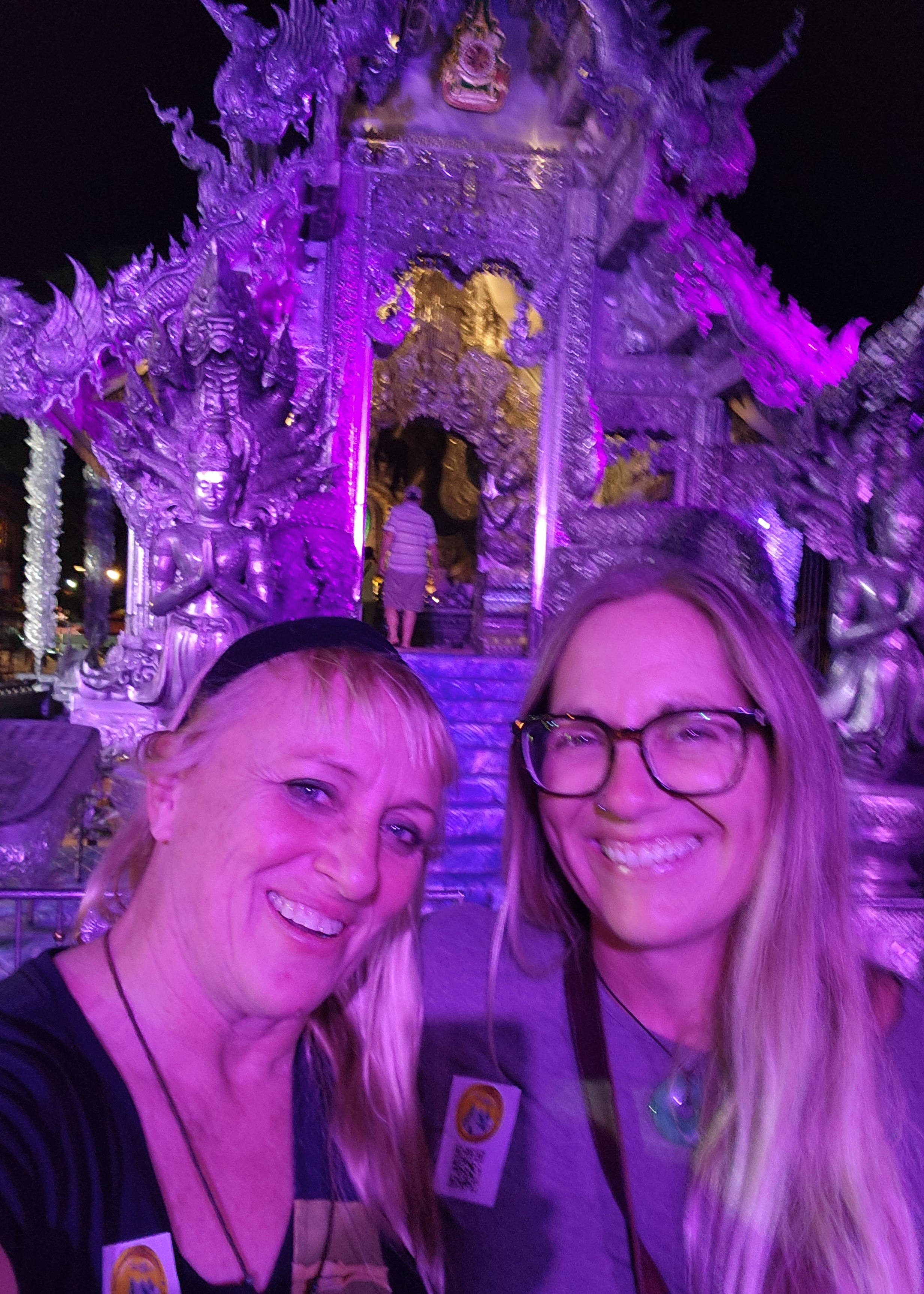
After dinner, we walked the Saturday Night Walking Street for a bit. Having spent more time at dinner, the street wasn’t terribly crowded. A detour to the lovely Silver Temple, which now charges farang (foreigners) 50 Baht to enter, was worth it. We didn’t stay long. As none of us were in the mood for shopping, we abandoned the idea of Walking Street and walked back into town, leaving the temple down a different (soi) away from the crowd of the shopping street. Plus, we had a visit to the elephants the next morning and need rest. Wishing them good sleep and another round of hugs, I grabbed a Grab ride back out to my hotel. My feet were tired from the almost 6 km (almost 4 miles) I had walked that day.
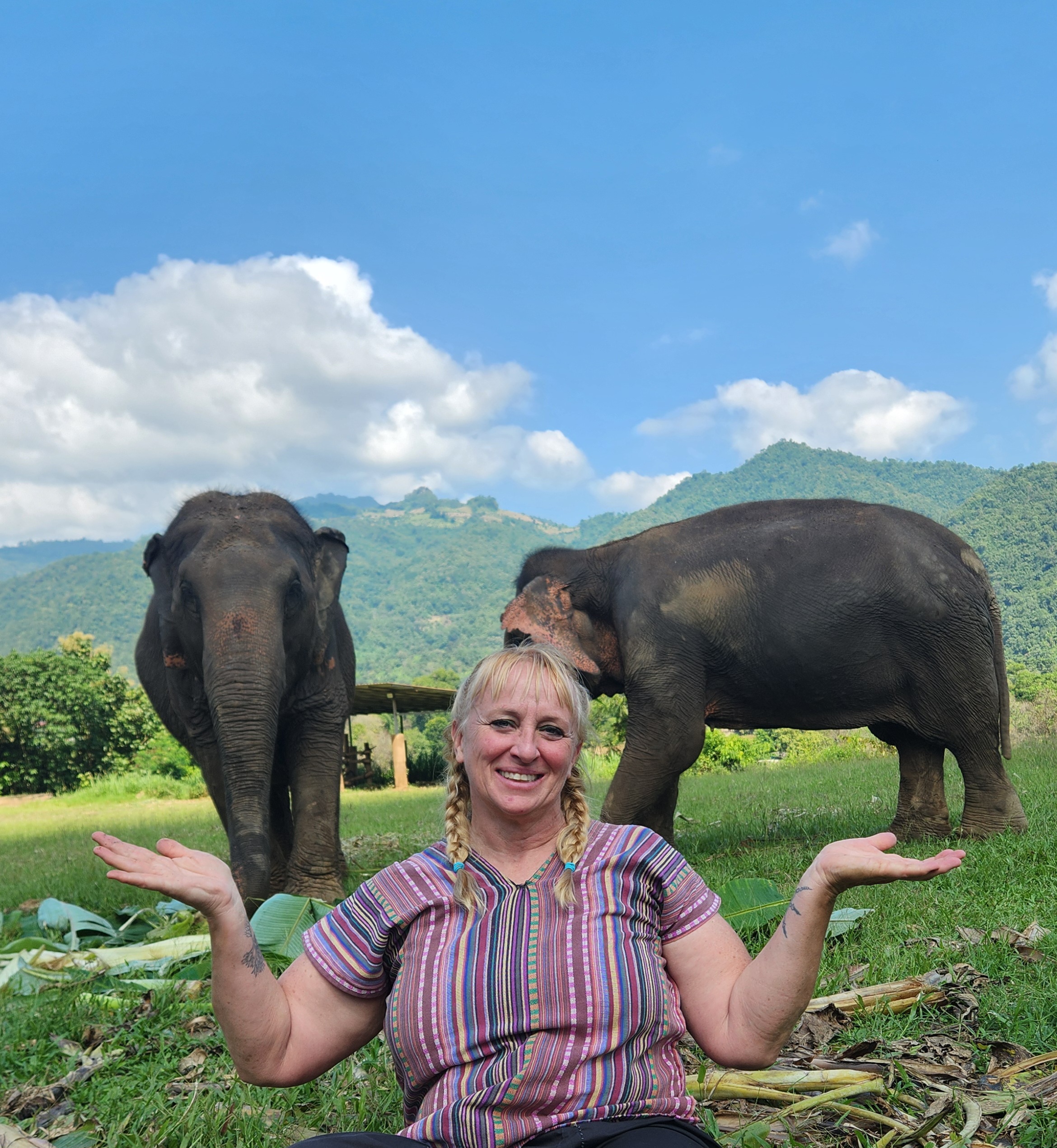
No matter how many visits or how much time I spend with the elephants, it still makes me so happy. My friend Apple, the manager of Happy Elephant Home, was happy to see me, as much as I was happy to see her. Our greeting starting with a boisterous “sawadee kaa” (hello) and the usual conversation in a mix of English and Thai. She is happy and that makes me happy.
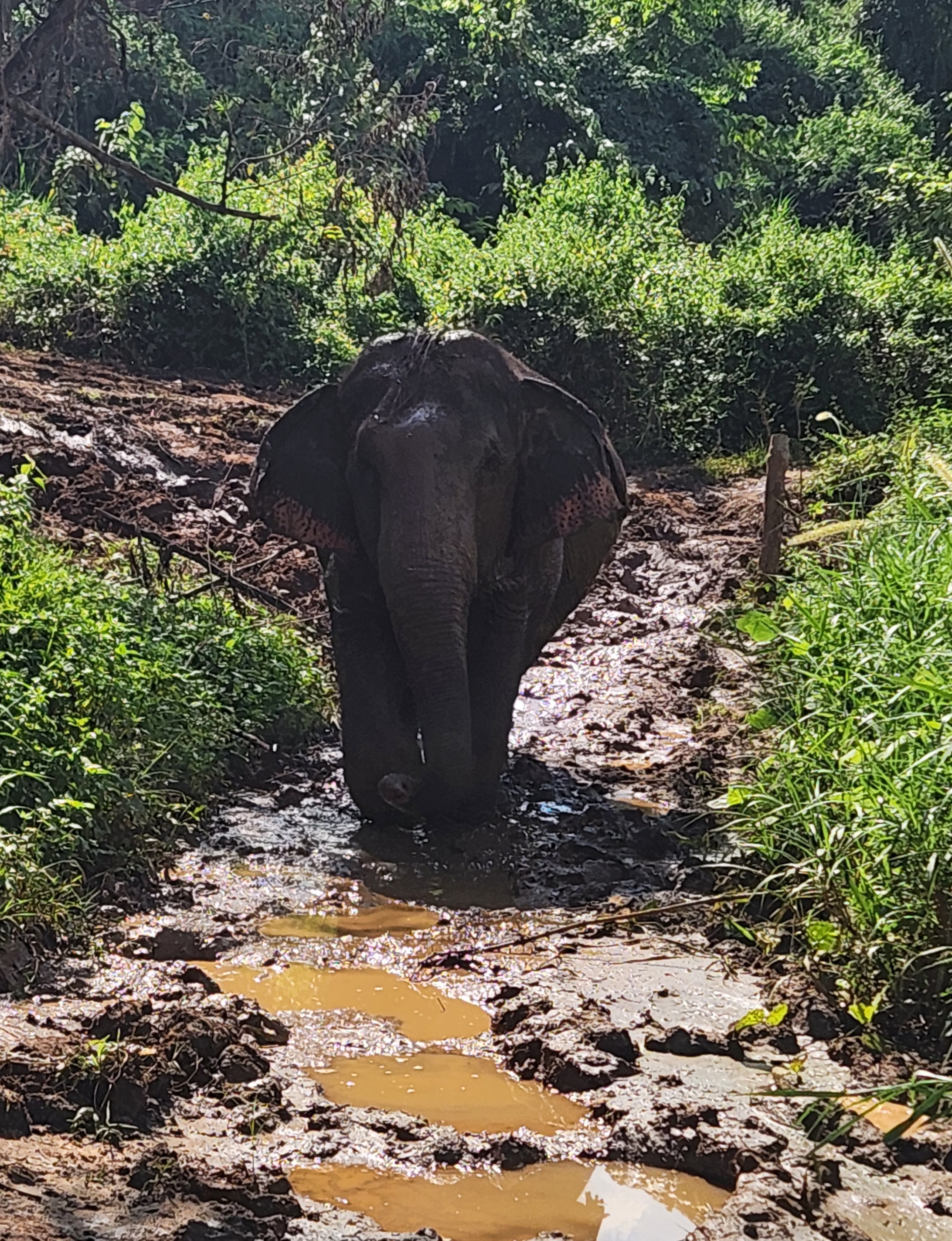
Happy Elephant Home has 5 elephants now. One elephant is owned by them outright. The other 4 have been rescued from a life of trekking or other work. Happy Elephant Home pays the owners the equivalent of what income the elephant would have provided. In return, the elephant gets plenty of food and medical care if they need it. Bua Ban, the elephant owned by Happy Elephant Home, is a solitary female and keeps generally to herself. Especially when food is around. The other 4 elephants hang out in pairs.
After changing into traditional clothes, we headed out into the field to meet the elephants. We started by cutting up pumpkin (fucktong) into chunks to fill our food bags. After enough farang (foreigners) had a chance, the mahouts (the people that care for the elephants) took over to expedite the process. If you have food, you are an elephant’s friend. “No food, no friend.” is the mantra when it comes to feeding elephants. We filled our food bags to the brim and headed into the field.
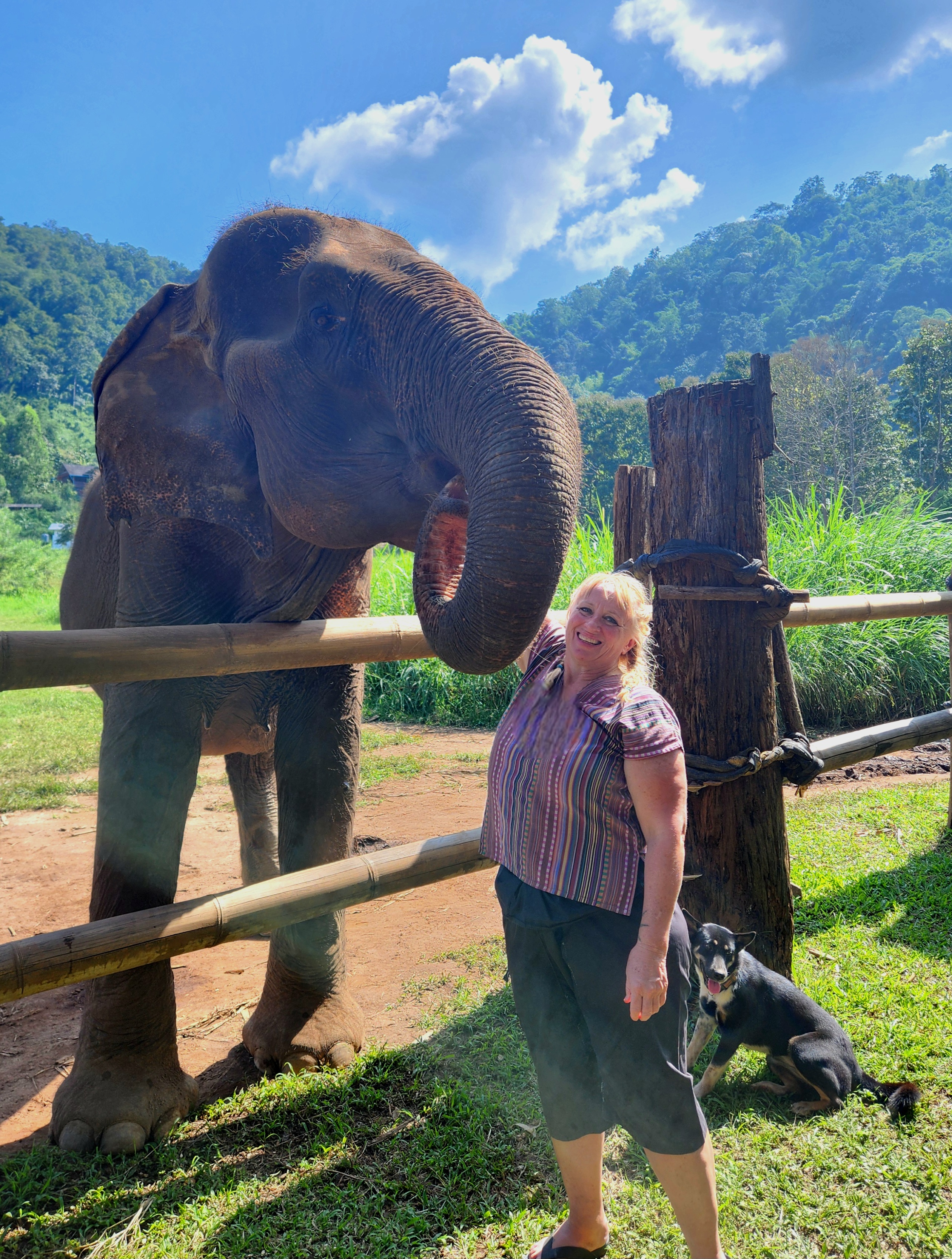
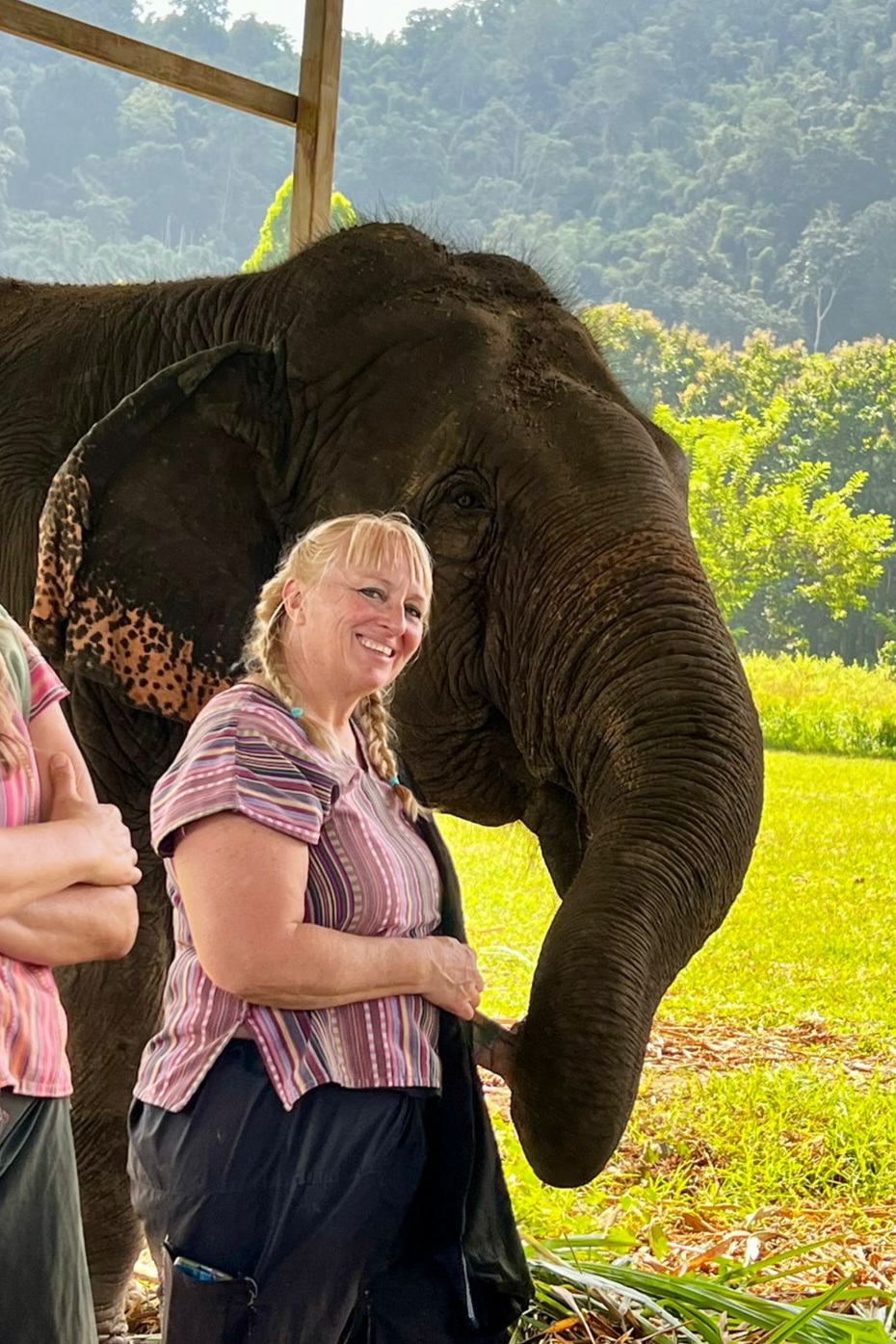
Apple divided the visitors into small groups of 3 to 4 people. That way, each group was able to spend ample time with each elephant. This time is the best opportunity to take photos with the elephants. Happy Elephant Home has a photographer that takes everyone’s picture with Bua Ban that they then print out by the end of the day and you can by framed in an elephant poo paper frame. Apple and I also posed with Bua Ban as a friendship picture.
Once we fed the elephants, it was time to feed ourselves. Apple demonstrated how to make som tom (papaya salad) and noodle soup. Then it was up to each of us to cook what we wanted. Everyone took a chance at making both the salad and the soup.
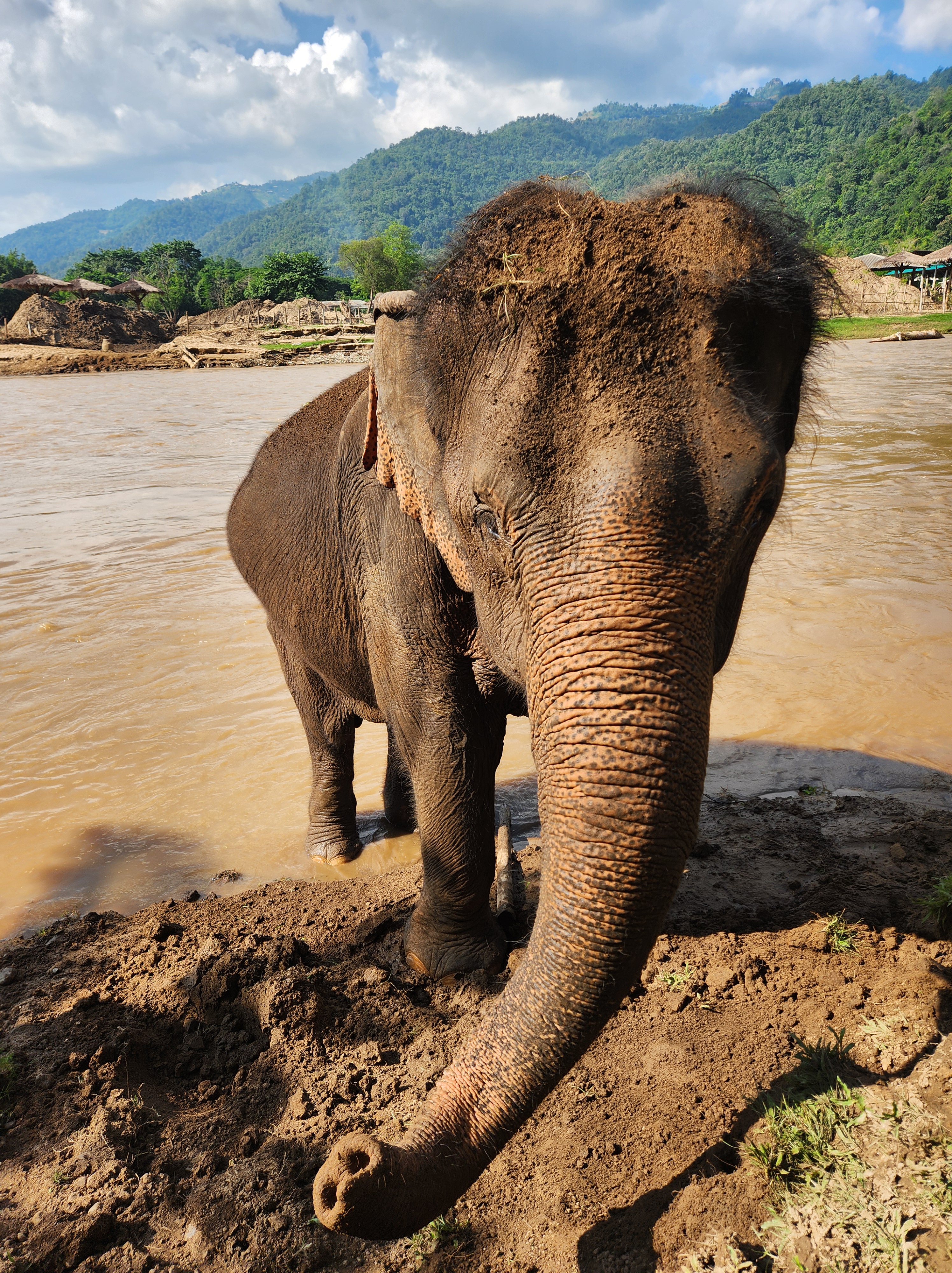
The afternoon started with a walk down to the river for bath time. Happy Elephant Home is located higher on the hill and so was spared significant damage from the recent flooding. The biggest problem for Happy Elephant Home is that much of their food crop was destroyed or is covered by mud. Elephant Nature Park, where I used to go, is located right on the river and felt the full brunt of the floods. The water at Elephant Nature Park reached almost 10 meters (32 feet) at the crest of the flood. Seeing the devastation to the park with huge piles of sand and debris covering the area where the elephants usually are was a bit heartbreaking. I know they will recover.
Bath time is always fun. I love being in the water with the elephants. Using a bucket of water to splash them and then rubbing their skin. Elephants sweat through their toenails (a new fact that I just learned) which is why it is so important for them to have bath time. With all the rain, the current in the river was strong, especially if you got a little farther out. The river also has occasional drop offs. Yes, I found both the drop off and the current at the same time.
Typically, after bath time is mud pit time. Elephants use mud and dirt as insect repellent and sunscreen. Today, the ladies didn’t feel like having a mud spa treatment. Maybe because they are tired of mud and rain with all that they have had this year so far and Sunday being the first day it hadn’t rained in a long time. The elephants at Happy Elephant Home get to choose what they want to do and are never forced to do something they don’t want to do as an activity for the tourists.
In the “ethical elephant tourism” world, there is great discussion regarding how much contact the elephants should have with humans. The more zealous say they shouldn’t have any interaction and we should just observe them. The other side of the pendulum says that feeding and bathing is ok. Because elephants heal and communicate by touch, my personal opinion is that some interaction is not bad. So long as it is not harmful touch and if the elephant isn’t feeling up to it, respect that and let them go on their own.
Chiang Mai by Foot
My first full day on my own was spent walking. I walked. And walked. And then walked some more. Walking into the Old Town from The Royal Shilton, I took a longer route through little sois (alleys) and streets I had never been on before. In front of one house was a Minion dressed as Captain America. Along another wall was a Bansky-esque painting. My route was planned to see the location of an accommodation that I was considering that had something available starting in mid-December. The place looked lovely from the outside. I never followed up about staying there.
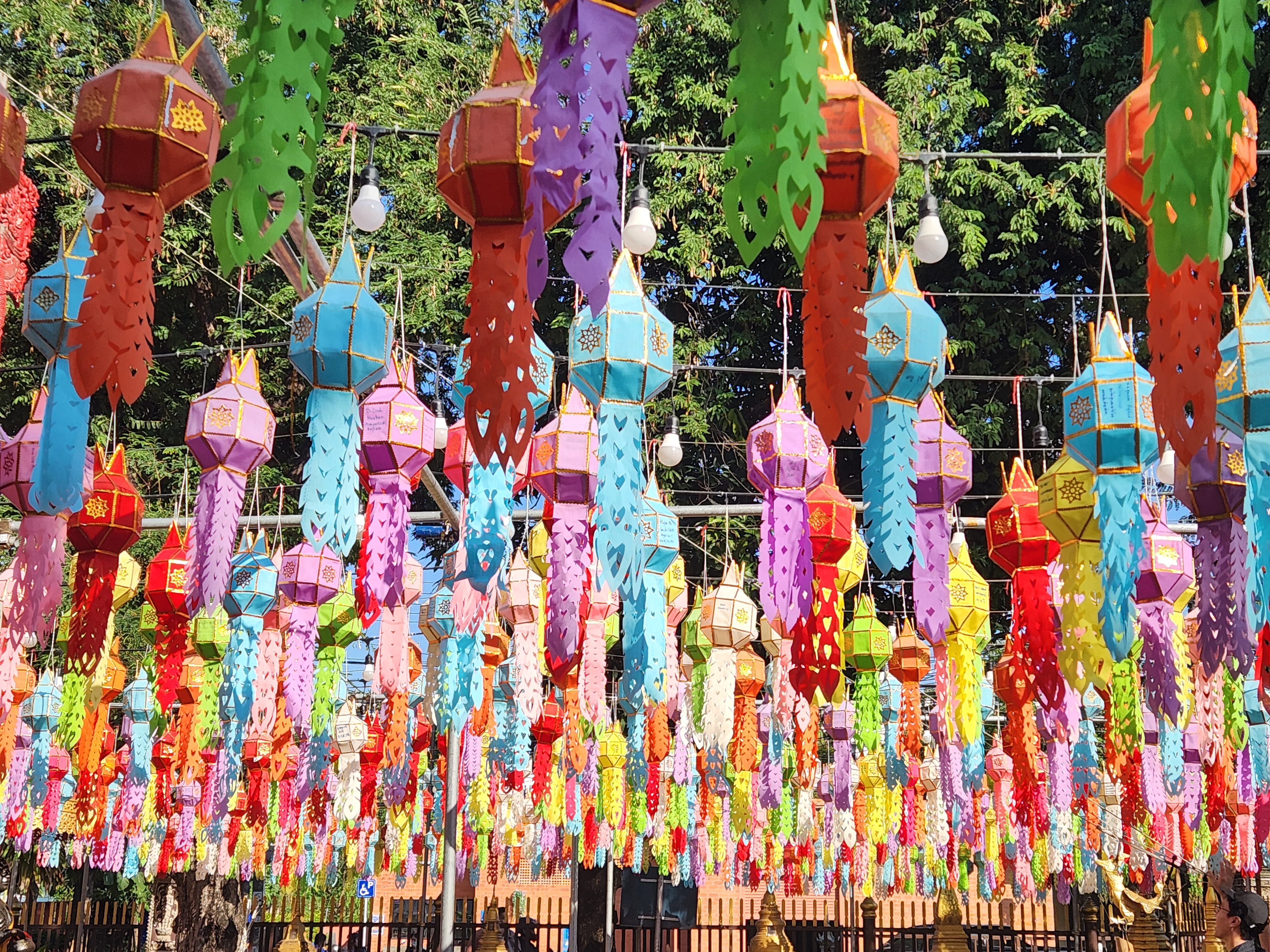
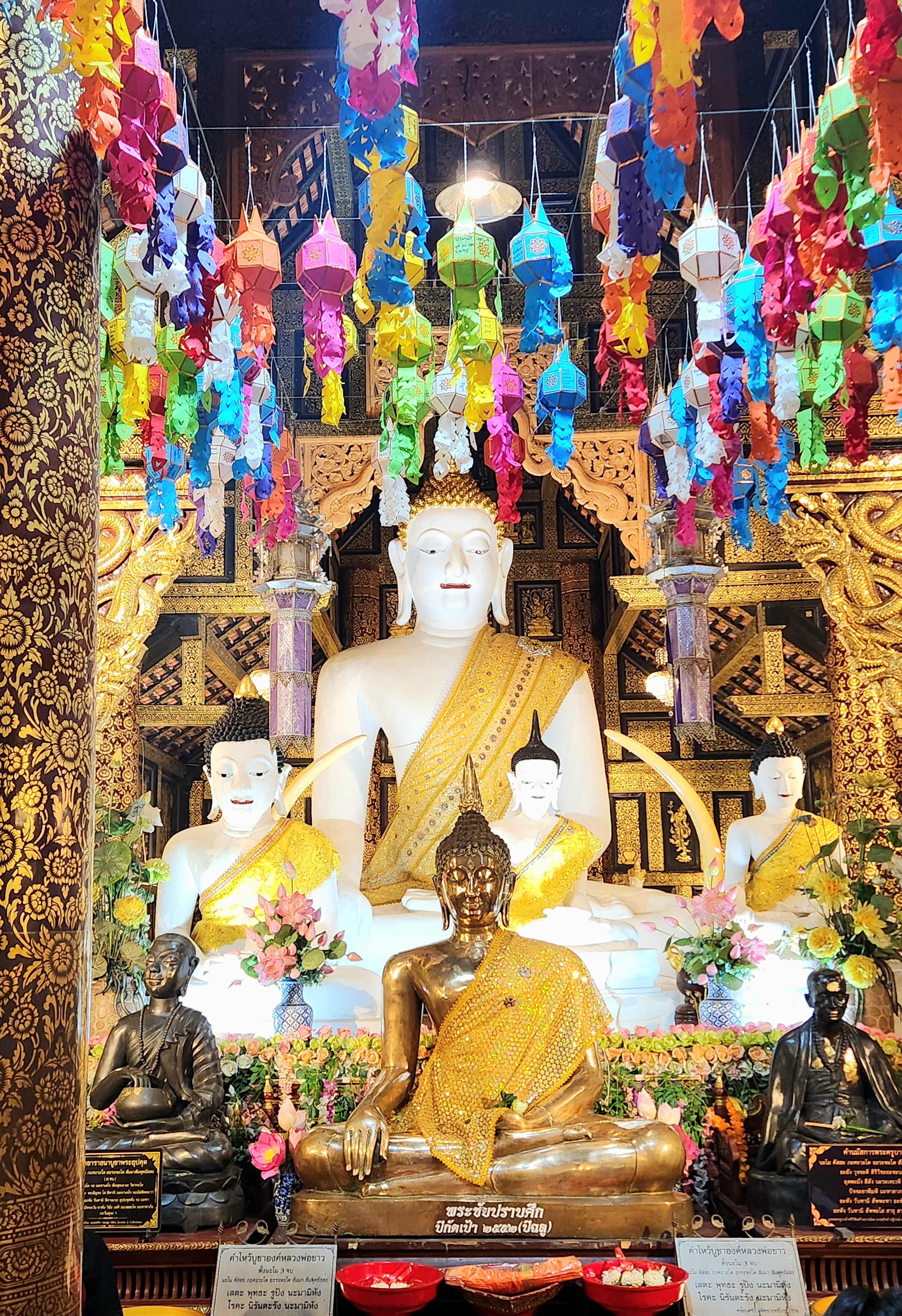
On the way to the Old Town, I stopped on the north side of the Old Town at Wat Lok Mali. As part of the Lantern Festival, you can buy a lantern to hang at the temple as an offering. On the lantern, you write your given name, surname, date of birth, and your wish. Selecting a fuchsia pink lantern for myself and an orange lantern for a friend, I paid 80 baht each, wrote names and wishes on them, and with the help of a bamboo rod, hung them among the other lanterns. Hopefully those wishes will come true.
After stopping at Tiptopthai House to confirm that I would take the room. I turned my feet toward Wat Pan Whean on the south side of Old Town for a tok sen massage. The massage was everything I needed after 3 days of traveling and all the walking the day before (and so far that day). Receiving the massage was also nice because it was my first massage after retiring. I was able to just be on the mat and receive the work without getting into the mindset of a student trying to learn additional techniques for my clients. It was perfect.
On my way to Wat Pan Whean, I stopped into a store that was selling skirts. Now that I was in possession of a garment to cover my knees, I walked back across the Old Town to Wat Inthakhin Sadue Muang so I could properly visit. Entering the Vishara (main temple building), I followed proper Thai custom, kneeling and bowing 3 times, each time touching my forehead to the ground. After saying my prayers and wishes, I made merit to the Tuesday Buddha to help my life. Each day of the week has a Buddha (Wednesday has two for some reason). Part of the practice is to make merit to the Buddha for the day you were born to help your life.
Since it was getting close to dinner time, I walked all the way back across Old Town to the Chiang Mai Gate Market on the south side. Arriving on the early side, I sat at the tables and watched the vendors get their carts set up for the evening. Once ready, at the same stand as two nights prior, I was first customer. As first customer, I was rewarded with a heaping dish of pad pauk ruak mu grab (stir fried vegetables and crispy pork).
My belly full and the sun long gone from the sky, I turned my feet toward the hotel. Despite being a little bit out of the way, I stopped by Wat Lok Moli once again to see the lanterns at night. Seeing all the colorful lanterns illuminated with bright lights against the dark sky was beautiful and worth the extra steps. The beautiful half moon over the peak of the temple was stunning. The moon kept me company on my walk back to the hotel.
My feet were starting to feel the impact of so much walking. Unfortunately, my phone battery died enroute, so I wasn’t able to take a Grab. After all the walking, I rewarded myself with a beer that I bought at the Tesco Fresh (like a 7-Eleven) near the hotel. By the time I got back to my room I had walked about 14 km (over 8.5 miles). My feet weren’t happy and only grumbled slightly when I decided that I needed another beer and walked to the 7-Eleven and back.
Festival Time
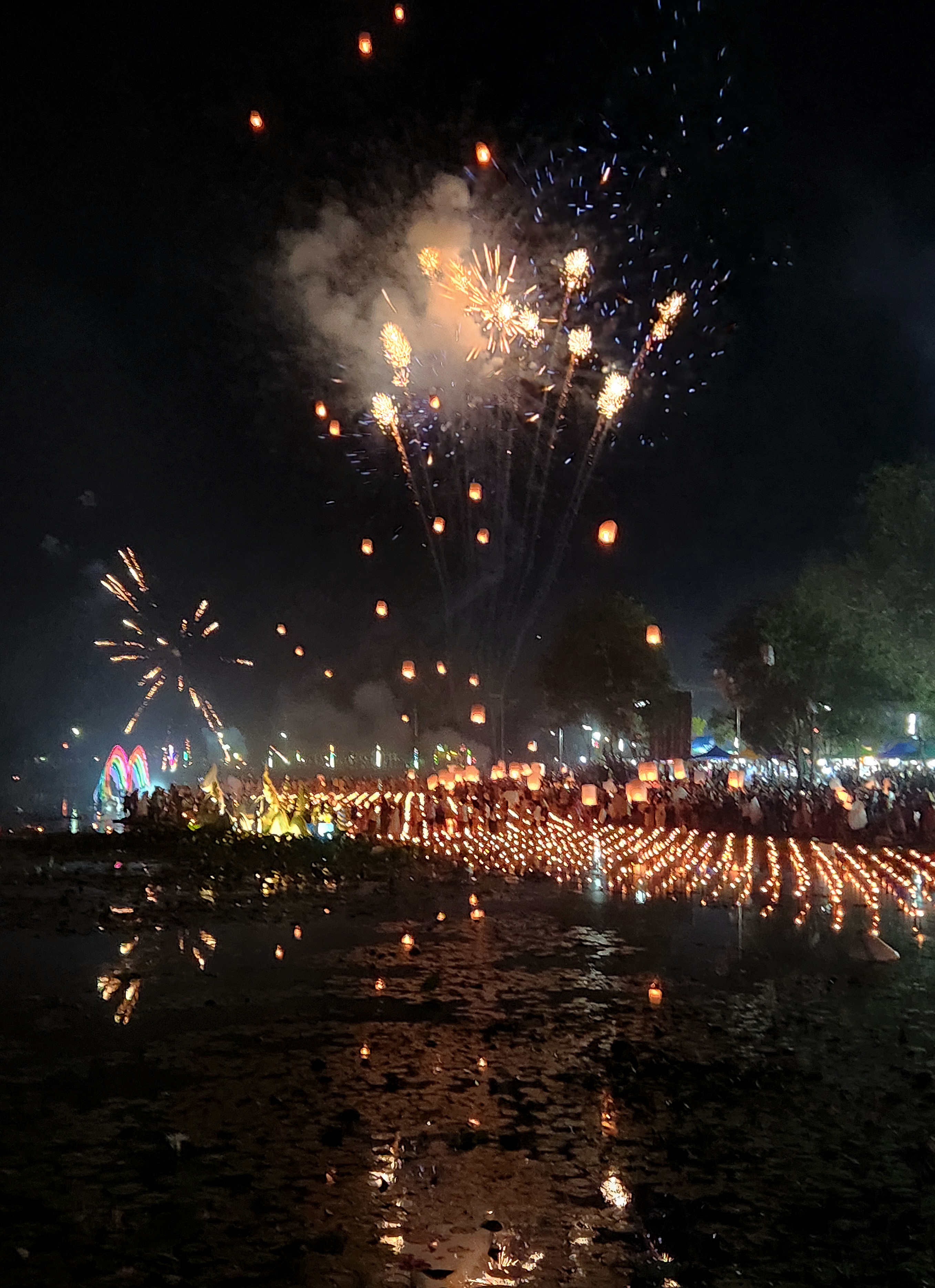
The Loi Krathong, Lantern, and Yi Peng Festivals were just ramping up as I arrived in Chiang Mai. The festivals tend to all get lumped into one festival, but really the festival is three festivals all held at the same time. Loi Krathong and the Lantern festivals are practiced throughout Thailand. Yi Peng is specific just to the northern part of Thailand. The festivals are always held on the full moon of the 12th month of the Thai lunar calendar and last 3 to 4 days.
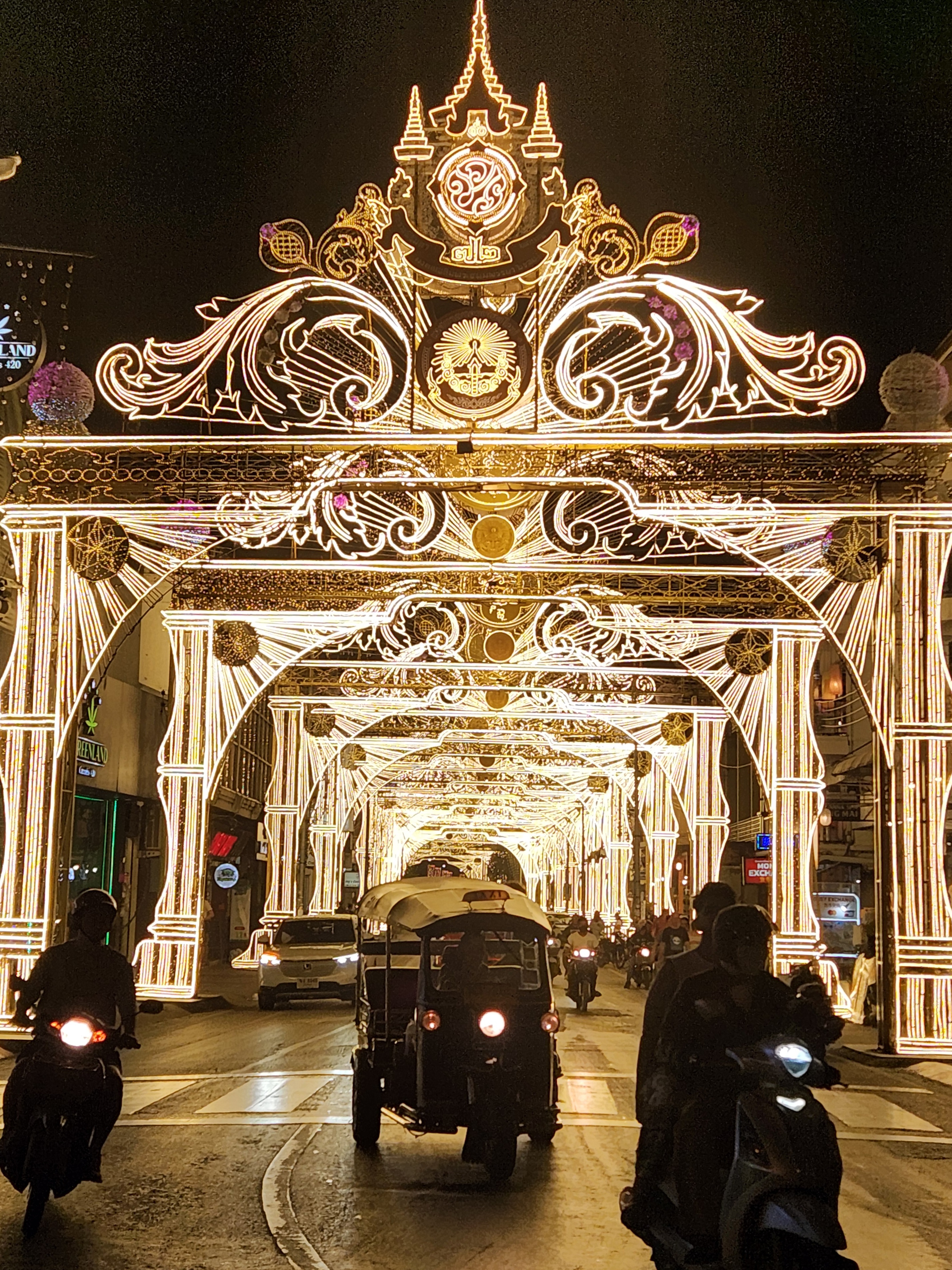
Festival time in Chiang Mai has the city illuminated with lanterns. Every temple has hundreds of paper lanterns offering wishes hanging on the trees and scaffolding erected just to hold them. Trees and business have decorative lanterns. The city is alive with color and light.
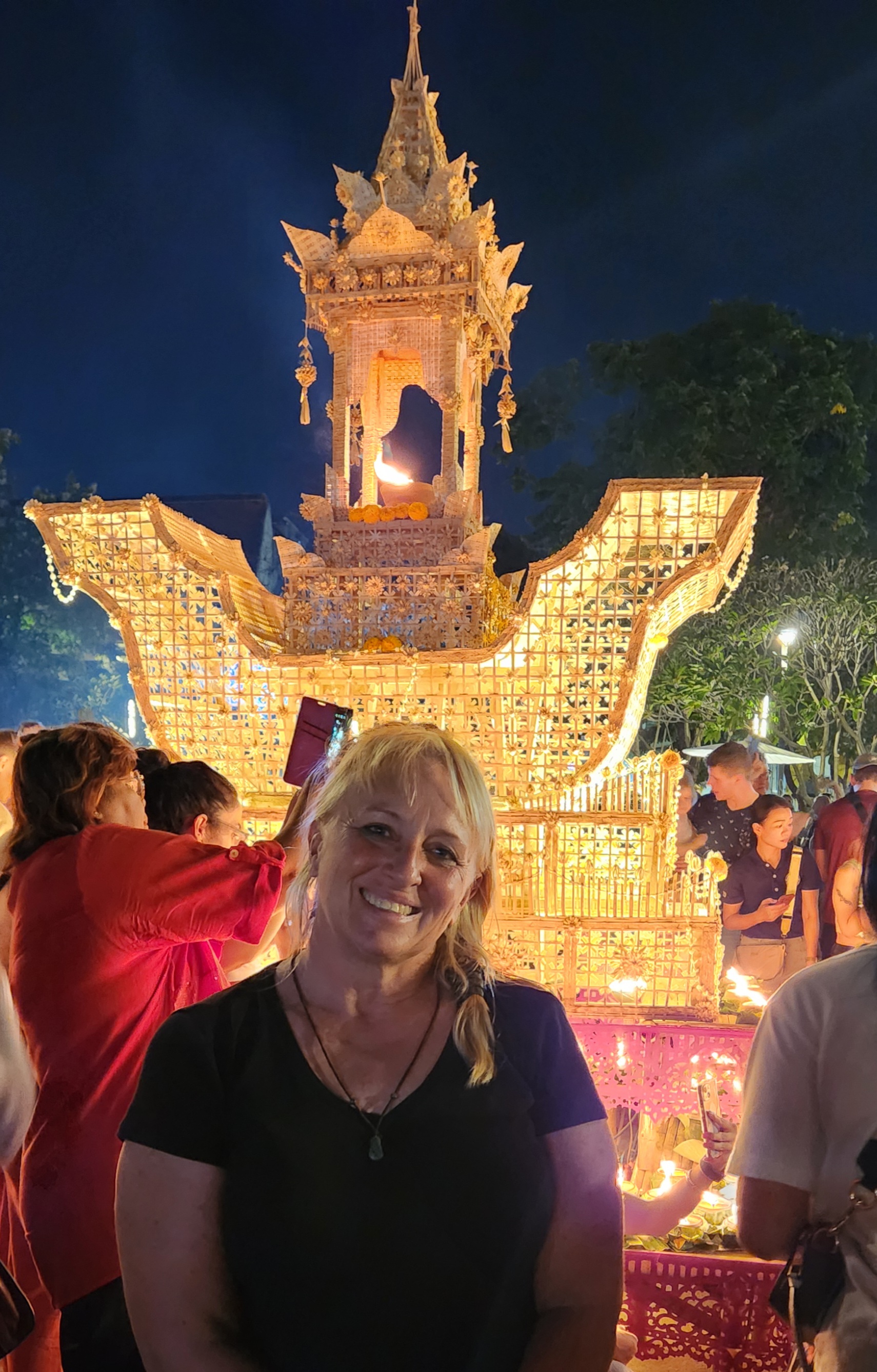
The first night of the festival was the short parade from the Thae Pae Gate to the Three Kings Plaza. The women in the parade carried candles and when arriving in Three Kings Plaza placed them on structures that had been errected there. Then over 100 women ranging in age from 4 to 80 performed a traditional Lanna dance holding candles. For the women it seemed a balance between keeping the candles lit and not getting burnt by the flame or wax. The Three Kings Plaza looked magical glowing with the candles on the structures in the middle.
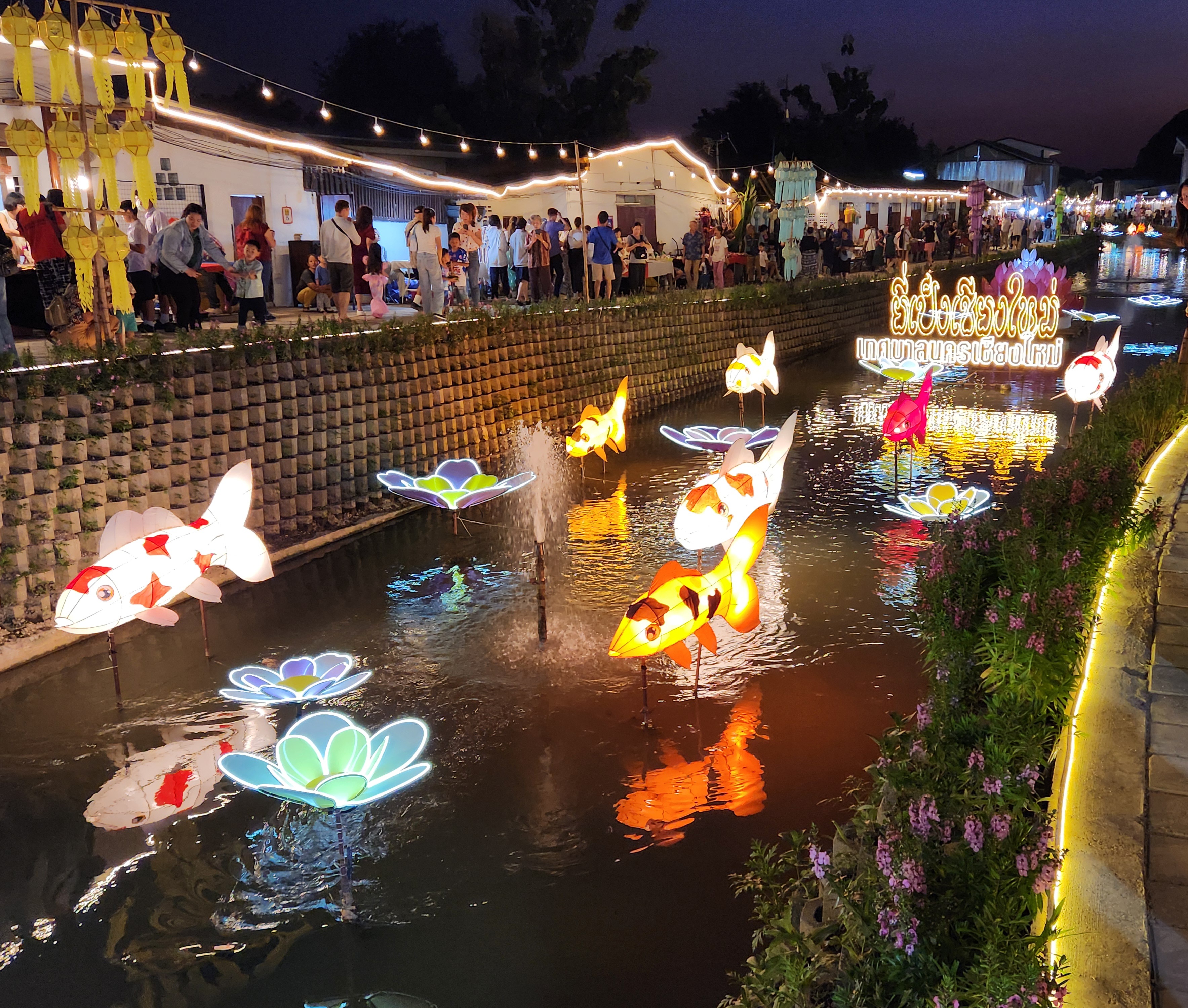
The second night I met up with some new friends, Gabriella, Miriam, and Nikki, Gabriella and I had connected through a Facebook group that we are members of. She brought Miriam and Nikki along. We met at the Thae Pae Gate which was a mass of bodies and more crowd than any of us wanted to be in. After some debate, and going off a video I had seen a few months ago, we decided to head to Khlong Mae Kha. Khlong Mae Kha is a canal area that has recently been revitalized and made a lovely place for walking and getting beer and food. Miriam, Nikki, and I walked while Gabriella went by motorbike.
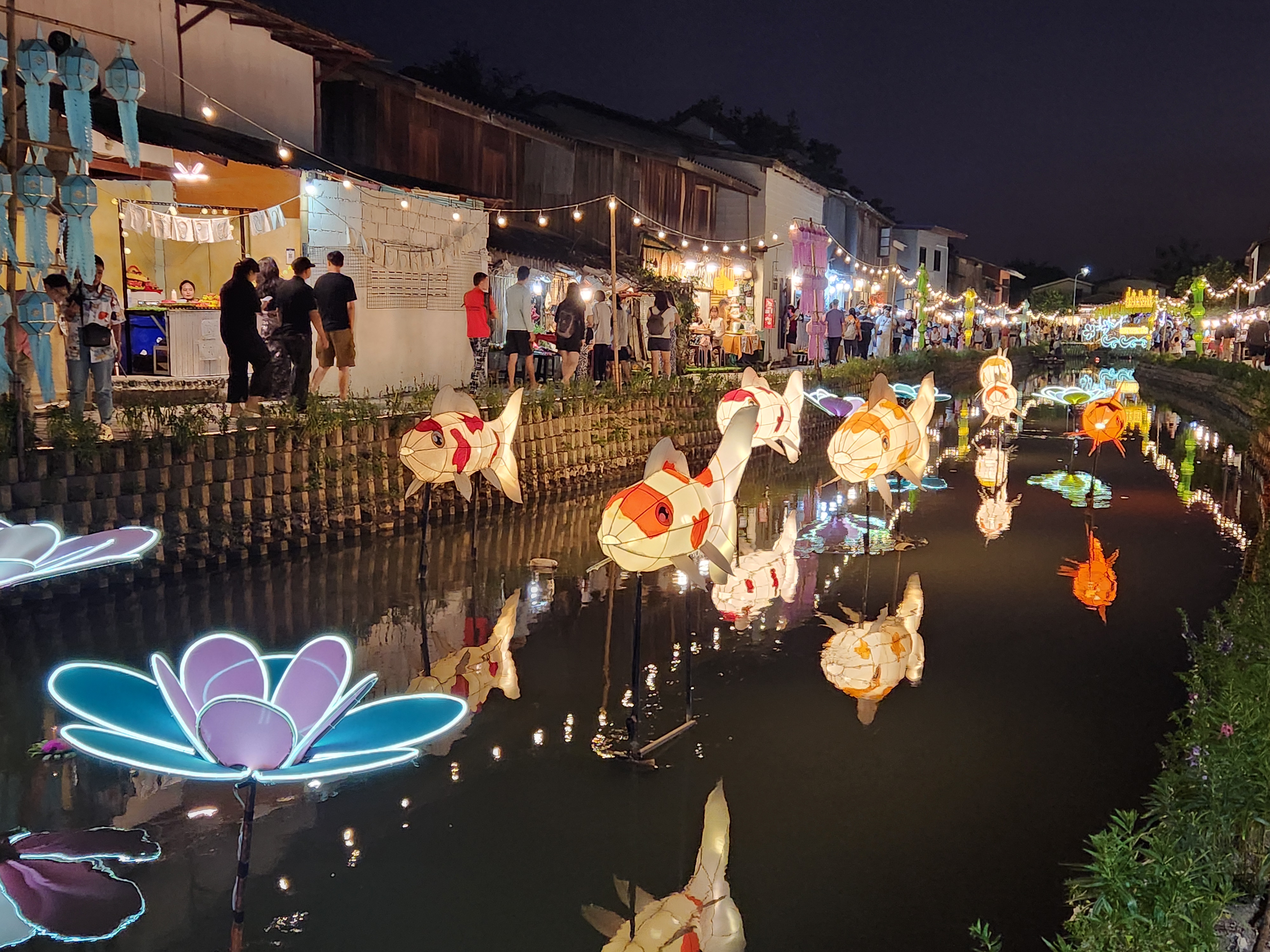
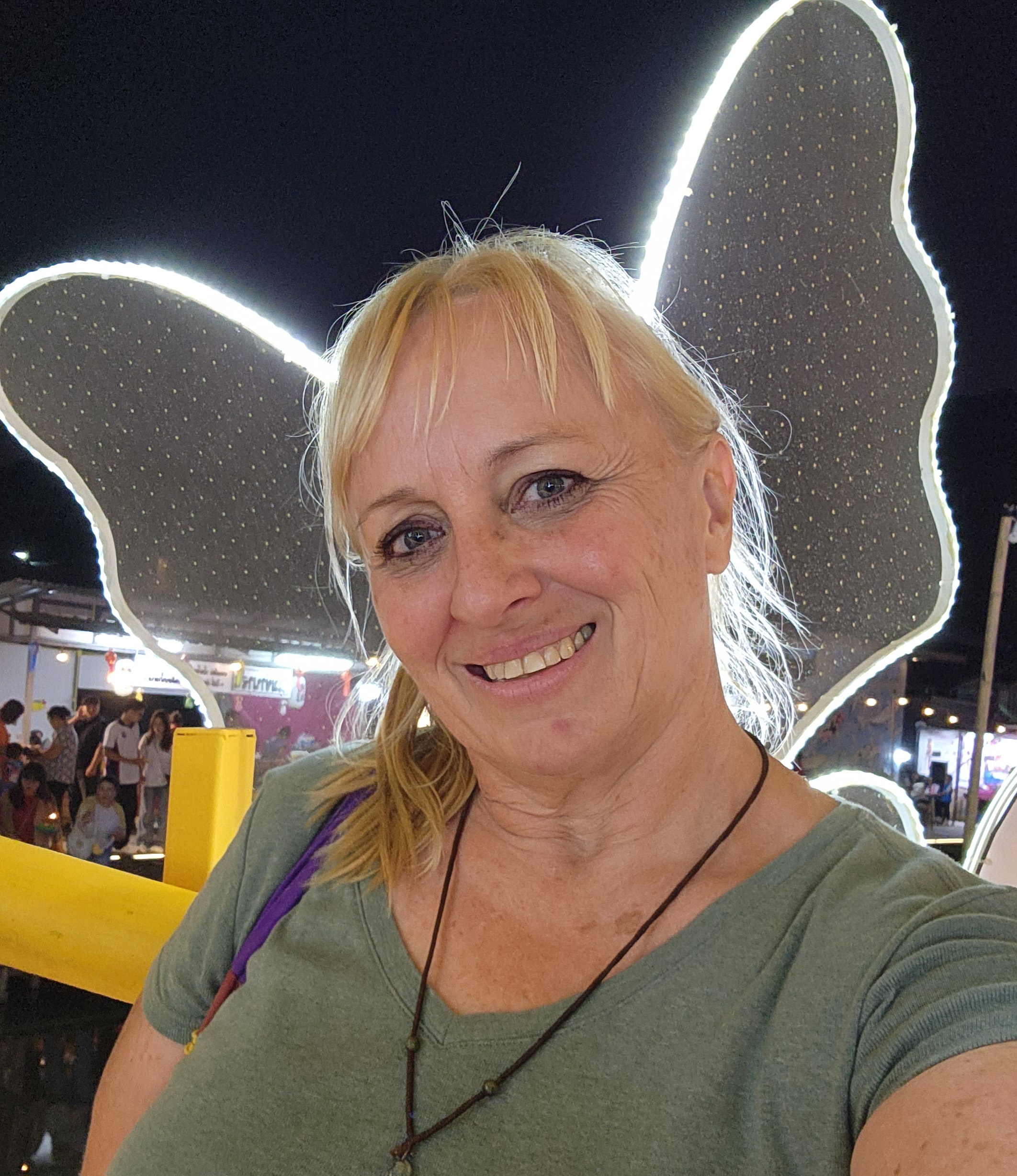
Klong Mae Kha was the perfect location. The canal was embellished with illuminated decorations of giant fish and lotus flowers reflecting in the water. The bridges over the canal were adorned with lights, lanterns, and giant butterfly wings. All along each side of the canal were stalls selling goods, food, beer, and krathongs (the small floating offerings made of banana leaves with flowers, incense, and a candle.) We found a bar, ordered beer, and got to know each other through conversation and laughter.
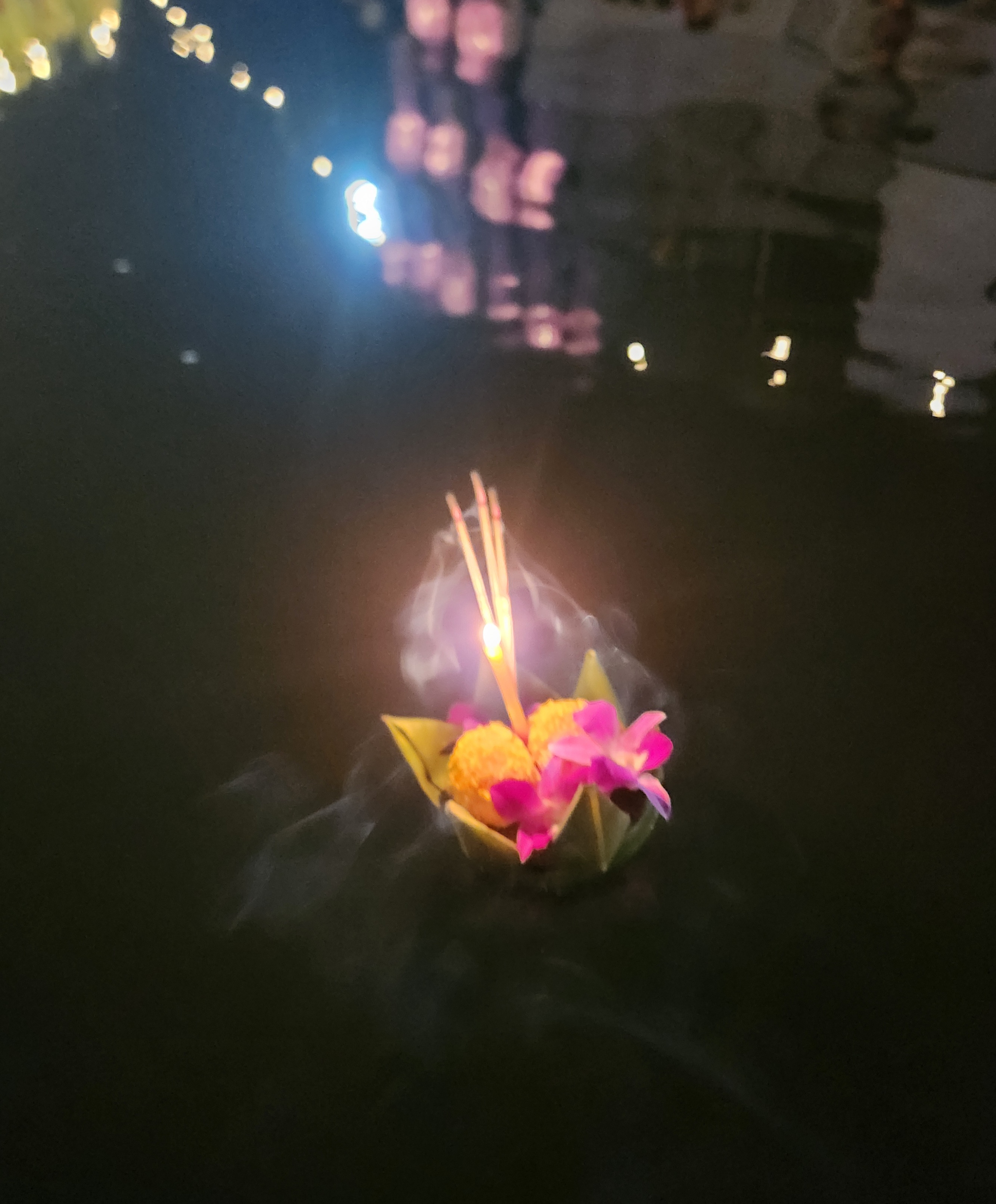
Leaving the bar we continued to stroll along the canal. Miriam, Gabriella, and I purchased krathongs from one of the many vendors and made our way to one of the platforms on the water. We each took our time making our wishes and sent them floating down the canal. Wishing each other good night, Gabriella and Nikki were off on Gabriella’s motorbike, Miriam took a Grab, and I walked back to the Old Town and my guesthouse.
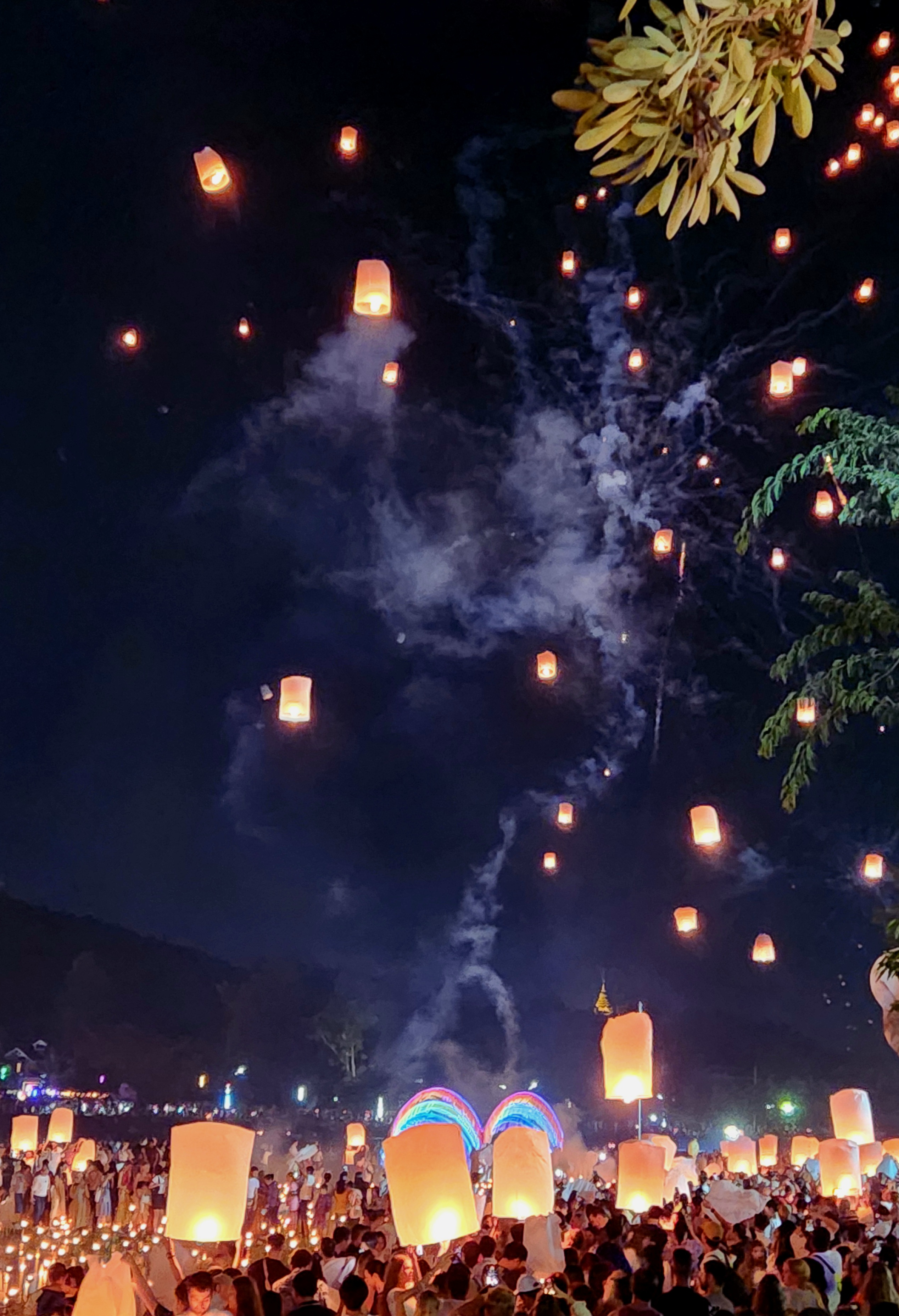
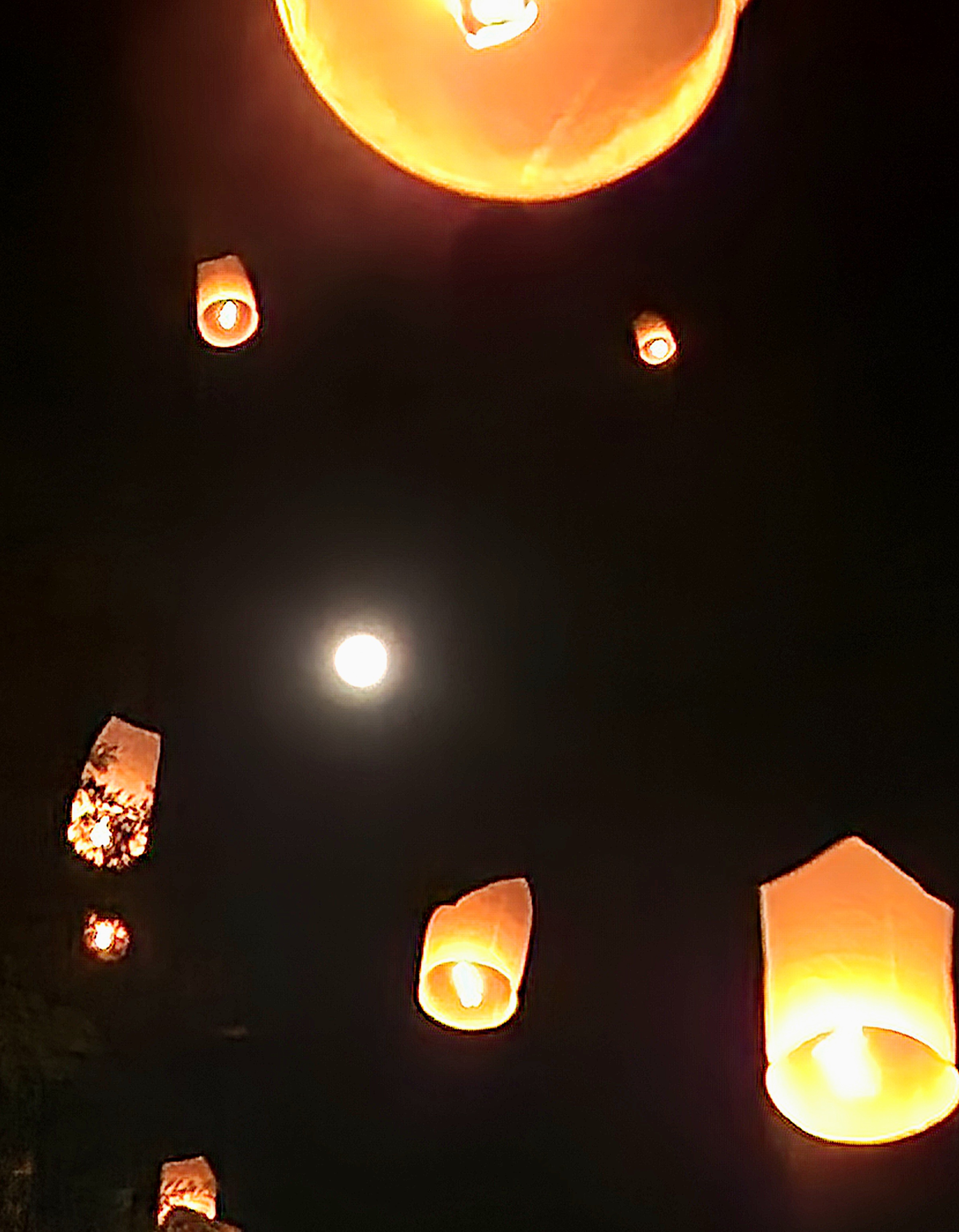
The third night of the festival was the mass lantern release at Doi Saket, the signature event for the Yi Peng festival. Thanks to a cancellation, I was able to get a ride in a van out to Doi Saket. Being on the 6 PM van, we were late for the mass release due to the massive amount of traffic in Chiang Mai and even more near the festival area. Even from the van, watching the trail of hundreds of lanterns float up into the sky was beautiful. Once we were close, the desperate feeling of going nowhere and missing out on the festival was felt by all the travelers in the van. Collectively, we decided to walk the rest of the way (only about 1 km (just over 0.5 miles)).
On the ride out to Doi Saket, I befriend a pair of sisters from New York and a friend of theirs from Germany. Sticking together, we bought khom loy (the paper lanterns) and found a spot in the grassy area to light them and send our wishes up to the heavens.
Lighting a khom loy is a group effort. They are constructed with rice paper and have a paraffin soaked disc that you light. Once you manage to get the disc light, you hold the lantern until it is filled with hot air. The temptation is great to release the lantern too soon, which makes for a difficult journey skyward and often ends up with the lantern stuck in one of the trees at the edge of the grassy area.
We each took turns lighting our khom loy and when it was time to release, only the person making the wish held on to it before letting it go up into the dark sky, joining the trail of khom loy into the heavens.
Monk’s Hike
Walking in the city is interesting, but I was ready to get out into some nature. One of the best local hikes is the Monk’s Trail. The Monk’s Trail is a path up to Wat Pha Lad and is the only way to reach that particular temple. The trail gets its name from the fact that the monks use the trail to come down in the morning for their alms rounds.
The trail is general easy going. Not steep and shaded from the hot midday sun with tall trees and stands of bamboo. The path goes along a small stream with occasional spots for waterfalls and rapids. The sound of the rushing water is so calming while hiking. Where possible, I would make a small detour to go down to the water and just enjoy the journey.
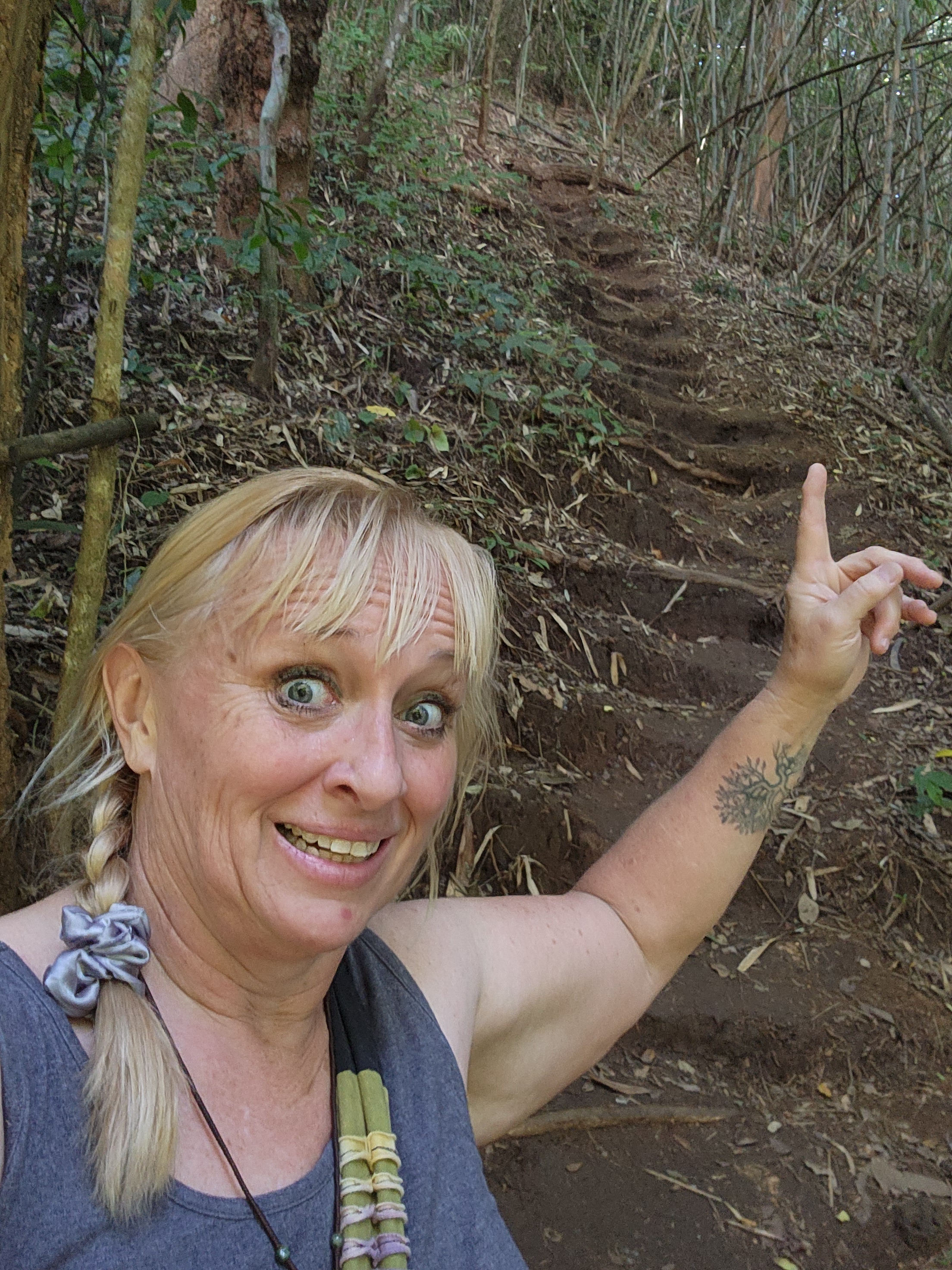
About two thirds the way up to Wat Phra Lad is a branch off to Anaigami Temple. The icon for the Monk’s Trail is a person with a walking stick. The icon for the path to Anigami Temple is a hiker facing a rock cliff. The sign offered truth in advertising. The trail was steep and challenging in a few places.
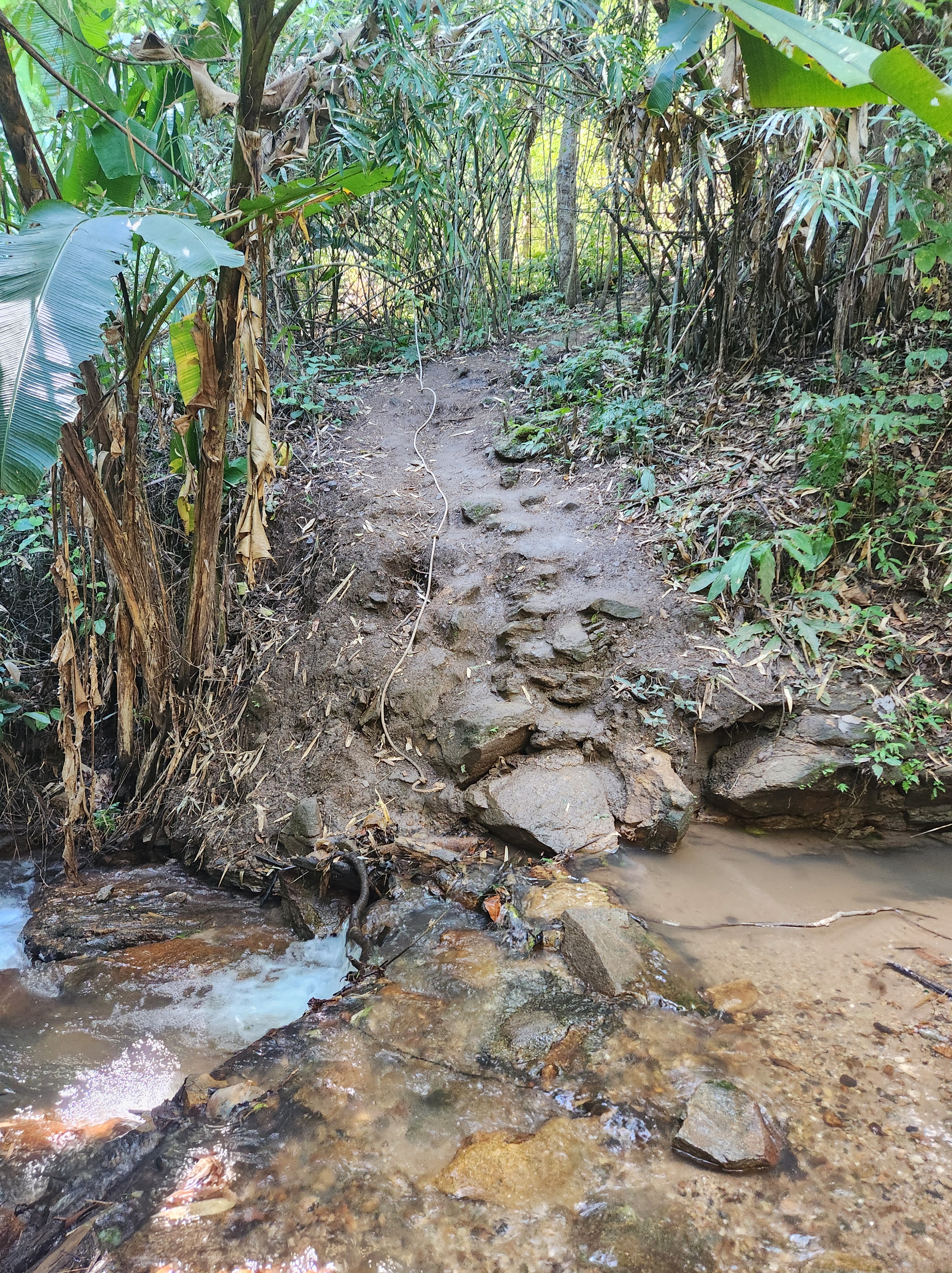
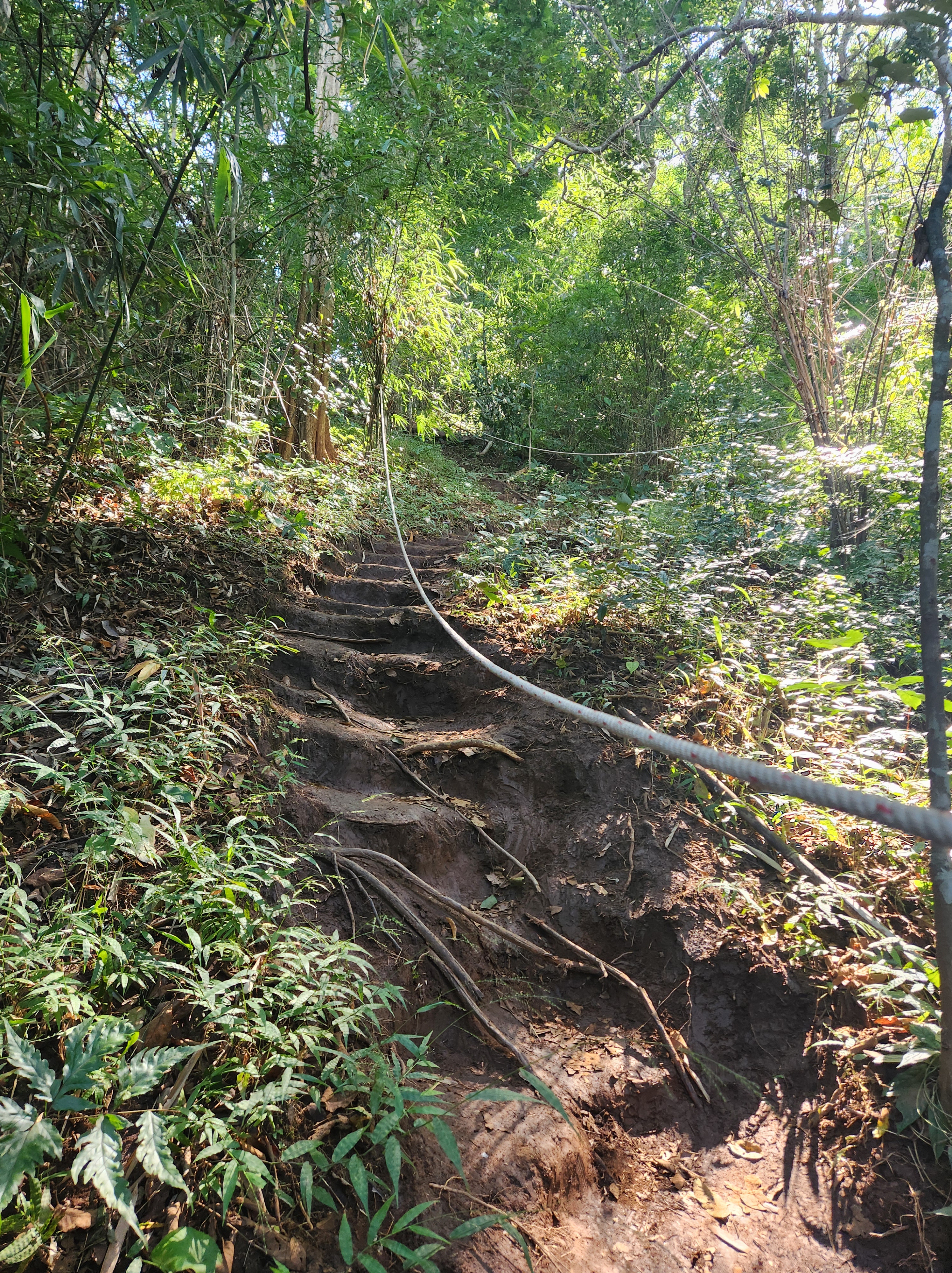
The beginning of the trail includes crossing a very small stream. A rope is provided to assist you up the other side of the embankment. As I was pondering my choices, an Aussie couple joined me. The guy was all for it, the woman was completely against continuing. I decided to press onward. Further up the mountain, the trail grew steeper. Steps had been formed in the mountainside and ropes were provided to assist in getting both up and down the path.
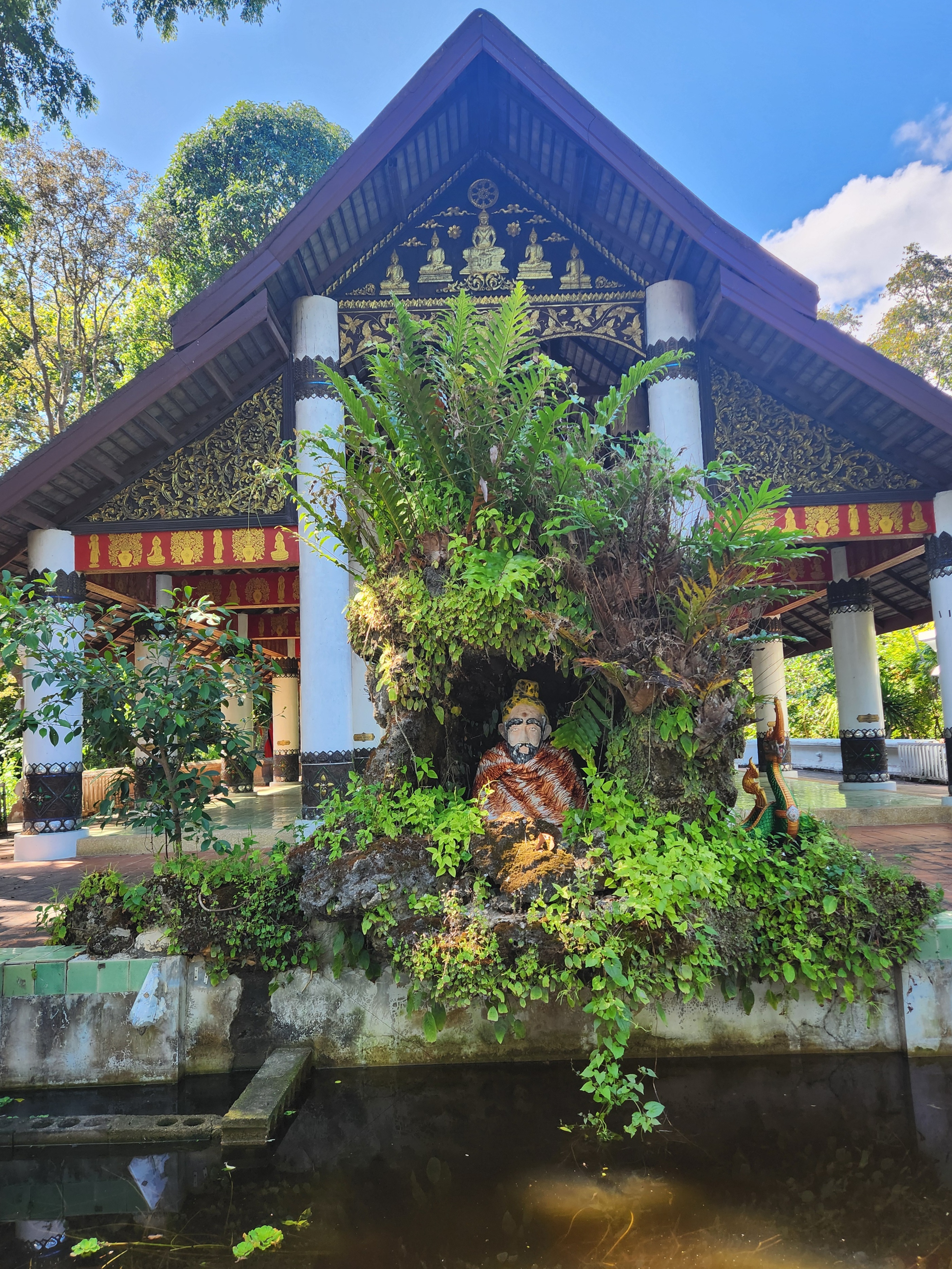
Anigami Temple is a modest reward for the journey. The people I passed coming down as I was going up were mostly honest in their assessment. But as the one woman said, after describing what she had found, “you are almost there you might as well go the rest of the way.” And I was truly almost there by the time I encountered her. The main temple was a platform with a roof as opposed to an actual building. A small shrine to the hermit doctor looked out over a pond, his shelter overgrown with greenery. I didn’t spend a great deal of time exploring as I was anticipating my reverse trek back to the Monk’s Trail.
Reversing my trek and making full use of the ropes, I managed to make it back down to the Monk’s Trail without falling. That in itself was a major accomplishment. Back on the main path, I continued up the mountain to Wat Pha Lad. Just before entering the temple, I paused to put on my skirt and long sleeve shirt over my shorts and tank top.
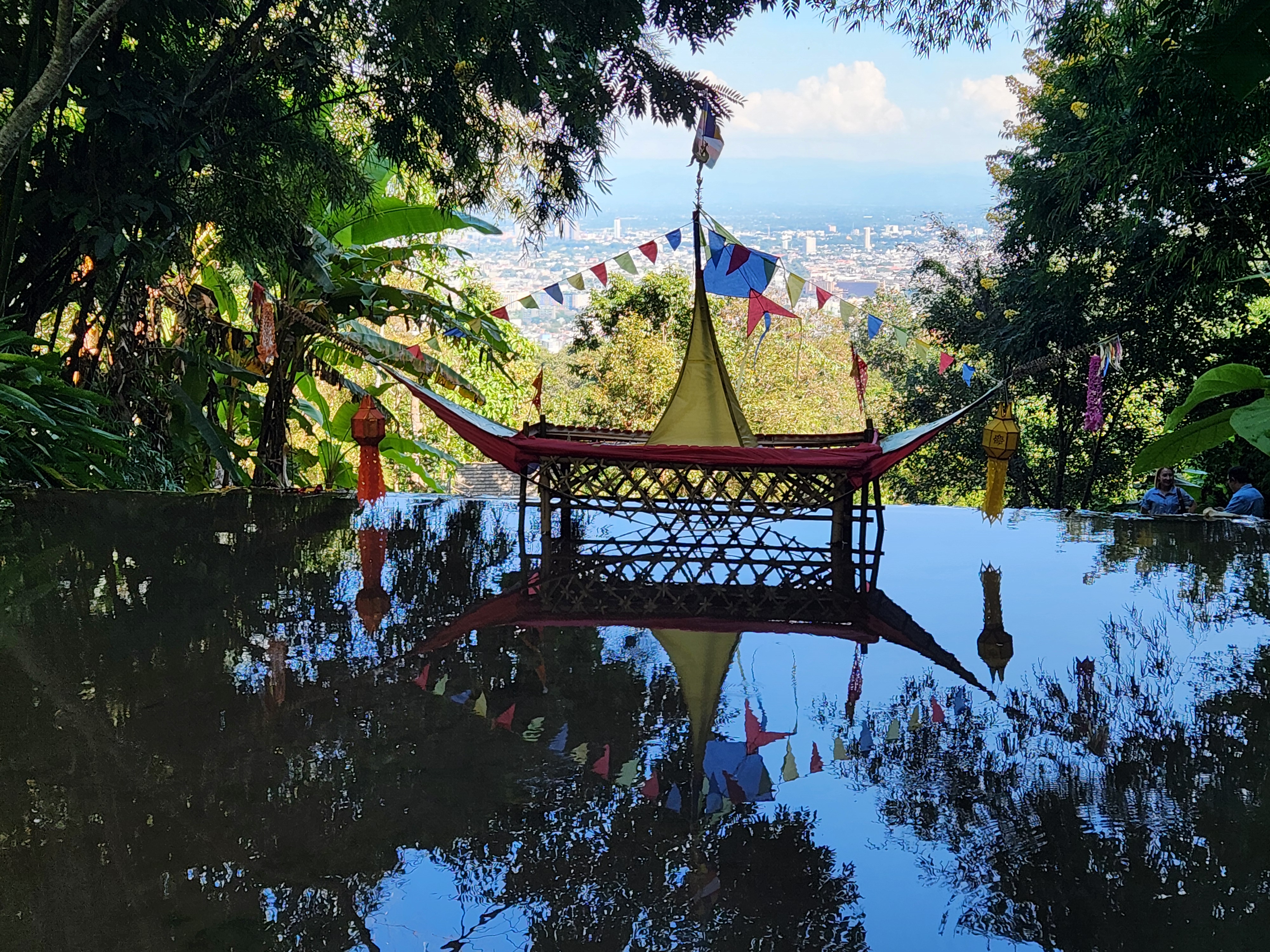
Wat Pha Lad was gorgeous. On one side of the stream is the remains of the original old temple, built against the hillside in 1375. Across the bridge on the other side is the new(er) temple area, built in 1934 when the temple grounds were being restored. Pausing on the bridge between the two sides, you have a perfect view of Chiang Mai in the valley below.
The old temple is a traditional brick and plaster wall on three sides and the back wall is the rock of the side of Doi Suthep (the mountain). The walls show the effects of standing for years in the jungle and the humidity. Steps lead up to a room that even at 5’3” I had to bend down to walk. Which is ok, because you are not supposed to have your head higher than the Buddha’s head. The archways in the walls provide the light for the temple room.
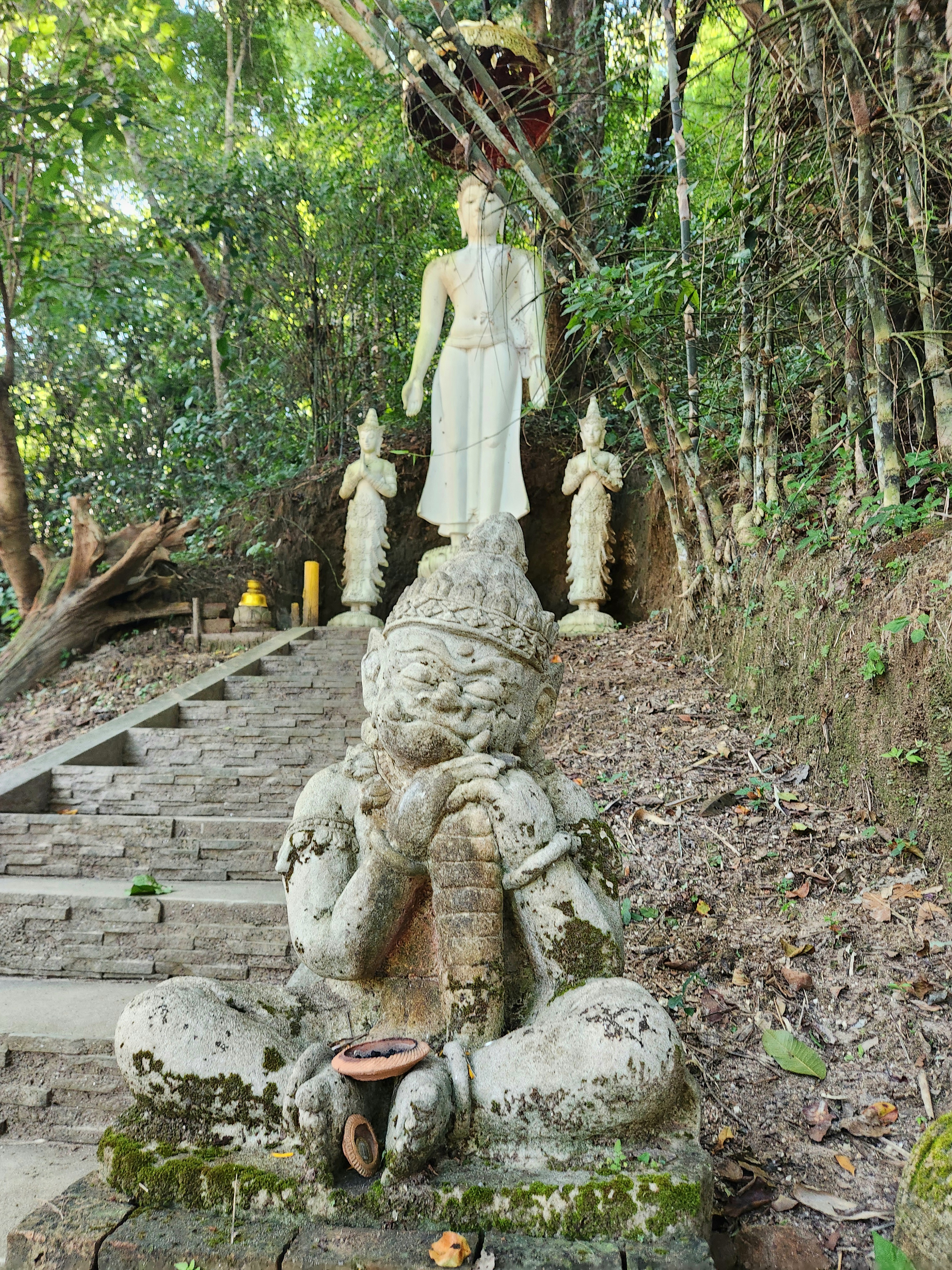
The new temple side has several buildings and even more Buddha images throughout balanced on the rocks and tucked into coves. A staircase with two large lions at the base and large stands of bamboo on either side reaching into the sky connect the lower area that overlooks the waterfall and the upper area where the majority of the buildings are located. I took my time exploring all of the buildings on the temple grounds. Despite the only access being the Monk’s Trail, the temple was relatively busy.
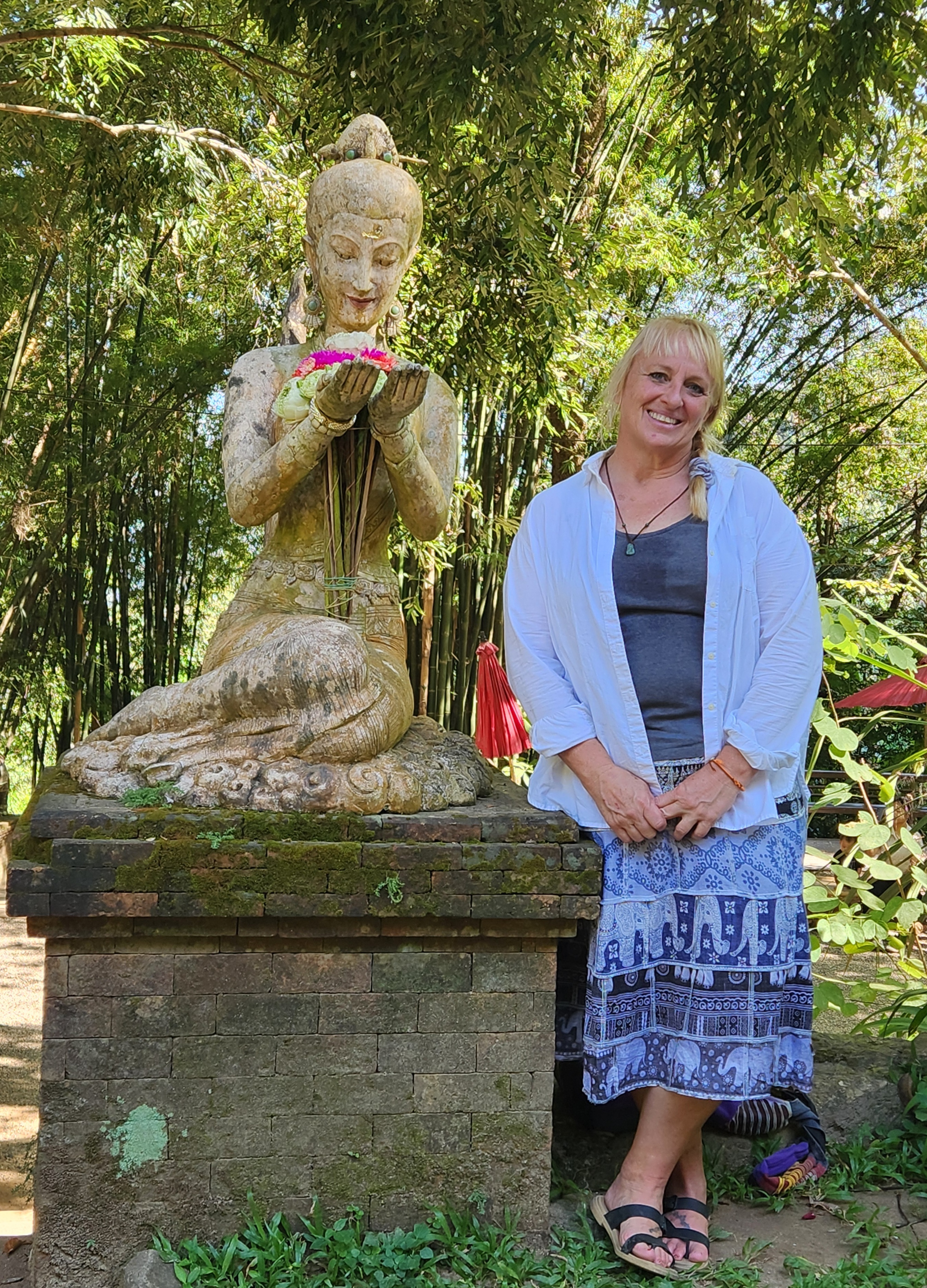
The centerpiece on the “new” side of the temple is a moss covered stone chedi. The lush green moss softening the hard edges of the rock, proof that the chedi has a long history in the jungle. A couple was taking pictures and offered to take some of me as we walked around the chedi. I am still working on perfecting my posing techniques.
Just Living
This adventure to Thailand is much different than the others. My travels have no defined purpose or agenda. Arriving in Thailand, I had no ready-made community of massage classmates or elephant park volunteers. Not only does this adventure look different externally, it feels different internally. My past trips seemed to have coincided with times in my life that my cup was empty and I needed the comfort and welcoming arms of Thailand as an escape. This time I feel like my heart is full and I can actually grow and truly heal.
The question I had been asked many times over the past months is “what are you going to do in Thailand?” My response has repeatedly been, “just live.” The Universe and I had very different ideas of what “just living” was going to look like. My original plans and intentions have all gone by the wayside, which is probably for the better.
Meeting Miriam and Gabriella has given me a community and new friendships in my life. All or just a couple of us have met for several of the days since that first night when we went to Khlong Mae Kha and released our krathongs. Reaching out to the other women for a beer or food has been wonderful and I know these friendships will last even after we go our separate ways.
My time has mostly been filled with walking and doing nothing. On average, I’ve been walking between 4 and 8 km (2.5 to 5.5 miles) a day. Passing locals, I always smile and say “sawadee kaa” (hello), which always returns a smile and greeting. Thailand is the Land of Smiles after all. I also pause on my walks to take in murals painted on walls, random statues, cats, and the smell of flowers growing along a brick wall.
Despite it being the start of cool season the weather is still very warm, topping out in the 30’s C (mid-80’s F), and still very humid. In the heat of the day, I’ve found myself at my room enjoying the breeze of the fan while I relax. My intent is to do some writing. My reality has been making travel plans for the next few months.
While my adventure may not be looking as much like I had envisioned or told people that it was going to be, I am in Thailand and that is petty alone is pretty incredible. I know that fact is something I don’t want to lose sight of or take for granted.
Time to get the suitcase out and start packing. Figuratively, not literally. Just yet anyway. My next adventure is beginning 7 November 2024 with a one-way ticket to Thailand.
This next adventure is more than just a trip. This next adventure is the start of a new life. Life as a nomad. I’m embarking on living a dream that started over a decade ago. The dream of living in Thailand and not just visiting. I plan to spend some time writing my book (fiction but based on reality), visiting the places that I haven’t yet visited in Thailand because I haven’t had time, and of course, an occasional visit with elephants.
So while I count the days until my airplane departs in the early dawn and I begin another 24 hour journey to the other side of the Earth, I am going through the mental exercise of determining what to pack for this trip. Beyond the clothes, what items do I take that I want to keep in my new life. A quilt I made, because it does actually get cool every now and then in Thailand and it’s nice to curl up in the comfort of a quilt. Electronic picture frames that give me visual reminders of my friends across the world. We’ll see what else ends up in my suitcase.
In Thailand, approximately 1,000 elephants remain in the wild, placing the Asian elephant on the endangered species list. Unfortunately, the approximately 3,000 captive elephants are considered livestock, similar to cattle, and are not protected as an endangered species. Captive elephants have a mahout (care taker) that forms a bond with the elephant. Often this bond is a life long relationship.
When young (about 3 years old), the mahout seeks to break the elephant’s wild spirit. Often the breaking process is through negative feedback involving beating with a hook (a foot long rod with a sharp metal book on the end) until the elephant displays the desired behavior. Once broken, if the elephant is destined for life in the tourism industry, they face further training to perform feats that are not a natural part of an elephant’s behavior such as playing soccer (football) or basketball, throwing darts at objects, painting or standing on their front legs. Again, this training is through negative feedback.
In 1989, logging was banned in Thailand. Elephants that once provided essential manpower were suddenly unemployed and their mahouts found themselves without a viable income source to feed their elephants and their families. Many mahouts turned to a life of street begging with their elephants or using their elephants in the tourism industry for trekking or circus shows. Ultimately, mahouts went from a standing of significant status to being on the lowest rung of the ladder.
Street begging elephants faced long days on the streets without access to proper nutrition or water as tourists paid to feed an elephant a bunch of bananas. In 2012, street begging was finally banned in all of the major cities in Thailand. And only a few years ago did authorities start enforcing the ban by fining mahouts using their elephants for begging
Trekking elephants and elephants used for giving rides at tourist locations face back breaking work carrying a heavy saddle (30-50 kilos/56-110 lbs) plus the weight of the tourists which can be another 70 to 120 kilos (150 to 265 lbs) or more, depending on the number of riders. The saddle is often ill fitting as they are a “one size fits all” design, held on with ropes that if tied wrong can constrict movements of the elephant’s legs and their ability to breathe. The elephant wears the saddle the entire working day. Despite the massive size of an elephant, their spine is not designed to bear this type of weight.
Life at the Elephant Study Project
Despite its research sounding name, the Elephant Study Project is basically a relocation option for formerly street begging and otherwise unemployed elephants and their mahouts. The center is located in Baan Tha Klan in the Surin province. Set on 2,000 acres of land, the center is home to anywhere between 150 and 200 elephants and their families. The government provides an income of 8,000 baht ($230) a month for families and elephants living at the center. Often mahouts have to turn to another source of additional income to take care of their families. One option is to perform in the circus that is held twice a day or to offer elephant rides around the center.
Many of the elephants at the center are “on chain” the entire day, either because their mahout is working elsewhere or because they have no place to roam. “On chain” means bound to a stake by a heavy chain allowing the elephant a very small area to move in, typically a radius of only about 6 or 8 feet. Some elephants also have a chain binding their front feet together allowing them very little movement. Another method of being “on chain” is a chain around their neck attaching them to a tree or post of a shelter.
Elephants “on chain” tend to develop stereotypical behaviors, akin to a bored human drumming their fingers or taping their foot. Some elephants sway, some move their head in circles, others rock back and forth. Most elephants at the center display some type of stereotypical behavior. Walking around the center it was heart wrenching to see these beautiful creatures facing this reality on a daily basis.
Why Volunteer?
The Surin Project was started by the Elephant Nature Foundation as a way to provide elephants a better existence and to demonstrate that tourists are interested in seeing elephants acting as they would in the wild. Volunteers pay about $400 a week to be part of the project. This money covers project expenses for the volunteers and to pay the mahouts salaries.
The project currently has funding to support 12 elephants. The mahouts on the project are paid an additional 8,000 baht salary to participate in the program. While these elephants still spend a large portion of their time on chain, the project ensures that they get at least 4 hours a day off chain to go for walks, for swims in the river or for roaming in the enclosure built with the support of the Surin Project. Mahouts are not allowed to use hooks or any sharp objects to control their elephant.
Besides directly supporting the mahouts, the project helps the community and village as a whole. Volunteer lodging is homes that are rented from study center families. The women take care of the houses daily to ensure the bathroom is kept clean and the refrigerator is stocked with an endless supply of water, and will do laundry if needed. Many of the meals the volunteers have are taken at local restaurants.

















































 Adventures with the Gypsy Gal