
The Jungles of Borneo.
The phrase evokes lush green vegetation and rare and unique animals narrated by the voice of David Attenborough. Creepy crawly things that could kill you. Plants that could kill you. Animals that could either amuse you or kill you. Taking boats down small tributaries in search of the rare and unique with the sounds of cicadas, birds, frogs, and monkeys providing a soundtrack evoking mystery of what might be around the next bend.
Of course I had to go when I decided to visit Malaysia. I couldn’t be that close to the world’s third largest island (Australia being a continent is excluded from that list) and not go in search of the “Borneo Big 5”. The Big 5 being the proboscis monkey, orangutan, hornbill (technically the Rhinoceros hornbill, but all of the hornbills are worthwhile), crocodile, and pygmy elephant.
Arriving at Sukau Greenview Bed and Breakfast on the Kinabatangan River deep in the jungle of Sabah, I knew I had made the right choice in booking 3 days and 2 nights on the Jungle Safari. The simple buildings and the lush surroundings felt warm and familiar. After an introductory greeting and getting checked into our rooms, we were off on our first river safari.
The Kinabatangan River, Malaysia’s second-longest river, stretches through the heart of Sabah and is considered one of Borneo’s most spectacular natural wonders. The river offers a haven for some of the world’s most unique and endangered wildlife. With the rainy season underway, the Kinabatangan was about 5 meters (16 feet) higher than normal at the moment. The brown water flanked by green jungles and chalk limestone cliffs. A large teak tree that had washed downstream was lodged against the Sukau Greenview dock.
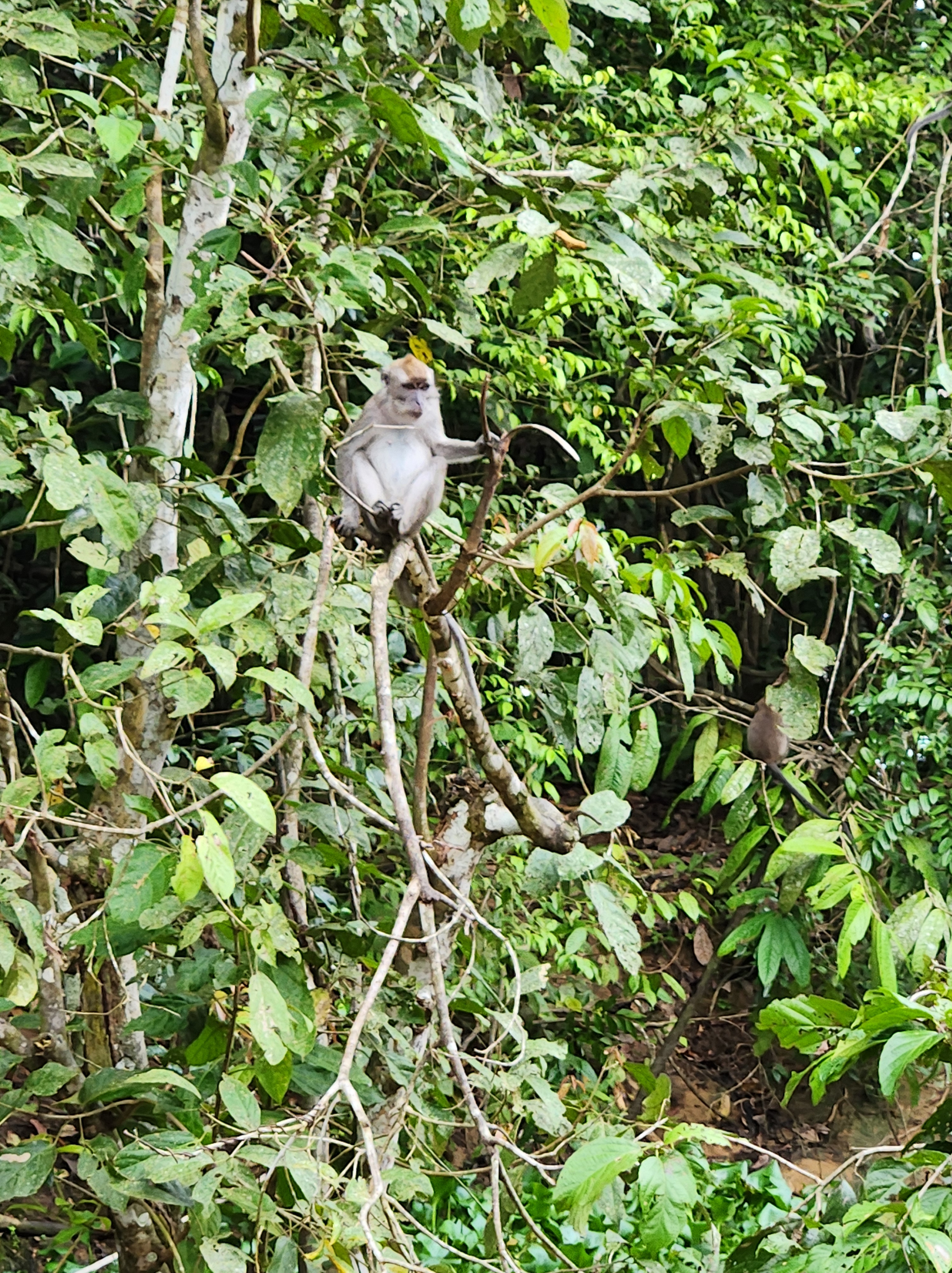
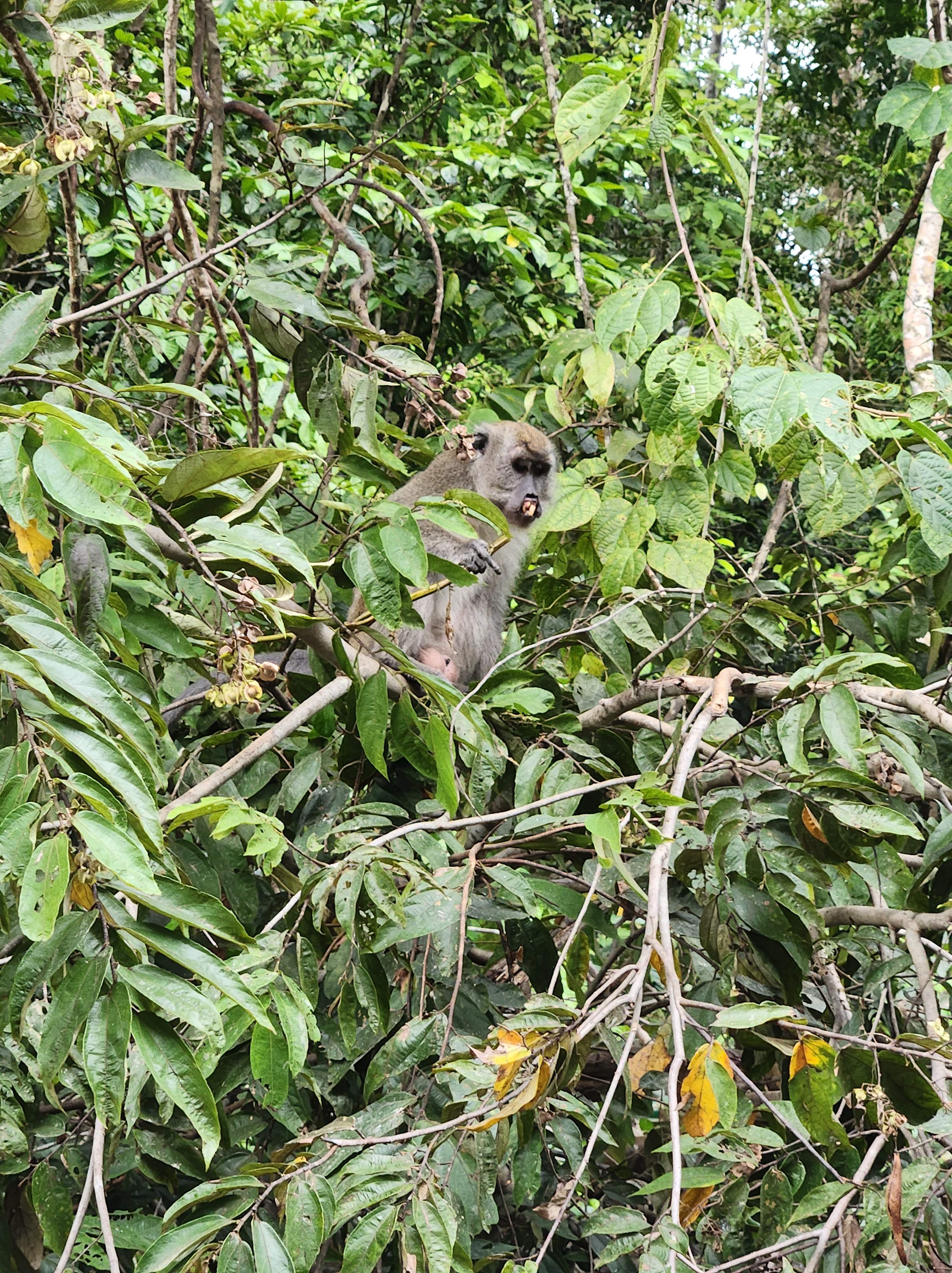
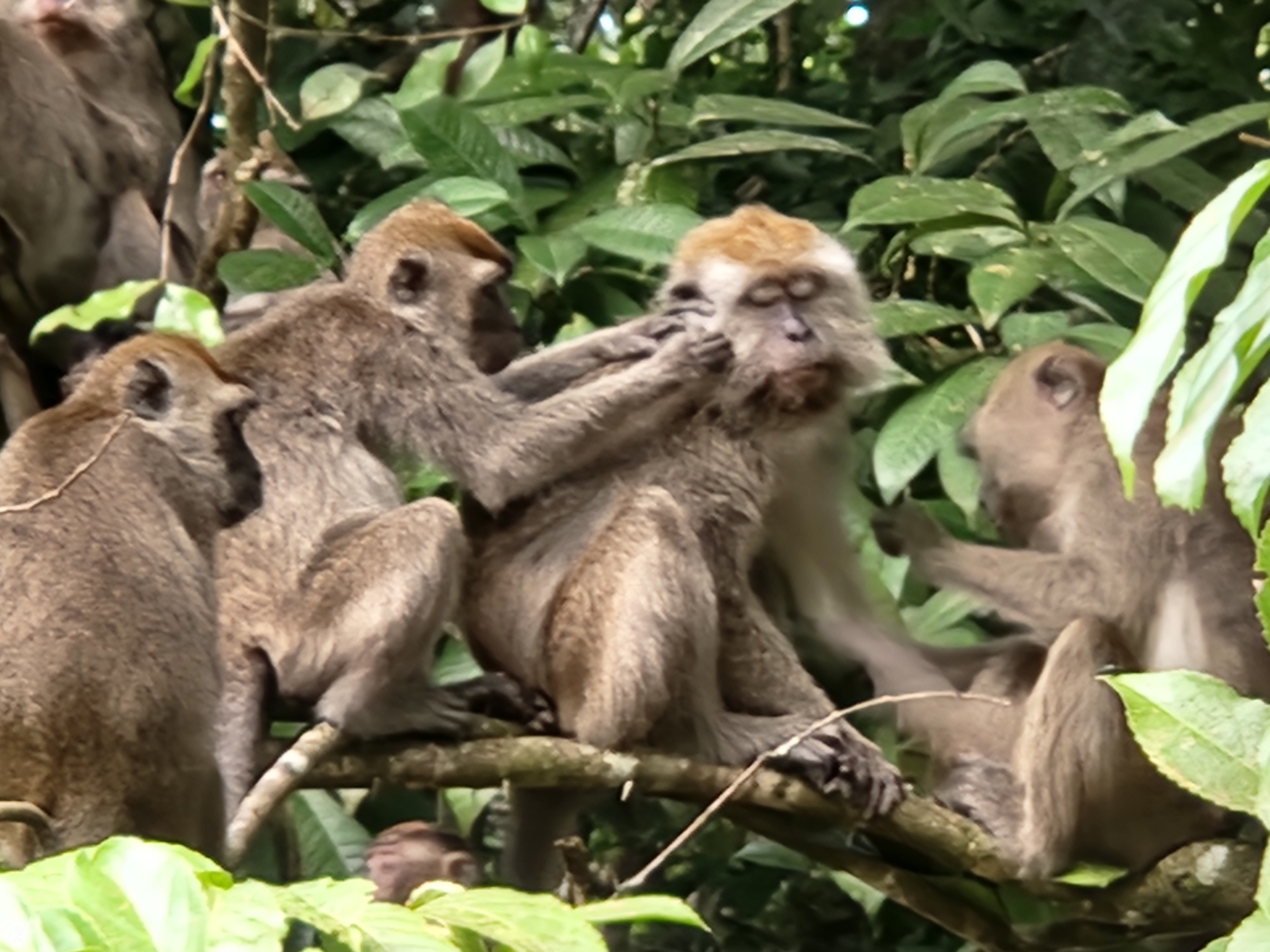
First up on our jungle safari were members of the forest mafia (the long tail macaques) playing in the trees. The long tail macaques are interesting and enjoyable to watch. Definitely not a rare and unique animal though. Ignoring his primate relatives, a small silver leaf monkey was just hanging out in the treetop. The silver leaf monkey is the smallest of the monkeys in the jungles of Borneo. Ten species of monkeys call the jungle home.
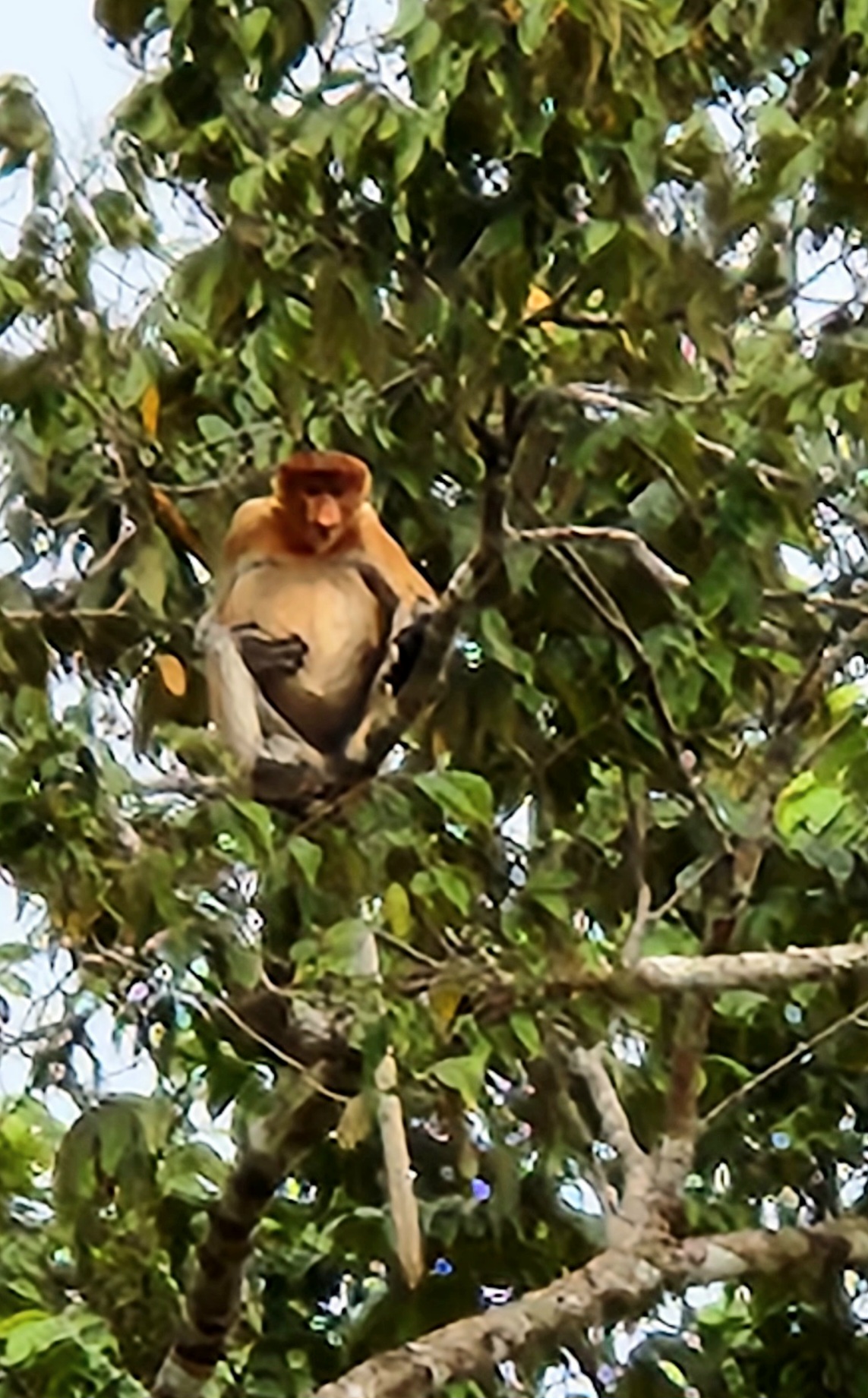
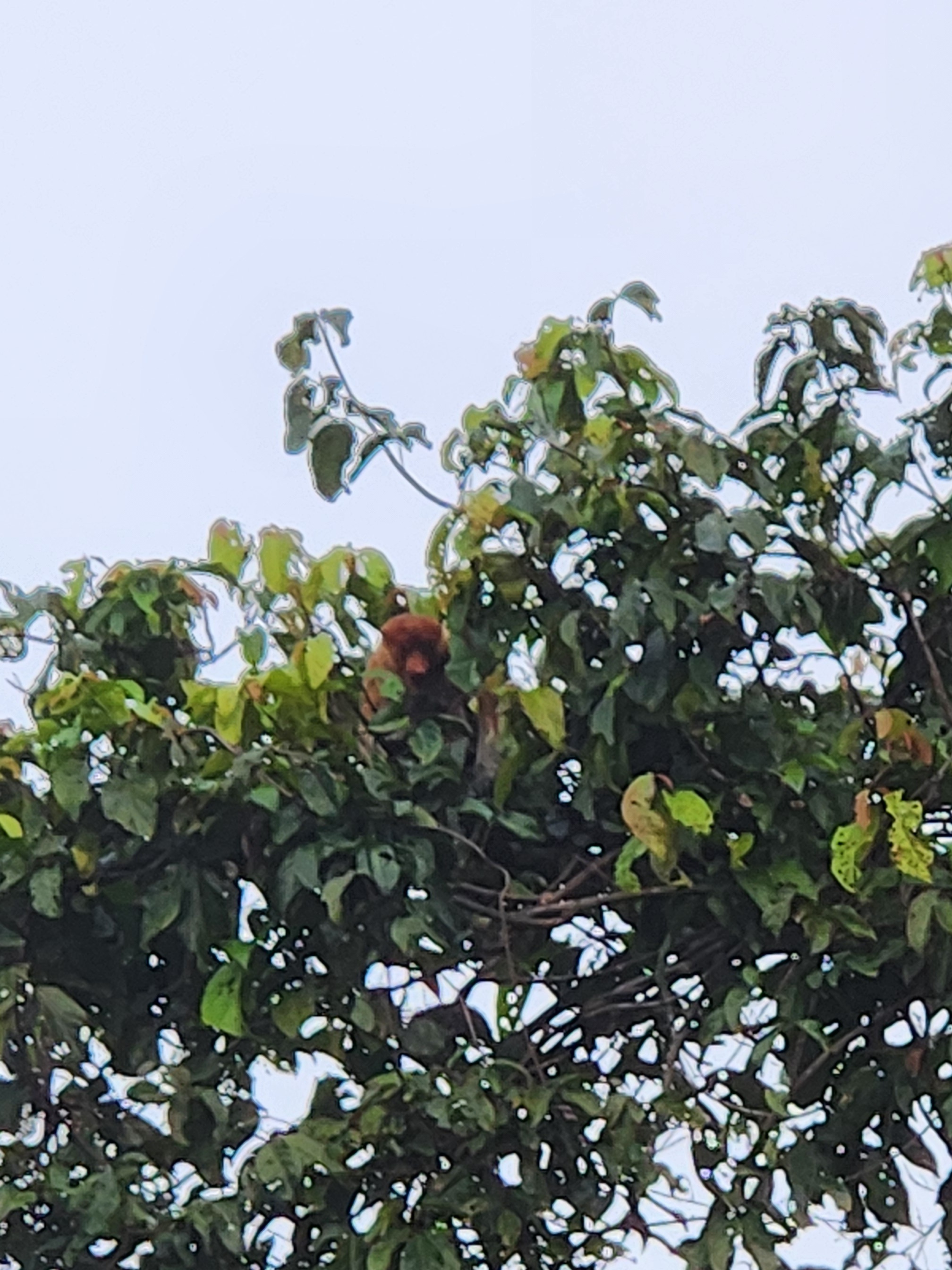
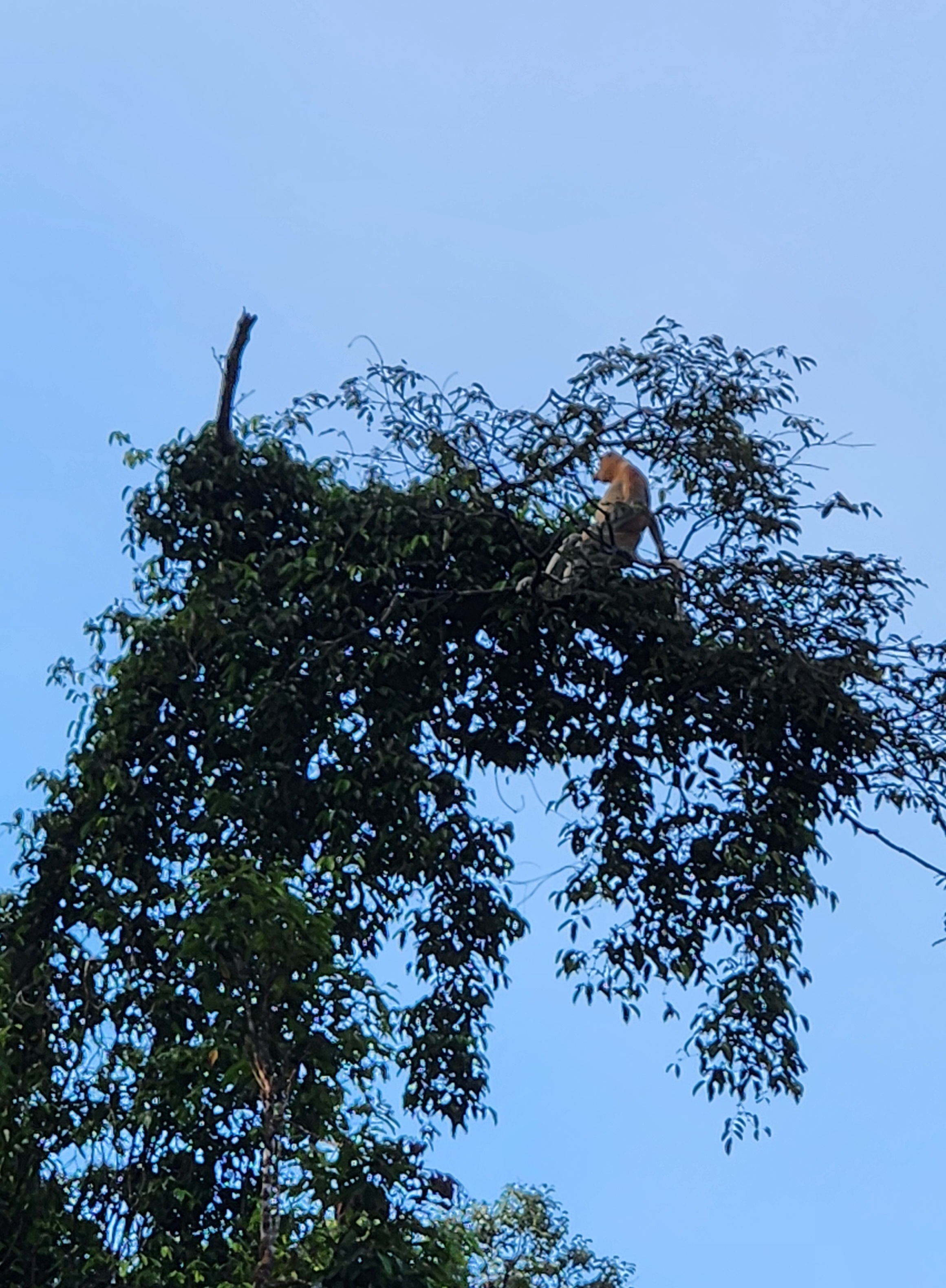
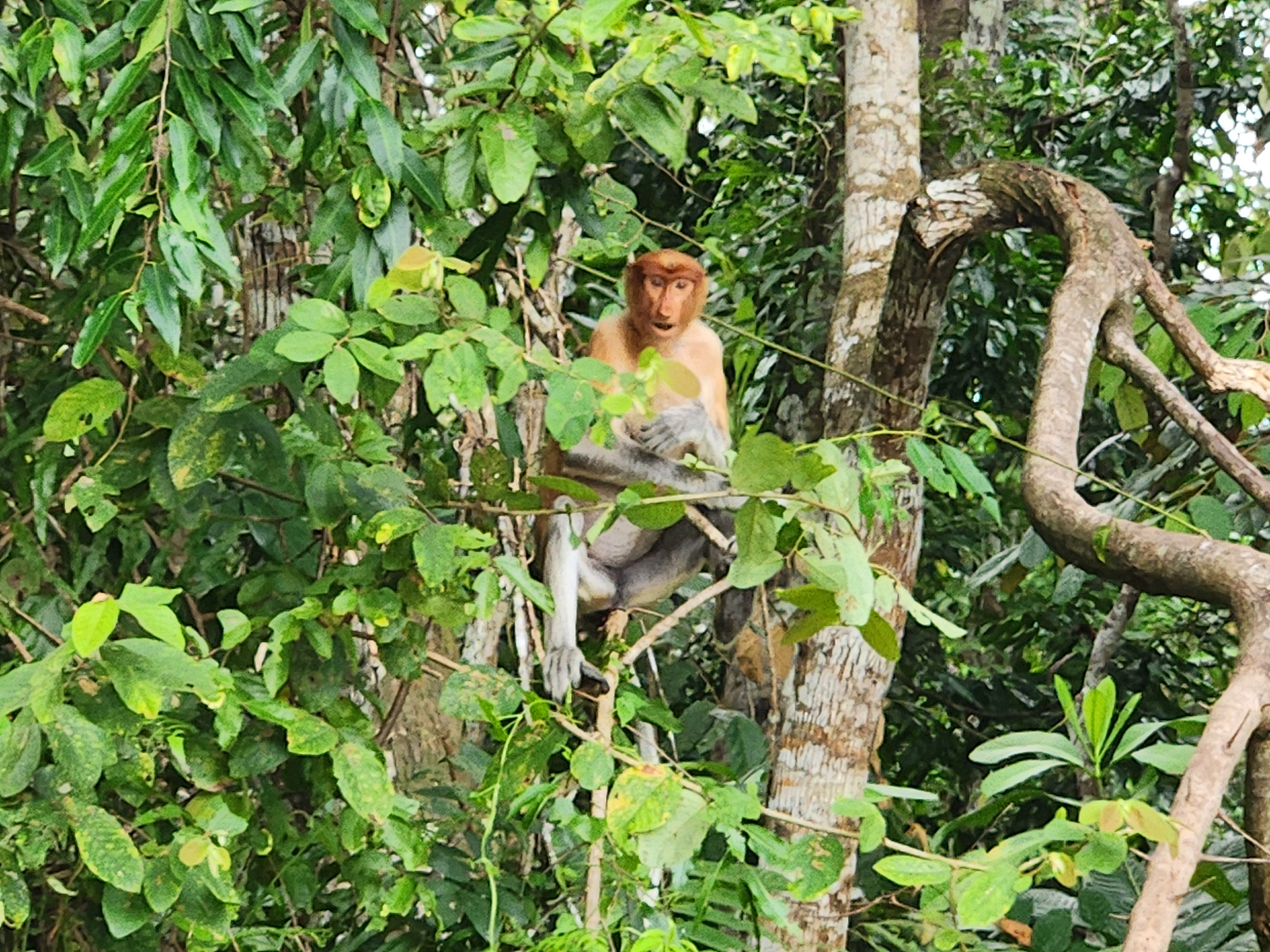
A little further up the river we spotted the first of the Borneo Big 5: the proboscis monkey. The male proboscis monkey with his golden fur and his giant bulbous nose sitting high up in the tree keeping watch over his haren. Only the males grow the big noses starting at the age of about 7 years. Apparently, the female proboscis monkeys find a large nose very attractive. Females and adolescents have pointy noses, which are still cute enough to give them a face that makes you smile. Seeing the proboscis monkeys brought a smile to my face.


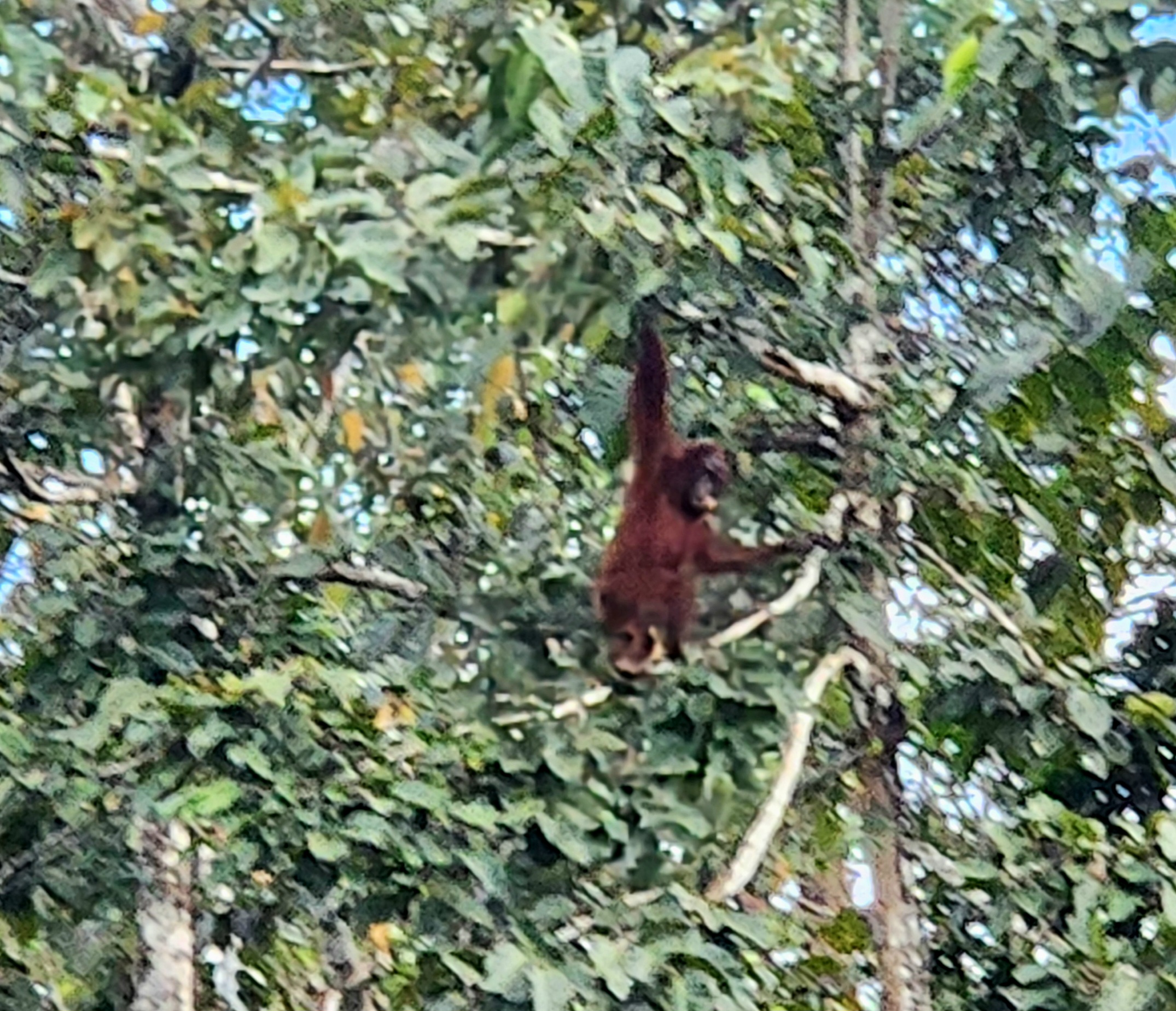
News of a rare sighting had reached our guide and boat driver. The next of the Borneo Big 5: an orangutan. A female orangutan had been spotted in the trees close to the river. She was hard to see because she was just far enough back, but you could see her move through the branches, catching a glimpse of her dark red furry arm as she moved stealthily through the trees. Stopping near the same place as we were returning to the lodge, we were lucky to spot an adolescent orangutan. His more radiant red fur was much easier to see as he moved about and swung from tree to tree. Getting to see an orangutan in the wild was special.


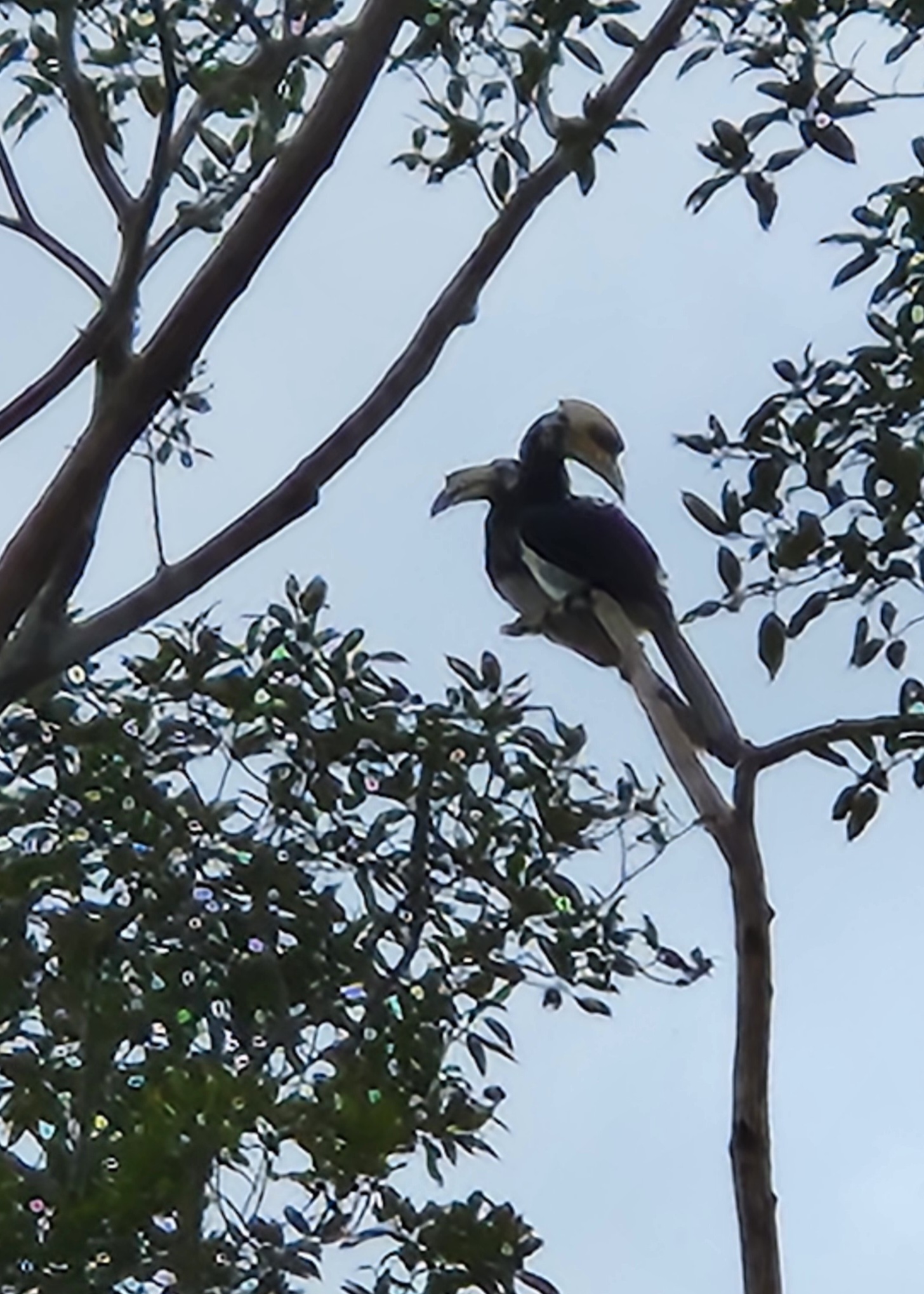
Turning down a tributary graced us with more of the forest mafia (long tail macaques), short tail macaques, and a pair of hornbills. There are 8 different varieties of hornbills on Borneo. This pair had black bodies and a white head (and I pretty much completely forgot the name mere moments after the guide said it. Apparently, based on an image search in Google, it was a Pied Hornbill.) We got to see the hornbill in flight and sharing a branch with his mate. Another one of the Borneo Big 5 in the books.


After dinner, the next cruise we embarked on was a night cruise. This cruise gave us an opportunity to see some of the rare and colorful birds that are active at night, a giant forest fox (fruit bat), and snakes sleeping peacefully on a stalk of grass. The birds were so colorful with their blue, red, and yellow feathers, and perched on the tree branches over the river. The cutest being a little puffy ball of blue and white perched on a branch sleeping. (I’m not even going to try and google what they might have been, I just appreciated the colors.) The white snake that was just curled up sleeping on the green grass. The perfect place to sleep since they will feel the grass vibrate if a prey is coming for them. We even got to see a snake crossing the river, its head and front part of its body perpendicular to the water giving it the essence of dancing along the water. Fireflies were blinking in the night back in the trees. So many fireflies. And between spotting the animals as we moved along the river, I couldn’t help but look at the sky so full of stars and visible without the light pollution of the cities.


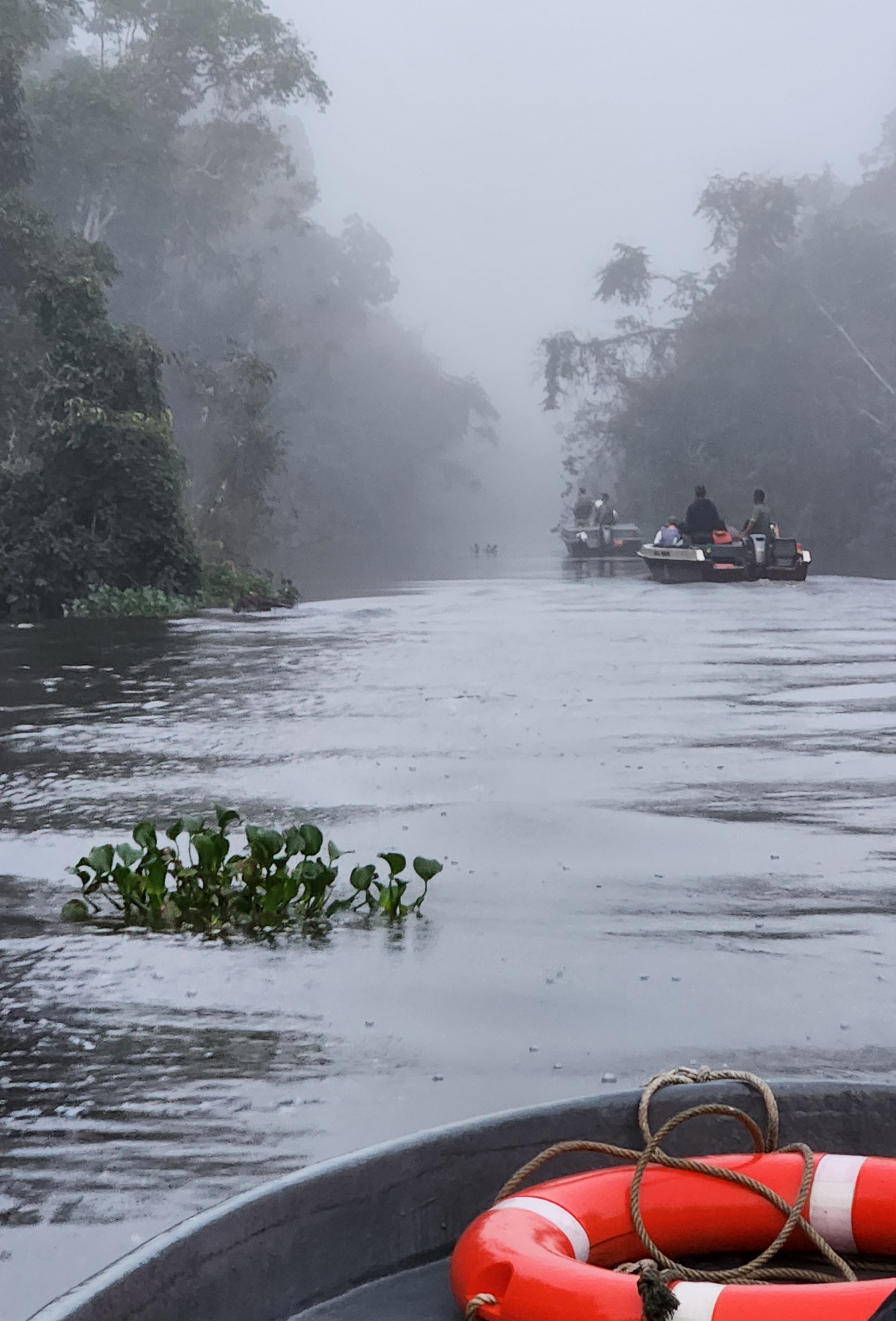
Morning came early as we boarded the boat for our third river cruise at 6 AM. The fog hanging heavy along the river, giving everything a mysterious and mystical quality. On the morning cruise, I discovered that I really am not good at spotting crocodiles. So many branches look like a crocodile, but are not. And then when we actually were stopped to look at a crocodile, I’m still not convinced that I was able to actually see it as it was tucked underneath trees and vegetation near the water’s edge. The number of other boats that impolitely jostled their way in to give their occupants a better view, didn’t help me. In my mind, before setting foot in the boat, I had pictured crocodiles in abundance along the river. The sighting still mostly counts as the fourth of the Borneo Big 5.
More proboscis monkeys were close to the river as the morning was getting started. Later in the day they retreat further into the jungle. For now though, momma and baby were hanging out in the crevice of a tree. Other proboscis monkeys were in the treetops, waiting for the sun to rise. Their golden fur and adorable faces make them a joy to watch. I could have stayed longer watching them start their day. The proboscis monkey has definitely won its way into my heart as a favorite of my time in the jungle.

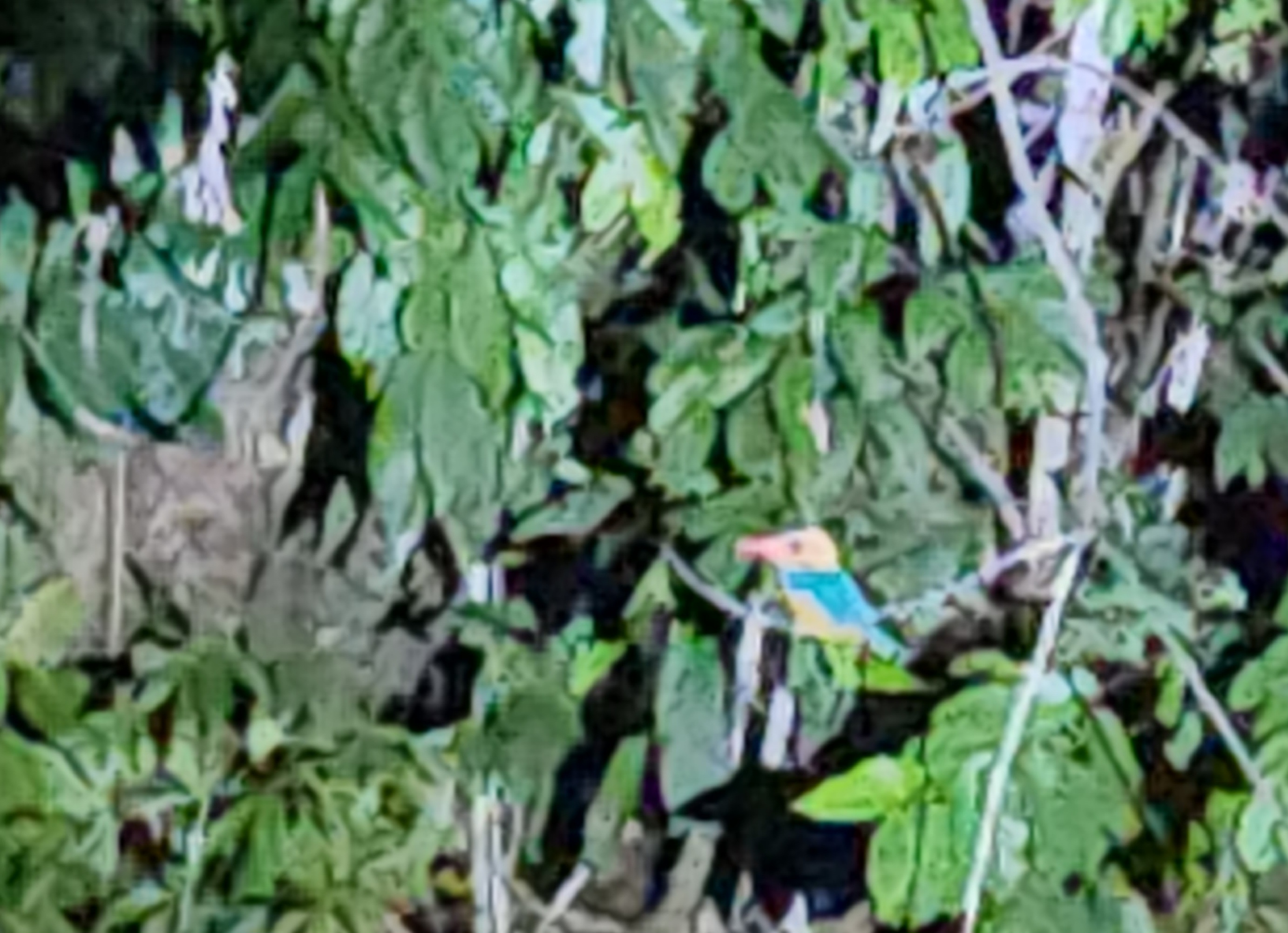
Not being a bird watcher, I took it for granted when our guide told us we were lucky to see the straw head bulbul, a rare bird native to Borneo. We also saw more colorful birds. Including an awake version of the little blue puffball that we had seen sleeping the night before. Another species of hornbill, the White-crested Hornbill (thank you Google), was perched high up in a tree, a bird our guide told us is a dream of most bird watchers to see.
Then it was time to get introduced to the jungle and the creepy crawly things and plants that call it home. A trek through a jungle must be dressed for appropriately given the propensity of leches and mosquitoes to find uncovered skin. Not having the recommended long pants with me, I opted for my turquoise blue with black and gold accents sarong from Bali, long sleeves in the form of my rust color Ganesha hoodie, and yellow wellies (rubber boots). Not everyone can pull off that look. At least the yellow boots drew out the gold in the sarong and the rust orange and turquoise blue were almost complimentary in their colors. Properly dressed and doused in mosquito repellent, we loaded onto the boat and they took us a little bit up river to the opposite bank.
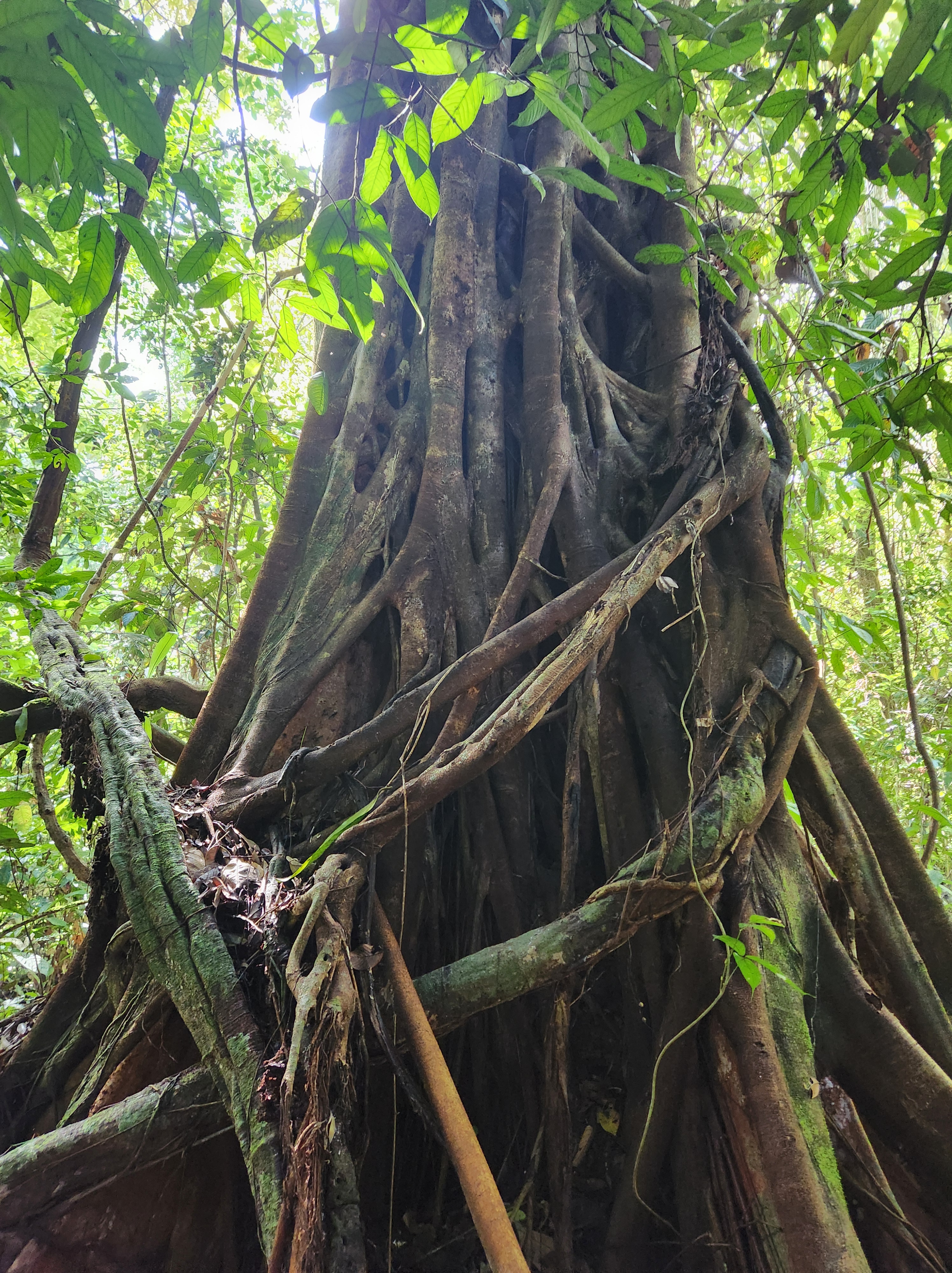
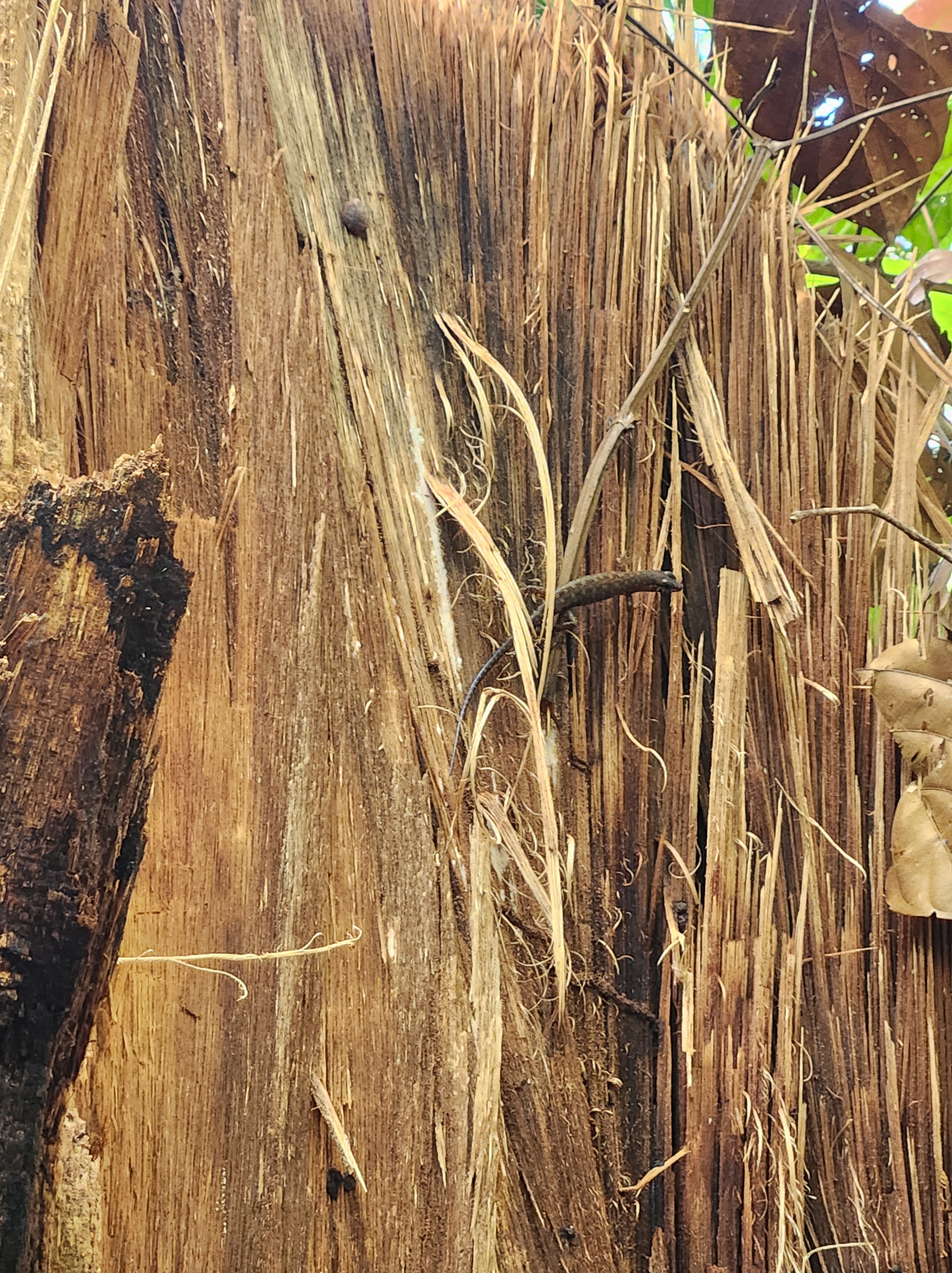
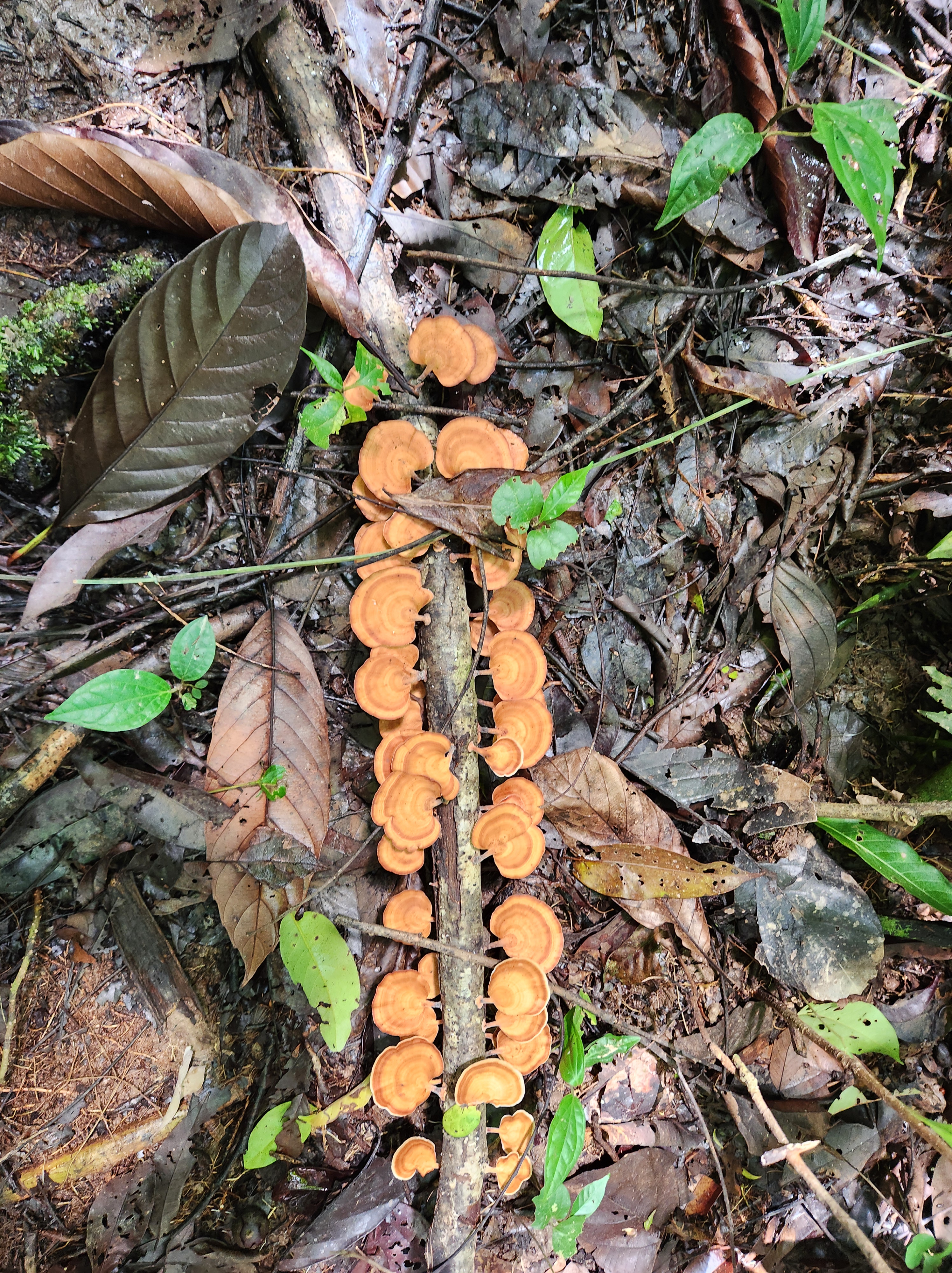
Once in the jungle, we slogged our way through the mud, each step making a glopping sound as the suction from the mud fought to pull the boot off your foot. One woman was the first to make friends with a leech. Just a little one. Despite the instructions to not scream and just let your guide know, she screamed anyway. Ike Ike, our guide, calmly took the leech, rolled it in his fingers and dropped it to the jungle floor. We learned about iron wood and the vines that are parasites and suffocate the tree they choose as a host. A relative of the poison ivy thrives in the jungle, with a sap that is way more itchy than its diminutive cousin. We saw millipedes (touch but don’t squeeze as they have a substance they will produce that can kill a human (it would probably take 5 to actually kill a human, 6 for good measure, but you really shouldn’t kill another human)), a skink trying to disguise itself as part of tree fibers, and a larger version of a millipede that rolls up like an armadillo for protection (so less poisonous than the first one, might take 10 to kill a human.) The red cup mushroom, white glow in the dark mushrooms, and the wood mushrooms were pretty fun(gi) to see.



The afternoon river cruise graced us with more opportunities to see some fantastic animals. More probiscis monkeys, the male of this harem group was close to the river when we pulled up, giving us the opportunity to fully admire his nose. Several hornbills of another species flew over us as we moved away from the monkey party, which was pretty spectacular. We searched in vain for the last of the Borneo Big 5: the pygmy elephant. Due to the high water level, the female pack had moved up river for the season. A bull had been spotted in the area a few days prior. Today he was nowhere to be found. Giving up hope on spotting him, we turned up another tributary. We did get to see the long tail macaque that had apparently lost a battle and was missing part of his lip, and several baby long tail macaques that are simultaneously cute and creepy looking. A rhinoceros hornbill did a flyover, close enough to see the brilliant colors.



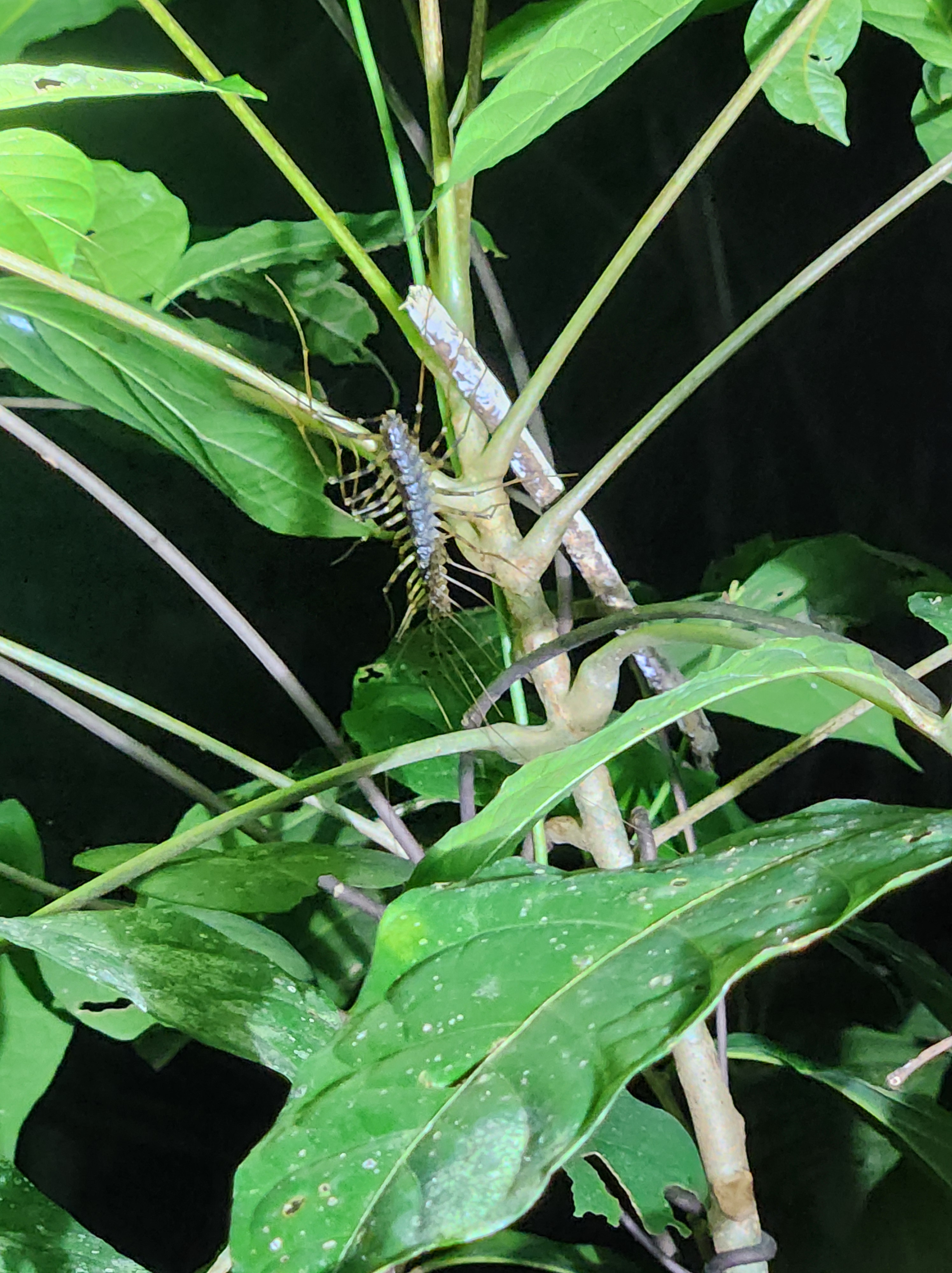
Our last venture into the jungle was a night walk. Covered in clothing and mosquito repellent, wearing our wellies (rubber boots), and armed with torches (flashlights, torches just sounds more cool) we were off into the jungle. This walk is where the small things that could kill you took center stage. The spiky plant that you would not want to grab onto unless you wanted to go to the hospital to have the spines removed one by one. The tree frogs, not colorful but definitely poisonous, the large huntsman spider hanging out on a tree, and the centipede all dangerous. Not everything we saw could kill you. The butterfly that flitted by and landed on a tree, the walking stick hanging out on a leaf, the cicada, and the hammer head slug were more pleasant to find. The soundtrack of the walk was the glopping sound of the boots in the mud and the chirps of the cicadas and frogs. No leeches this time.



The people at Sukau Greenview were so beautiful and wonderful. From the guides to the ladies in charge of the food, everyone made sure the experience was incredible. At each meal, the staff ensured that I had my gluten free options. In between meals, the ladies made sure the coffee and water were flowing.
Seeing four of the Borneo Big 5 is an excellent experience. Yes, I was a little disappointed to not see the pygmy elephants, but nothing is guaranteed with wildlife. Enjoying the proboscis monkeys more than made up for the lack of pygmy elephants. Everything about the tour was worth the journey to get there. Especially that I can now say that I have visited the Jungles of Borneo.

 Adventures with the Gypsy Gal